Caption
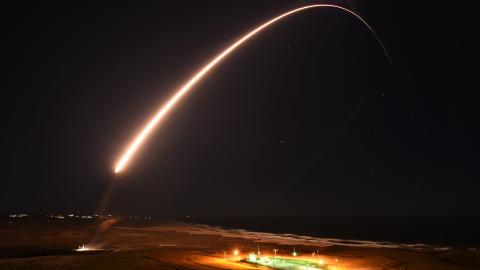
An Air Force Global Strike Command unarmed Minuteman III ICBM launches during an operation test on February 23, 2021, at Vandenberg Air Force Base in California. (US Space Force)








Antisemitism has once again reared its ugly head in the United States, permeating American institutions, political discourse, and online ecosystems. Antisemitic ideas endanger not only the safety of Jewish Americans but also the integrity and stability of the nation itself.
These pernicious ideas’ reappearance is no coincidence. US adversaries are engaged in coordinated campaigns to exploit antisemitism to infiltrate American institutions, sow domestic division, damage vital US alliances, and spread narratives that weaken US leadership.
In a rapidly shifting information environment and political landscape, understanding and confronting the intersection of antisemitism, disinformation, and great power competition demands a coordinated strategy. Hudson’s Center for Peace and Security in the Middle East will convene policymakers, experts, and private sector leaders to examine how antisemitism, both foreign and domestic, threatens American security and Western civilization.
8:45 a.m. | Welcome Remarks
9:00 a.m. | Keynote I
10:00 a.m. | Panel Discussion: America after October 7
Moderator
11:00 a.m. | Keynote II
12:00 p.m. | Panel Discussion: Information Warfare and Antisemitism
Moderator
1:00 p.m. | Panel Discussion: The Grand Chessboard
Moderator
2:15 p.m. | Panel Discussion: The US Constitution, the American Founding, and US Foreign Policy
Moderator
3:00 p.m. | Keynote III
4:15 p.m. | Farewell Reception
Welcome Remarks
Keynote I
America after October 7
Keynote II
Information Warfare and Antisemitism
The Grand Chessboard
The US Constitution, the American Founding, and US Foreign Policy
Keynote III
Welcome Remarks
John Walters:
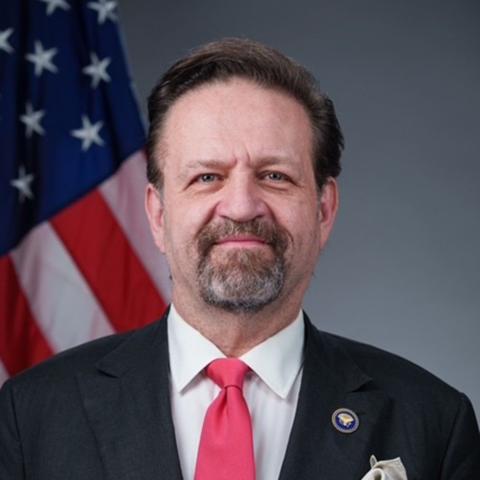
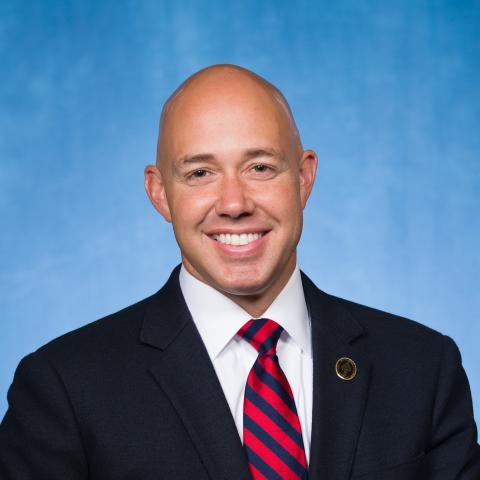
I am John Walters, president of the Institute, and we are delighted to have you with us for this important conference today. I want to welcome both those of you that are here in person and those that are online. We have quite a big online presence for this conference on Antisemitism as a National Security Threat. Your presence underscores both the gravity of the subject and the urgency of addressing it. Before I begin, I want to acknowledge several special guests with us today. Congressman Brian Mast, chair of the House Foreign Affairs Committee, a veteran and a steadfast voice on national security. He has been a leader in confronting the threats we are here to discuss today. Also, Dr. Sebastian Gorka, Deputy Assistant to the President and Senior Director for Counterterrorism at the National Security Council. His experience in counterterrorism and strategic policy will inform our conversations throughout the day. We are grateful to have both of them with us.
In addition, my thanks to our speakers, some of whom are already seated in the audience, some will appear later, and the team from Hudson Center for Peace and Security in the Middle East that organized today’s program with special thanks to my colleague, Michael Doran.
Let me begin with a strategic framework as we understand this problem. The world, of course, that we inhabit is not only not orderly, it is certainly not benign. At Hudson, we understand today’s danger is a pervasive global struggle between the United States and the People’s Republic of China, a conflict that spans military power, technology, economics, ideology, and influence. It is taking place every day across multiple arenas and in all weaponizable dimensions. It’s unprecedented in that regard. In some arenas, the contest turns on hard power, and in those arenas, allies matter. We need partners who can fight, who can hold their own, who can advance shared interests without constant American supervision.
Israel is one of those partners, a fighting ally, and one of panelour very best, I would say our best. As the United States adapts its global posture, reducing its direct military commitments in Europe and the Middle East, the importance of capable allies increases. Israel brings a first-rate military, world-class intelligence, unmatched cyber capabilities, and a demonstrated willingness to take on dangerous missions. Operation Midnight Hammer, the first joint combat action between the United States and Israel made that partnership visible to the world. President Trump has been clear, Israel’s strength is a strategic asset for the United States in an era of renewed great power competition. And our adversaries understand this perfectly.
They also understand something else. You do not have to defeat America in open confrontation if you can isolate it, divide it, and strip it of strong allies. That is why Beijing and its partners have begun to weaponize antisemitism through state media, influence networks, and covert online campaigns. This is not an accident. It is a method.
Why deploy this toxin globally? Because antisemitism serves three strategic purposes that we’ll discuss in greater depth in today’s program. First, it foments discord at home. It corrodes civic trust, polarizes communities, and turns Americans against one another. A divided society is a weaker society. Second, it drives wedges between the United States and its European and Arab partners. Partners who are essential for any stable balance of power. By inflaming passions around Israel, our adversaries make it harder to maintain the diplomatic coalitions on which American leadership depends.
Third, and most directly, it aims to detach Israel from the United States. If you can delegitimize the Jewish state in the eyes of the American public or delegitimize America in the eyes of Israel, you have weakened the single most capable ally the United States has in the Middle East, just as China, Russia, and Iran deepen their cooperation. Antisemitism in this context is not just a vile hatred. It is a strategic weapon. It undermines the moral foundations of American society, destabilizes our alliances, and erodes the architecture of security that has kept the free world intact for decades.
That is why we are gathered here today. To understand this threat clearly, to expose how it is being used, and to consider what serious national response we must. . . what that response must look like. Throughout the day, you will hear from experts, policymakers, and leaders who have been studying these developments up close. I hope today’s discussion will sharpen our thinking and strengthen our resolve, and will result in action that changes the direction that this threat is going today. Thank you for joining us.
Now, it’s my pleasure to introduce Michael Doran, senior fellow, director of our Center for Peace and Security in the Middle East. And again, I want to especially thank him for his organization of today’s event. Mike?
Keynote I
Michael Doran:
Thank you, John. And thank you for those kind remarks about me and the center, and thanks to all of you for coming. Antisemitism recasts Israel as a genocidal or apartheid state. And once Israel is portrayed in that way, America, its principle defender is portrayed in that way as well. The American-led alliance system, which anchors global stability, suddenly looks malign. antisemitism corrodes the legitimacy on which our entire system rests.
The Declaration of Independence tells us that all men are created equal. And by that measure, every prejudice is un-American, but antisemitism carries a more consequential dimension. It destabilizes, as John just told us, the strategic architecture on which the United States depends. It strikes at the foundations of American power, religious, cultural, political, military, and diplomatic. That is what makes it uniquely anti-American, a national security threat as much as an assault on civic equality.
Today, antisemitism is coming at us from the left and the right simultaneously, and what I think is really unprecedented in my lifetime. On the left, progressivism advances interpretive frameworks such as the 1619 Project that depict the United States as structurally racist from its beginning. U.S. support for Israel becomes, in that framework, the foreign policy expression of that same injustice. Among younger Democrats, this is now the dominant moral lens. Unfavorable views of Israel among 18 to 29 year olds rose from 33 percent in 2018 to 56 percent in 2024.
On the right, a different but structurally parallel narrative is taking hold. Tucker Carlson, perhaps the leading antisemite in America today, presents the U.S-Israel partnership as proof of elite corruption. He attacks the theological bases of evangelical Zionism, portrays support for Israel as harmful to U.S. interests in general, and features guests on his show who claimed that since 1945, a disloyal Jewish elite has manipulated American foreign policy. These ideas now circulate widely among younger populist Republicans. Thus, on the progressive left, the United States is condemned as a racialized illegitimate system, and on the populist right, it is condemned as a captured system run by hidden elites.
In both cases, Israel becomes the focal point for a judgment on the American system itself. The cumulative effect is to teach a rising generation that the United States has no legitimate purpose in the world. A nation uncertain of its own legitimacy cannot sustain alliances, deter adversaries, or project force and influence abroad. Antisemitism therefore threatens not only Jewish Americans or the U.S-Israel partnership, it threatens America’s ability to act as a global power. Confronting this challenge is why we’re here today.
Across our sessions, we will examine this threat from multiple angles, how October 7 exposed fractures in American civic life, how foreign adversaries weaponize antisemitism through disinformation and influence operations, how this hatred shapes geopolitical alignments in the Middle East, Europe and the Indo-Pacific, and how the principles of the American founding provide the intellectual resources to fight back. And finally, also, how this undermines President Trump’s national security strategy.
Our panels bring together government officials, strategists, scholars, technologists, intelligence professionals, and constitutional thinkers to map the threat and identify concrete steps to strengthen American security. To launch this conversation, we begin with Dr. Sebastian Gorka. Has he arrived? He’s arrived. Good. We can’t begin if he doesn’t arrive. We begin this with Dr. Sebastian Gorka. Few people have worked more directly at the intersection of ideology, counter-terrorism and statecraft. Dr. Gorka is serving in the White House as the deputy assistant to the president and senior director for counterterrorism. He helps to shape the administration’s efforts to identify, disrupt, and dismantle terrorist threats to the United States and its allies. He’s both a scholar of insurgent movements and an advisor to President Trump in the first administration. He brings deep experience in understanding how extremist ideologies adapt, metastasize, and exploit the vulnerabilities of open societies. He’s also a close advisor to the president, and he has a profound grasp on the president’s strategic vision.
His vantage point spanning analysis, policy, and operations makes him uniquely suited to explain how antisemitism functions not just as a prejudice, but as a strategic weapon used by hostile actors. Please join me in welcoming Dr. Gorka. There he is, I see. He has a very, very identifiable profile, and I saw it through the glass. There he is.
Sebastian Gorka:
All right, so I have the three-hour lecture and then the six-hour fireside chat? Are we good?
Michael Doran:
Three and a half hours.
Sebastian Gorka:
Okay, good. Good morning, everyone. I’m Sebastian Gorka, deputy assistant to the president and senior director for counterterrorism. And I’ll be talking today about a topic that is dear to my heart. Why? Because I bring a certain baggage to my work in the White House, in this administration, and the prior administration. If you’re not familiar with my backstory, my parents as children, lived under fascism in Central Europe, and then fascism was replaced by communism. My father, at the age of 20, was betrayed by Kim Philby, received a life sentence in a communist prison, and then was liberated by the brave revolutionaries of 1956. As such, I bring the baggage of a family that has lived through totalitarianism of both stripes, and then realized after 9/11, once I’d started a career in national security, that Jihadism is just another form of totalitarianism.
The symbols may change. The narrative may be slightly different, but at the end of the day, whether it’s the Third Reich, whether it’s a Stalinist communist regime, or whether it is Hamas, the Muslim brotherhood, Hezbollah, Al-Qaeda or ISIS, these are all totalitarian ideologies that preach one thing, “We will kill you or we will enslave you.” I am very proud to work for the 45th and the 47th President of the United States, who is the most Philo-Semitic commander-in-chief since the reestablishment of the state of Israel in 1948.
I like to remind people because it’s so counterintuitive. Only one president as president, has prayed at the wailing wall, who has gone to Jerusalem to recognize the cultural heritage of our civilization as a Judeo-Christian civilization. Lots of quotes I wanted to read you from my immediate boss, Secretary Rubio, and talk to you about the recent EO, the president signed with the Muslim brotherhood. But instead, let me start with a story that tells the world who President Trump is and why this time, America is serious.
Let’s roll the clock back to the first Trump administration. In the question of recognizing Jerusalem and moving the embassy, I won’t give names, but in that administration, only three members of the cabinet supported the president in that decision. And when the president was finally ready to do that which had to be done for various reasons, he held a meeting of the cabinet at which most protested. In fact, one individual who is a master at self-promotion and propaganda who likes to call himself, Mad Dog, more of a lap poodle, Jim Mattis, the then Secretary of Defense, and I say this as an individual who loves the devil dogs.
Don’t listen, Jim. Of all the services, I love the Marines the best. I spent two and a half years at Quantico. Mad Dog Mattis said, “Don’t do it, sir. Don’t recognize Jerusalem. You can’t move the embassy. You will trigger World War III. I don’t have enough Marines to protect all our embassies in the Middle East.” What did the commander in chief say? After 23 years of America breaking our promises, people forget this. It was Slick Willy, it was Bubba. It was Clinton who first said we would do this. He didn’t follow through. Bush didn’t follow through. Obama didn’t follow through. And the really embarrassing aspect of that, this was a requirement of the U.S. government we’d made a commitment to. And as a result of that written commitment, every six months for 23 years, the White House had to inform the government of Israel, “Sorry guys, we’re not going to do it this year.”
46 times, America had to admit to being a deadbeat until the billionaire from Queens arrived and he said to Mad Dog Mattis, “Jim, we’re doing it. We’re doing it because America promised the people of Israel. I promised the people of America in the campaign. Oh, and by the way, Jim, it’s the right thing to do.” That’s Donald J. Trump. And it’s so weird. World War III didn’t break out. So strange.
One of the greatest regrets of my life is I was invited by our then ambassador David Friedman to come to the opening of our embassy in Jerusalem and for family reasons I couldn’t attend. But why does this matter? Why? I’m here to talk about antisemitism in the context of counterterrorism and what I truly believe to be a civilizational war between barbarity and Western civilization. Western civilization, which is the greatest civilization the world has ever seen. We are unapologetic. Read the national security strategy, which was launched a week ago today. There is one civilization which is better than all, and it is ours. We are saddened that parts of it, especially on the European continent, are in decline. We would like to help reverse that, but we understand our roots and why they are so important. So what has this got to do with antisemitism? Will you allow me to go on a little bit of a. . . Down a rabbit warren for a second.
Michael Doran:
As long as you praise me in the process.
Sebastian Gorka:
Oh, thank you, Michael, for inviting me today. And thank you to this amazing institution. It’s great to see all the familiar faces in the audience. Michael is a trooper. The only thing that really pisses me off about Michael Doran is we need him back in government. So, I got your number.
So, why? What does this got to do with national security? Well, let me wax theological for a moment. Bear with me. My first degree was philosophy and theology and my good friend, our good friend, Andrew Claven, recently made an incredibly deep philosophical point about antisemitism, which by the way, I think is PC. I think the right word for our topic today is Jew hatred, not antisemitism and that’s milk toast. That’s pablum. It’s Jew hatred. And Andrew, in one of his recent podcasts, one of the best podcasts in America said, “You need to understand what antisemitism, what Jew hatred is really about. It’s not about the Jews. It’s about Christianity and the Jews. Go back and read the German philosophers. Understand what Nietzsche was saying. What were their critiques of Judaism?”
“Well, they said the problem with it is, from Judaism, we got what? That famous Jew called Jesus who gave us Christianity.” And what’s the problem with Christianity according to the German philosophers? It’s a slave theology. You do what? You promote weakness. The servant is more important than the master. It’s not triumph of the will. Some Nietzschean superman. No, it’s the opposite of that. Christianity is about love, not power. And they hated this concept of a weak slave theology. How could it be that the slaves of the circus defeated the Roman Empire? That’s an outrage to those who believe that might is right.
And the antisemite is in fact, galled by the fact that Judaism brought us what? Monotheism and objective truth. The modern German philosopher said, “What? There is no objective truth. There is power. There is will.” Christianity says the opposite. We have a relationship with the creator who is the truth. The rejection of the Jew is the rejection of the West. It is the rejection of Christianity as well. That is why we care. That is why we just designated the Muslim brotherhood, which I will get to in a moment because what we did a few weeks ago has been woefully misinterpreted and deliberately misrepresented by the clickbait prostitutes of social media, some of whom paint themselves as MAGA who just need the clicks. But I’ll get to that in a second.
So let me quote what we are doing and why we are doing it. From the remarkable Neo Kissinger, who has both National Security Advisor and Secretary of State and National Archivist and a few other jobs as his title. Secretary Rubio, “The poison of antisemitism, which has plagued mankind for centuries has visited us now and again in this century. And it still courses through the veins of cowards in dark corners of the world. Antisemitism today hides behind geopolitics.” “Oh, I’m not an antisemite. I just don’t like the government of Bibi Netanyahu.” No, you’re a Jew hater because there’s only one Jewish state in the world. Back to my quote. “It embeds itself in international organizations in the curricula of our colleges and universities in the voices of some who hide behind social media and even openly espouse this ancient poison,” From the River to the Sea.
October the 7 was an act of mass antisemitic terror that showed how Hamas “dreams of a world without Jews.” And lastly, most powerfully from Secretary Rubio, there can be no compromise with antisemitism. That is why just a few weeks ago, thanks to my incredible team at the counterterrorism director of the NSC, and especially my colleague Nancy, who held the pen on the EO, the president decided to designate key chapters of the Muslim brotherhood, the Ikhwan Muslimine. Thank you. Why? Because the Muslim brotherhood is the progenitor of all modern global Jihadism and the propagate of the transmission belt of the most heinous antisemitic Jew hatred today across the region and sadly, in America as well.
In the founding charter of Hamas, which calls itself a chapter of the Muslim brotherhood, Hassan al-Banna, the founder of the Muslim brotherhood is quoted. “Israel will exist and will continue to exist until Islam will obliterate it just as it obliterated others before it.” Nothing clearer than that mission statement, but let’s bring it all back home. Maybe you’ve never been to Israel, as I have. Maybe you’ve never seen the unedited videos of what really happened on October the 7. Young boys hiding in a shelter until a grenade is thrown into the shelter, which kills their father and blows one of the little boys’ eyes out of his skull. And as he’s pulled out by the terrorists back into his home, as they go to the fridge to drink soda, and the one son says to the other, “I can’t see. I can’t see.” That’s the weakest of what I saw on that video.
Let’s bring it closer to home. I think we have an image just to make it all relevant, of this beautiful couple. Is there nothing more joyous than seeing a young man and woman about to set off on their life together to become one in marriage? Staff members of the Israeli embassy here in DC, Yaron Lishinsky and Sarah Milgrim, whose lives were brutally taken just a little stroll from here. I think we’ve got Hudson on the bottom and in the middle, the side of where they were killed outside the Jewish museum, just a few minutes away. And what did the man say who extinguished their beautiful young lives as he pulled the trigger of that weapon? “Free Palestine. I do this for Gaza.”
Sebastian Gorka:
Free Palestine. I do this for Gaza. It’s not in some tunnel under the Gaza Strip. It’s a five minute walk from here. And in the 900 word manifesto, that piece of human filth posted online prior to his act of murder, he said the following, he titled his screed, “Escalate for Gaza. Bring the war home.” That is why we are deadly serious. President Trump, Secretary Marco, Homeland Security Advisor, Stephen Miller, et al, to stomp out the Jew hatred that is a hatred of Western civilization. Finally, before we have a chat with my good friend, Michael, let me explain that which we really don’t have the time to do much. A savant in our press team said to me a few months ago. . . I told him what my biggest problem with the Trump administration is, my biggest problem is we can’t keep up with President Trump. It is simply humanly impossible. My colleagues and I live what is called skiff life. We’re in a secure compartmental information facility for 12 hours a day, 13 hours a day, and much more because of them. And we leave our cell phones outside because we have to.
And then we come out to stretch our legs, grab a coffee, and then we look at our phones, “Oh my gosh, what did he just do? Another peace deal, peace deal number eight?” I mean, we just physically can’t keep up with this man. Let me illustrate a personal story. We had, in September, a very important EO had been written by another member of my team regarding hostages and wrongfully detained US citizens. And this time we were going to have a public signing of our directorate’s EO in the Oval and the President opened it up to the press. And I had my colleague next to me at the resolute desk. I had our incredible envoy for hostages, Adam Boehler. And then Will Scharf, the man who explains all the EOs by heart on camera, comes in, presents it to the President. The President signs it, and then turns to me and my colleague live on camera and says, “Hey Seb, hey Julia, tell the world why this is such a good EO.” “Okay, sir.” And so she’s never spoken on live television ever, an interesting moment for her.
For me, it was a little bit easier. And then that was a pretty good day. Have our EO signed by the President live on television. 90 minutes later, we’re back in the oval to give him a very sensitive classified briefing on another issue, which went very well. And then we went back to our office. It was whatever, five, six o’clock on a Friday. And I said to my team, “EO signed from our directorate, live TV coverage, and then a classified briefing. Not bad for a Friday. Pretty good.” Then I finally got back home, crawling in bed with my wife Katie. I get to see her for about 90 minutes of a day, and she switches on the television live coverage. President Trump is hosting his first Rose Garden Club party, giving a speech. And we just look at each other and go, “How does he do this?” It’s genetic. It is purely genetic. That’s the first problem, keeping up with the President.
The second problem is, as this genius kid from the press team said, “You know what we need to do in the Trump administration? We all need to stop working for three days. Just all of us, pens down, stop working and explain to the world what we are doing and what the President is doing because we’re moving so fast we don’t have the luxury of explication from the terrorists to the drug boats to NATO 5 percent, to everything Scott Bessent is doing, to AI, to you name it, to the ninth peace deal imminently. The President’s moving so fast, we don’t have the time.” And he’s absolutely right. He’s absolutely right. On the drug boats. . . Can I just please, I don’t know if you’re recording this or if you can do a clip or something or just do me a favor, can we just destroy the garbage out there, the asinine, clinically embecilic coverage of the drug boats? The mainstream media and the Democrats would have you believe my friend Pete Hegseth is in an operation center with a joystick, and he says, “Ooh, fishermen.”
Without divulging any secrets, I can assure you, I can guarantee you, I would swear on the good book we’re here on the podium, we have such exquisite intelligence on every single vessel. With mild hyperbole, we know what size underwear they’re wearing. We know their great-grandmother’s maiden name. We know exactly what’s on that ship, where it’s heading, who they work for. We know that each ship is going to cost the lives of at least 50,000 Americans. We have them banged to rights just as much as we do any of the high value territory we have killed since 9/11. The collection is superlative. We don’t take that shot in self-defense of our nation unless we have full confirmation that they are guilty of poisoning Americans. That is simply a statement of fact. Let’s clear the air on the Muslim Brotherhood designation despite what some influencers would have you believe. It’s a statement of designation to occur, not a defacto designation, because we follow the law in the Trump administration. We believe in the Constitution and the statutes agreed upon by Congress and signed by the President. We don’t just do stuff because we want to.
We don’t deploy the FBI against Catholics in Richmond because they go to Latin mass. We don’t raid the former President’s home at gunpoint because we don’t want him to win an election. We believe in the rule of law. As such, FTO designation has to be done according to the law. A foreign terrorist organization must have killed Americans or must have gravely affected the national security of the United States, and that must be proven with predominantly unclassified information that stands up in a court of law and which is less than three years old. It’s not me. That’s the law in America. We can’t just willy-nilly say, “Yeah, he’s a terrorist. He’s a terrorist. He’s a terrorist.” That’s what the Biden administration does, “Oh, you don’t want your children to wear masks in school? Oof, hope. Domestic terrorist.” We don’t do that. Number one, the mechanics of the designation is stipulated in law and we are following it. We chose three that are slam dunk cases, like Jordan, like Lebanon, like Egypt. Why? Well, because Egypt is where the Muslim brotherhood was created.
And if Egypt and Jordan can ban or designate the Muslim brotherhood, don’t you think it’s about time we did too? If Arab Muslim nations can do it, I guess we could too. But for the record, Lara, for the record, Mr. Carlson, for the record or the clickbait . . . I will control myself. It’s unusual. For the record, this is not the beginning, this is not the end, it is just the beginning and we are assiduously working on the next tranche of designations right now. And please read the statute you cretinous individuals. We’re not designating states, it’s organizations, so if you think, “Oh my gosh, you left this country out.” That’s because you cannot call a country a foreign terrorist organization by American law. Do your homework unless of course you’re in it for the ads and the clicks, but we are committed to one thing, destroying the brotherhood, its offshoots and global Jihadism writ large, at least suppressing it to a point at which it is no longer a strategic threat. I joke about this, but it’s not really a joke.
My objective is to put myself out of business. I’m a little bit like that great Secretary, Linda McMahon, who the President hired her and said, “Your job is to shut down the Department of Education.” “Thank you, Mr. President.” It is wrong that the White House has a senior director for counter-terrorism. Terrorists should not be a strategic threat. It’s wrong. China, Russia, people with 6,000 nuclear warheads? Yeah, maybe. But guys running around the desert with rusty AKs, not so much. We have a senior director because of 9/11, which is understandable, but I want to get us back to a point at which terrorism is not a strategic threat. And we do that by stamping out the Muslim brotherhood, and we do that by making Jew hatred and antisemitism history in civilized nations. Thank you.
Michael Doran:
The difficulty of interviewing you is you mince your words.
Sebastian Gorka:
I know.
Michael Doran:
It’s really hard.
Sebastian Gorka:
I beat about the bush.
Michael Doran:
It’s really hard to nail you down on what you really think about things. No, thank you for that. Let me hone in on one thing you mentioned. You said you have a colleague in the press office who said, “Let’s stop and explain for three days.” Because it seems to me one of the problems that we have today is that there are a lot of people out there who are either MAGA adjacent or well-branded as MAGA, who are not expressing the President’s opinion on Israel. And I think there’s a kind of a brand pollution as a result of that. And of course, for me, I mean, the number one person there is Tucker Carlson. He’s going on his own Jihad against evangelical Christians and against the state of Israel.
Sebastian Gorka:
And Jewish conservatives like David Rubin.
Michael Doran:
And Jewish conservatives. How do you understand, if I could take you a little bit out of your counterterrorism responsibilities and say, how do you understand what’s going on in MAGA? I never would have predicted this.
Sebastian Gorka:
First things first, it’s not. . . A very senior media person texted me a few days ago and labeled this the Civil War in MAGA, so can we just set things straight here? This is not a Civil War in MAGA. It’s a couple of people who are very loud. It’s not MAGA. I have to remind my friends, “You know Twitter is not the real world, right? X is not America. Leave the beltway, touch the grass.” The idea that MAGA is riven through with this division, garbage. There’s about six morons who are really clickbait prostitutes or mental cases, truly mental cases. There’s one lady in particular who I think is. . . She needs psychiatric assistance. And they just want the money or they have other issues. Daddy didn’t love them, something. And for me, and you know better than anyone, this is just a recrudescence. This is a porpoise repackaging of Buchananite, anti-Israeli, anti-Jewish sentiment. There’s nothing new in this. I mean, the idea you want to whitewash Hitler and do a revisionist history of World War II. I mean, does anybody know who David Irving is?
I mean, this is not new, “Oh my gosh, I’m so controversial. I’m going to have a podcaster who nobody has ever heard of come on my show to talk about how Hitler was the victim of World War II and Churchill was the bad guy.” We’ve heard this since the 1950s, but it’s a cheap version. It’s like a photocopy done a hundred times. Neo Buchananite photocopy end for version. Number one, it’s not new. Number two, it’s just totally transparent garbage. Go to my Twitter feed and repost or have a look at the video I posted last night. David Rubin is interviewed by Megyn Kelly, who Megan Kelly. . . Please, Megyn, choose your sides wisely. Don’t go down the route of the Candace Owenses of the world. But I think it’s Megyn who says, “What is this about Tucker saying he doesn’t know who you are?” Have you seen this? Tucker’s biggest answer to his critics, “Oh, this person I’ve never heard of. Who is Dave Rubin?” They have this video, “Who is David? I never heard of him.”
And then Dave pulls out his book that he wrote two years ago with this massive blurb from Tucker Carlson on the back, “David Rubin, amazing. Buy this book.” You’re just a fraud Tucker. I mean, really. It’s just so asinine. I’m not worried about it. Why? Because it’s six people with loud voices who like to do episodes also on Sasquatch and Chemtrails. I mean, you’re just a clown that wants clicks. You’re a clickbait clown. I think we can use that phrase. And the best thing is what did the President tweet or put on Truth Social two months ago? Tucker, the kook, right? Kookie Carlson. The idea that these people have any grip on the President, on MAGA is utterly fallacious. It’s problematic, but we’ve seen it before. We will excise it from decent conservative company, just like we did it before, so don’t believe the hype is my response.
Michael Doran:
That’s beautiful. The national security strategy you mentioned is a very, very interesting document. And I think if you read it. . . You don’t even have to read it closely. It’s very clear that a lot of the criticisms of the Trump administration about isolationism, abandoning the world, they’re simply not true.
Sebastian Gorka:
No.
Michael Doran:
And you can see it in the Western hemisphere, Europe, Middle East, and so on. And it seems to me, I don’t think that-
Sebastian Gorka:
Sorry, can I just interject?
Michael Doran:
Sure.
Sebastian Gorka:
That is also a rejection of the Tuckerites of the world, because what do they say? Oh, who cares about the rest of the world? All we care about is America. America first means ignore everyone else. Well, then read the national security strategy because it’s not isolationist. It says some regions matter more than others and the Monroe doctrine is going to be the new Trump corollary. We’re going back to saying some pieces of earth are more important than others, especially the backyard of America.
Michael Doran:
I don’t think the strategy says this, but this is my interpretation of it, that especially in Europe, the Middle East and East Asia as well, the US-Israeli alliance as it has manifested itself under President Trump with Operation Midnight Hammer is really the model that he’s aiming at. Would you agree with that?
Sebastian Gorka:
It’s not explicit, but it is of maybe three or four partner-ally relations; it is one of the exemplars, absolutely, especially if you look at Midnight Hammer. Israel does what it has to do with waves of kinetic sauties for 12 days. And I was in the Sitrum, I was underneath the West wing when we did Operation Midnight Hammer, and it was just, if you read that . . . Let’s be serious, ladies and . . . If you read Midnight Hammer in a Tom Clancy novel, you’d say, Tom, you’re just stretching credulity. Jack Ryan saving a nuclear sub, maybe, but a whole fleet of stealth bombers going into Iranian airspace for 42 minutes, coming out and not even one 22 rifle is fight at them, that’s just unbelievable.
I was watching it on the big screens. I mean, it’s what I termed before I came back into the administration, and the President concurred, surgical strength. We are not going to invade other people’s countries. We’re not interventionists. We’re not going to turn you into a democracy with the end of a gun barrel, but when there is an extent threat, when it is imminent, we will come down on you like the hammers of hell, whether it’s Soleimani, whether it’s the chemical weapons in Syria, or whether it’s the nuclear sites in Iran, exquisite use of force when necessary in cooperation with excellent partners.
Michael Doran:
And so then this, I think, has to be one of our major arguments against the antisemitism. This is actually the model partnership in the—
Sebastian Gorka:
Totally. Yeah. And just imagine a region, imagine a CENTCOM region where Israel isn’t doing what Israel’s doing with regards to Iran, with regards to Hezbollah, Hamas, the Pager operation. I mean, that makes all of us safer. What we’ve seen on the streets of Buenos Aires, what we’ve seen on the streets of America, these are all. . . I mean, I can’t go into all the details, but Iran, as we know, if you look at the open source, is trying to kill US officials, is trying to kill former US officials on US soil, not when they’re visiting the Middle East, but here. Any nation that assists us in keeping Americans safe, how is that a bad thing?
Michael Doran:
It’s such an odd thing about the MAGA . . . I don’t know what to call them. What are we going to call them?
Sebastian Gorka:
Pseudo MAGA.
Michael Doran:
The pseudo MAGA broadcasters that at this very moment, when it’s very clear what the president’s vision is, and when we have very serious foreign threats, the Chinese, the Russians, and the Iranians, that they’ve got us all talking about whether the Jews did 9/11. What does this-
Sebastian Gorka:
I didn’t fully deal with the phenomena, so yes, it’s a cheap neo-Buchananite, veiled Jew hatred, put in isolationist terms, but there’s a broader thing. And I’m not making excuses for these people. As far as I’m concerned, these people are. . . I wipe them off the bottom of my shoe, these individuals.
Michael Doran:
Again, you’re mincing words.
Sebastian Gorka:
It’s what a concert in kissing calls the woke right. It’s a very interesting concept and James Lindsay as well, that because of various external factors, number one, the dearth of critical thought in Western civilization. I mean, when I’m asked career advice from 20-somethings, “What should I do to be successful?” And I tell them, “Whether you want to be a national security wonk like me or a brain surgeon, one piece of advice. Every day switch this stinking thing off and pick up a book with pages, preferably written by a dead white man, preferably dead for at least four centuries, so Shakespeare or older and read a book.” Number one, critical. . . I am a wicked addict of social media. I see myself opening a book. And if it takes me longer to read that page than a 60-second video on X, I start to get the jitters, so we have to retrain critical thought so we don’t have critical thought amongst these influencers.
And lastly, what do we have this general on we, this general. . . Not cynicism, cynicism which should be in fact skepticism of authority because they lied to us about the Iraq war, they lied to us about COVID, they lie to us about. . . There’s this long laundry list of the experts, the Faucis, the WMD experts, whoever it is, who have no authority. Therefore, what does the woke right translate this into, which is really dangerous? It’s like that comedian, David what’s his face who says, “Israel is the problem and blah, blah, blah.” The end argument of this is there are no experts. Don’t trust anyone. Well, that way lies anarchy. I mean, I know experts. You want me to tell you who an expert is on information operations, on nuclear improvised munitions, on threat finance? I can give you real experts, but what the woke right has turned skepticism into is global cynicism, and that’s what these pseudo MAGA fakers are exploiting. Sorry, that’s the broader context.
Michael Doran:
The name you were looking for was Dave Smith.
Sebastian Gorka:
Dave Smith, yeah.
Michael Doran:
I think it’s funny because I’ve actually never heard him say a funny thing, but he’s branded himself as comedian Dave Smith.
Sebastian Gorka:
But think about this, we’re talking about people whose self-label, whose category is standup comedian. And what’s his greatest import today? His impact on the debate on geopolitics in the Middle East. I mean, that would’ve been a Monty Python skit. Standup comedian is explaining to us the whys and wherefore of where ISIS came from. I don’t think so. That’s moronic.
Michael Doran:
I want to ask you, because you don’t mince words. Could you sum up in two or three sentences, five with semicolons, the essence of the vision behind the national security strategy?
Sebastian Gorka:
Totally.
Michael Doran:
But I want to prime you before we. . . Because I sat down, I read it twice, and I think there’s, from a communications point of view, I think there’s one problem with it, and that’s that the word China doesn’t appear as often as the idea of China is in it. What I mean to say is that I think for prudential reasons the President didn’t want to have China in every paragraph, but actually China is, the whole document is-
Sebastian Gorka:
Suffused.
Michael Doran:
. . . suffused with China.
Sebastian Gorka:
To summarize, and it’s very short, you can read it three times or four times.
Michael Doran:
I read slowly.
Sebastian Gorka:
Read the NSS, but I can give you a two sentence summary. What we care about as Americans is America and what is important to America. We are America first, but not America alone, but the principles of America as a functioning nation state and the principles of the international system is bound around one concept, sovereignty. If you want to get fancy and highfalutin, this is the rebirth of West failianism, meaning you cannot be a functioning nation state unless you exercise sovereignty. Not just ours. Why do we build the wall and have zero illegal immigration now? Because you can’t be a nation without borders. It’s the revenge of common sense. Everything the President does is just common sense. Men shouldn’t go into female restrooms. It’s not a political statement.
Michael Doran:
Do I have to stop? Shit.
Sebastian Gorka:
TMI. It’s not an ideological statement to say men should not go into private women’s areas. It’s common sense for eight millennia. Second, you can’t have a nation without sovereignty, whether you’re America or . . . Could you imagine how good it would be for us if Mexico was a fully sovereign nation? Some of the cartels roll around in equipment and wearing stuff that would make tier one units in NATO jealous, armored vehicles, NODs, latest ceramic plated gear. A nation state has to have what? Two things. It has to have the right to tax and monopoly on the use of force. Who has a monopoly on the use of force in Mexico? No one. Lots of actors use force with impunity, not just the Feds. Number one, America’s interest, sovereignty, and then thirdly, we are a civilizational entity. We care about Western civilization and we are saddened and perturbed when parts of that civilization seem to be crumbling, not just in terms of demographics, but in terms of the rights upon which we built our civilization. I mean, look at the horrific stories from the UK.
I grew up in the UK. If you told me that the land of Margaret Thatcher and Churchill, now he’s putting people in prison because of a Facebook post. Did you see the Facebook post of that accountant who was just put in prison? He came to America and fired a shotgun and posted a photograph of him firing a shotgun. I’m a gun guy. I’m a nerd, all right? Look at the photograph of it. It looks like he’s holding something radioactive. He’s so afraid of it. He’s clearly never shot a gun in his life. His head is in the wrong position. He hasn’t got to bead down the rail. It’s a guy trying something out on vacation, and he’s in prison because guns are bad in another country. Principles, national sovereignty, American interests. Oh, and then let me put a slightly more diplomatic one that suffuses everything we’ve done internationally. Eight years ago, it was about security. We’re going to crush ISIS. We’re going to go out there; we’re going to hammer them. We’re going to make America safe. We’re going to go to the Middle East, and we’re going to find partners to work with us.
Now we’re transitioning from security to prosperity. In the US government, we silo everything. We have the Iraqi desk officer. We have the expert on threat finance in Lebanon. Everybody has their little compartment. The President of the United States is a preternatural strategic thinker. He does not hermetically separate diplomacy from national security, from commerce, or economics. Why was the first meeting with Zelensky the disastrous one? Why was it about a rare earth’s mineral deal? Everybody in Europe was saying, “Article five guarantees, give him NATO membership, blah, blah.” We know that a piece of paper from Brussels is about as useful as the one Neville Chamberlain brought back from Munich. But if you’ve got tens of thousands of Americans in Ukraine mining rare earths, processing rare earths, I’m sorry, but Vlad is going to think twice about invading Ukraine, commerce-
Sebastian Gorka:
Think twice about invading Ukraine. Commerce, trade, prosperity. I think I made this point the last time I was here. All left-wing politics are the same and different from all right-wing politics. Whether you’re a commie or a member of the Labor Party, or a Democrat, left-wing politics is predicated on what principle? Zero-sum game, closed box of wealth. There’s one pie of wealth, and the government, the elite, will decide how to distribute that pie. It’s Marx on redistribution of wealth. Closed system.
All conservatives, real conservatives, believe in what? The ingenuity of humankind is utterly limitless. Compare the gross wealth of the world over the last 400 years. It is a curve you can’t map, it’s so exponential. We believe prosperity is a pie that always grows because of this, the mind. As such, the president is inviting the world to prosper with us.
Think of Sharm El-Sheikh. Just internalize this. Everybody’s at Sharma Sheik. From Orbán to Starmer, who didn’t get the podium, just joyous to watch. Anyway. But who else did the president invite to Sharm El-Sheikh? Who did he invite? Who refused to come? Iran.
He even invited the supreme leader to Sharm El-Sheikh and said, “Hey, guys, we’re going to rock and roll. We’re going to get bigger AI, wealth. Do you want to be part of this? Or do you want to be an idiot who says death to America on Friday?” Prosperity is also key to the NSS.
Michael Doran:
So how do you fit in the US-Israeli relationship in that context? Where do you think it fits? How would you do it, but also where do you think it fits in the president’s mind?
Sebastian Gorka:
I would do it exactly as President Donald J. Trump does it.
Michael Doran:
Okay.
Sebastian Gorka:
Would you expect me to say I’d do it any differently?
Michael Doran:
Yeah. But I want you to tell us your view of how the president sees it because it connects up all of these issues.
Sebastian Gorka:
How he sees what?
Michael Doran:
Civilization, prosperity.
Sebastian Gorka:
The bilat?
Michael Doran:
Yeah. The bilat within this framework.
Sebastian Gorka:
I think the prosperity part of it is it’s not even a factor in the bilateral relations with Israel. I mean, Israel is what? I mean, it is an incubator of high-tech. It’s doing counter irregular warfare at the same time as being a high-tech hub for the whole region.
I mean, from what was it? When I first found out, I found SodaStream in the ‘80s because it was a big thing in the UK. You can make your own fizzy drinks at home. And then you find out it’s an Israeli company with the factory on territory, on settlement territory, using people from Palestinian territories as employees.
I mean, that’s the 1980s. So from SodaStreams to satellites, I don’t think we need any more help for Israel in terms of prosperity. What we need them to do is what I said in the video I posted after I saw what really happened on October the 7F.
And I stand by what I said. I was in Congress and I’d just come out of the viewing and I said, I had a message to the IDF, the people of Israel and Netanyahu, “Kill every single one of them responsible, salt the earth above their graves and make sure it never happens again.” So, let’s get that job done first.
Michael Doran:
You pleased the crowd with that one. Oh, I have a two-minute warning. Is that what I have? I have one-minute warning. Can we take a question? Are you? We have one question. Okay.
Ron Corey:
Thank you, sir. I’m Ron Corey of the Alliance . . . So, my understanding of . . . Thank you. My understanding of the president’s strategy is that the United States will no longer do the heavy lifting in different parts of the world. We need allied and partner nations to take the lead.
We’re not going away. We will be in a secondary role. We’re actually flipping, switching places. How would you characterize that in the Middle East? Israel is our ally and the best ally. What about the other allies that are not qualitatively there where Israel is?
Sebastian Gorka:
We’re not flipping the role. That’s an exaggeration, but look at the language in the NSS. It’s very deliberate. For decades, we’ve talked about burden sharing. We’re moving to burden shifting. Okay?
If you are to be measured as a serious ally or a serious partner, we expect more of you. It’s a very simple thing. It’s simply, if you’re a member, I look at the NATO example. I cut my teeth on NATO, which is 30 years ago. Back then, the idea that we could get 2 percent of GDP across NATO was a pipe dream.
I was in my skiff with Newsmax and the subtitles on watching the NATO summit. And I see this thing running at the ticker tape saying, “President Trump gets 5 percent GDP commitment from every nation except Spain.” And I was about to leave the skiff and call Chris Ruddy, the CEO of Newsmax. “No, Chris, you got a really bad typo on the Chiron. It says 5 percent of . . .” I said, “there’s no way it’s 5 percent.”
And then I decided to go online and saw yeah, he did it. Not just 2 percent, not 3 percent, not 4 percent, but 5 percent. I mean, that’s, again, beggar’s belief. If you read that in a novel, you’d say impossible. So you will be measured in terms of your seriousness as a nation based upon your willingness to do more for our common interests if we have the same threat perception.
If you have terrorism as a problem in your country, well, guess what? We want you to be serious about it so you can work with us. With regards to the region, look, the best example I can give is the president’s infamous statement on Gaza, right? “We’re going to take over Gaza.” Remember that? And then horror across the commentariat. The talking, “Oh, my gosh, how dare he say that?” And the nations of the Middle East say, “Oh, the arrogance, how dare he say that?” For 72 hours.
And then what happened? Well, to anyone who’s read The Art of the Deal, which I highly recommend to everyone, if you want to understand President Trump, suddenly, four days later, nations that really hadn’t lifted a finger, that hadn’t invested anything in the West Bank or Gaza, who are very rich nations said, “Hmm, maybe we should spend some money rebuilding that part of the world.” That’s The Art of the Deal. That’s the Trump effect, and that’s what we expect from our partners.
Michael Doran:
We have two more minutes, don’t we?
Staff:
One more minute.
Michael Doran:
I’m like, “One more minute.” Okay. We’ve got a question in the back, and then we have to make it a laser-like question and you can make it a . . . This is your finale.
Sebastian Gorka:
All righty.
Michael Doran:
So make it a good one.
Noah Firestone:
Hello. Thank you so much for coming and speaking with us today. I guess my question was going to be-
Sebastian Gorka:
Who are you?
Noah Firestone:
Oh, my name is Noah Firestone. I’m a RAND student. Given how quickly antisemitic ideology is spread across social media platforms, what tools do you think will be the most helpful in this administration to counter the ideology that we see online without harming freedom of expression?
Sebastian Gorka:
Yeah. So, we are serious about the US Constitution. We see it as an enumeration of what the Founding Fathers said it is, which is our God-given rights. There’s a reason the word Creator is in our founding document with a capital C. That garbage you hear about the Founding Fathers being atheist or deist is complete crap.
They were God-fearing Christians who said you have freedom of religion. Nobody has to be a Christian, and there is no state religion, but they were clear that America’s principles are based upon Christian values. So we’re not going to do anything to undermine those principles, but the First Amendment is of course, one of them.
To your point, I think I promised this last time, and I’m happy to promise it again, you need to have an event here with Mr. Miller. Because I have the global remit for Jihadism. Mr. Miller, who is a force of nature, deals with stuff inside this country.
And I think if you look at what we’re doing already with the colleges and what we’re doing with those who allow the propagation of genocidal ideology on their campuses, there are consequences to that. Why should you receive a penny of federal funding if you allow them?
And as Marco, as the Secretary has been very clear, if you’re a foreign national, you have no right to come to this country as a student or otherwise. No one has the right to come here. I am a legal immigrant to the United States. I waited in line. I took a test. I took an oath to the US Constitution.
So if you do something to undermine any of that as a foreign national, there will be consequences. For US nationals, I think the most important thing, and I’ll let Mr. Miller talk to this, is mapping the money trails. How do chants of the river to the sea with protestors who have placards that all look exactly the same? Who printed those? Who funded those? Scott Bessent is rather committed to following the money, which is a key. So, I’ll leave it at that. Thank you.
Michael Doran:
Okay. Thank you, Seb. Please, everybody, join me in thanking Seb for this very, very enlightening talk.
And. . . Hello. And force of nature, Liel Leibovitz. Liel, it’s all yours.
America after October 7
Moderator
Liel Leibovitz:
Okay. Hi, I’m Liel Leibovitz, senior fellow at the Hudson Institute, editor at large, Tablet magazine, sitting as always on the far right. What a pleasure to be here this morning, and what a pleasure to follow Sebastian Gorka. I’m an immigrant like Dr. Gorka to this great and godly country.
And the nation that I dreamt of as a kid, the nation that stood up to tyranny all over the world, the nation that spread the light of liberty and freedom, is precisely the nation that I’m seeing right now. And these are precisely the policies that I was hoping and praying for. It’s just a great honor.
I hope you’ve all had a moment to enjoy antisemitism for the very last time, because after 3,000 years, we will eradicate it right here, right now, on this panel. And so we have an almost preposterous slate of topics to cover. The topic being America After October 7. We could be here for a very, very long time and we have a very distinguished kind of panel that I’ll introduce.
As they go along, we’ll try to catch as much as we can and then turn it into a conversation with all of you, with apologies in advance for everything that we’re missing. But I’d like to start with Professor Deborah Lipstadt, ambassador for combating antisemitism. I’d like to do you the great disservice of asking you to give the sort of 30,000-foot view of everything that’s going on.
As Dr. Gorka mentioned, we are seeing antisemitism come from all corners. We’re seeing it on the right. We’re seeing it on the left. We’re seeing Islamist varieties, Marxist varieties, really. It’s a whole smorgasbord of bigotry. And so I want you to sort of take us through this magical mystery tour of Jew hatred.
Deborah Lipstadt:
Let me start first of all by thanking you by I’m happy to be here. I will go and talk to anyone, any place who wants mysterious about Jew hatred, a term I used in my confirmation hearings before the Senate Foreign Relations Committee. I believe too, that it is more efficacious than antisemitism spelled without a hyphen, but that’s for another conversation.
I’m going to start, Liel, with small things. They may seem small to you, but I think they will resonate with some of you. I wanted to buy a young child, very good friend of mine, a Magen David for Hanukkah. And before I did so, I sat down with her parents to discuss whether they would be comfortable with my doing that and whether she would be comfortable wearing it.
I can assure you that no parent, friend, aunt, uncle who buys their child a cross has this serious conversation with the parent. Unless the kid is a complete wayward, and they don’t want to advertise whatever. But about whether it’s safe to wear a Magen David.
I know too many students who moved into campus in September, late August and September, who had a mezuzah, and not because they were harassed. But as they say in Jibali, l’maan habitachon. For security’s sake, put the mezuzah on the inside of their dorm room, not on the outside.
If you read the Columbia reports, if you read the stories from Harvard, and many other schools, you will hear students saying, “I moved my mezuza. A, it kept falling down.” Which mezuza usually don’t do because you secure them well. “But I got tired of being woken up in the middle of the night by banging on the door.”
It’s small things. I mentioned to this to you earlier at the demonstration outside of Park East Synagogue last month. The slogan that they chanted that scared me the most was not globalize the Intifada, which to me means kill Jews everywhere. And it was not from the river to the sea, though most of the people chanting don’t know which river or which sea, but that’s beside the point, which means the eradication of Israel.
What scared me the most was make them afraid. That is what we are seeing. And it’s everywhere. You read the Columbia Report or read the Executive Summary once you read and it’s horrific. You see it on the left and you see it on the right.
I could talk to you about the feminist groups which were silent after October 7, more than silent. Some said, “But when it comes to antisemitism, when it comes to rape, there is no but. None, none, zero, nada, FS, none, nein, nothing.” Yet these groups engaged in it.
We are seeing more than left and right. When I first came into office, I talked about a spectrum from the left to the right. After a short time, I stopped talking about that. I talked about a horseshoe where the two ends of the horseshoe meet. And this is what is so disturbing to me.
And on the left right, it’s the red-green alliance. The Islamists are in there and sometimes more than just Islamists are in there quite strongly. But it’s the two ends meeting with the same Jew hatred. But here’s what’s interesting to me as a historian, as someone who has studied antisemitism, fought antisemitism and sued by antisemites, the slogans at both ends of the spectrum are the same.
It’s finding the cause for, I’ve lost out in this system, my factory has closed, I can’t find a job. It doesn’t matter which end. Somehow the Jews are to blame. This is an old story. This is the oldest hatred, the oldest continuous hatred.
If it weren’t so horrific, it would be fantastic. And I don’t mean fantastic and great, but like a great fantasy. At its heart, no matter where it’s coming from, what we’re seeing today is an anti-liberal, traditional liberal, anti-capitalist attack. It is Occupy Wall Street on steroids. You want to explain the losers on the left, the losers, or on the right, I’ve lost somehow in this.
If I’ve lost somehow in this system, blame the Jews. If you were to say blame the left-handed people, we’d say, let’s get you to a psychiatrist. But if you say blame the Jews, even if you don’t think it’s right, even if you don’t think the person’s explanation is correct, you say, “You know, I’ve heard that. That is familiar.” So, when you ask me what it is, I would say what we’re seeing today is different. It’s worse. And those of you who know my work, you’ll know that years ago, and I took a lot of flack for this. When people in the Jewish community lead Jewish organization, it’s worse, worse, worse than ever. I’d say, “Calm down. It’s not that bad.” It is changing the daily life of Jews. There is no Jewish gathering, which doesn’t have some form of security.
During the summer, I was in the Berkshires and I was on Sunday morning, I think I was driving through Lennox. And I passed a church, an old revolutionary era church. And I did a double take because something looked strange. And you know why it was strange? Because the three double doors of the church were wide open. And there were members of the church standing there with the programs or the order of the service, handing them in, welcoming them to people. A young girl I know goes to a Jewish day school in Atlanta, the Atlanta Jewish Academy had a volleyball game at another school. And she came back and she calls me Tanta Deba because when she was little because she couldn’t pronounce Deborah and she said, “Tanta Deba, they didn’t have any security. We could just go into the school. No one checked us.” It’s the reality. It’s become the reality. And this is not boys will be boys.
And even if boys are being boys, it filters down. So that the kid in middle school who wears a Jewish star, maybe one of the few Jews in his class, puts the Jewish star under his shirt. He gets bullied. Dana Bash told me that in a school she knew of middle school kids were throwing pennies on the floor in front of Jews. Now, they heard that. So, you could say, “Oh, it’s just middle school kids.” But those middle school kids grow up. The kids who worked for the university paper who seriously treat a question, “Is it ethical to be friendly with the Zionists?” Go on to jobs at major publishing houses. Whereas low level editorial assistants, they read the incoming manuscripts. They say to the editor, “Don’t take this. It’s Israeli. It’s got Israel. It’s got Jews. It’s controversial.” It’s a kind of cutting out, icing out of life that is very, very dangerous.
And while the killings, the murder at the Capitol Museum, murders, that’s what they were, the murders at the Capitol Museum, murders at Pittsburgh, Poway, Jersey City, which we often forget and lots of other places. They’ve been, by the way, since October 7, there has been arson of synagogues on five different continents. If you want, I’ll give you the list. That’s thanks to Dave Rich, the head of the community security trust in England.
So, what can we do? First of all, we cannot weaponize the fight against antisemitism. Do not engage in the useless conversation, what’s worse, right or left. When I hear that, I always say if Sholem Aleichem, the great Yiddish humorist and literary person, much more than just a humorist, had heard that, he would say, “You know, that’s like asking me whether I’d rather have dysentery in Kyiv or cholera in Odessa. Neither thank you.”
But especially because they’re coming together and they’re fortifying one another. A member of Congress who was retiring early just was visited by Code Pink. That’s weird, but it wasn’t reported as weird. Speak out expeditiously and unequivocally and speak out not just when the person is on a different side of the political spectrum than you are. Speak out even more expeditionly when the person is part of your own cohort and you agree on all sorts of other things because you will have more street credit, as maybe they used to say, I don’t know if they say it anymore, but with that person.
And most of all, recognize, and with this I’ll close, antisemitism. And this is something I developed during my time in office as a multi-tiered threat. It is not a threat just to Jews. I spoke at one of our agencies in Langley, you can figure it out to their employees. And I said to them, “When you see antisemitism, think of it not as the canary in the coal mine, that canary is dead. And I don’t want to be that canary. Because when it’s dead, we know there’s a danger.” Think of it as the flashing amber light when the light is about to turn red. And I always had this vision that, as it gets closer to turning red, it goes faster. I don’t know if that’s true, but that’s in my mind. The red light that’s coming is worse. It may not be more antisemitism, but it’s anti-democracy, anti-rule of law. So, think of antisemitism.
First and foremost, as a threat to Jews, Jewish institutions, and those associated with them. When we had a killing at the Jewish community center, I believe in Kansas City about a decade ago, three people were murdered, none of them Jews. So if you’re associated, you’re a threat. Many of the people on October 7 who were killed were not Jews. Many of the women who were raped and horrifically, not Jews, Arabs, Jews, et cetera.
So, it is a threat to Jews, Jewish. And if it were only that, it would be something worth fighting. But next time it is a threat to democracy. Anybody who buys into the conspiracy myth, which is the cornerstone of antisemitism, that the Jews control the, and you fill in the blank, judiciary, government has given up on democracy. Now, before October 7, before the incidents on campus, I would’ve just given that, but there’s a flip side to it. The victims, the objects of antisemitism, the students on campuses, in this country and in other countries, who when they were the victims of an antisemitic act, had nowhere to go. The students at UCLA who were blocked from entering the library and who looked this way and that, to paraphrase the biblical phrase. And the police, UCLA police, a big police force, just stood there and did nothing. Gave up on the administration. They gave up on the democracy, on the rule of law. Second tier.
Third tier, a threat to international security and stability. After October 7, we saw a surge. NSC reported on this and INSS in Israel, et cetera, and others in antisemitism on Chinese controlled websites. What was that about? China does not have a long tradition of antisemitism, not yet, at least, to be pleasantly optimistic, not yet.
It was functional antisemitism. It was utilitarian antisemitism. Iran is ideological antisemitism. Russia is both ideological and functional, but this was functional. In other words, if you know Yiddish, it was to be the kochleffel, but stirring up the pot. To send a message to the global South, the Third World, to other nations, we China, we the PRC are with you. They, the United States, are with them. It’s a threat to international security and instability. We saw this. This is not new.
In 1959, just the historian nerd in me. 1959 in the Federal Republic of Germany, West Germany, there was an outbreak of what today looks like benign antisemitism . . . gravestones were knocked over. Swastikas are newly rebuilt synagogues, no Jews, but they rebuilt the synagogues. And the synagogue and cologne had a swastika on it. And then it spread to New York, to Chicago, to London, to the West. Turns out it was a KGB-Stasi operation with the support of communist operatives in these different countries. To signal you in the West, you talk about us as antisemitical, what you got in the West? An international security instability.
And finally, it is a threat to society at large. After the Charlie Abdo Hebrakashare tragedies, Manuel Valls, then the premier of France said in the iconic statement, and many of you will remember it, “France without Jews will not be France.” And I once was in conversation with him last year at the Paris Peace Forum. And I said to him, “You know how I chose to interpret that? You weren’t talking to the Jews, stay here. It already assured them we will protect you. “ But if one group in your society doesn’t feel safe, if one group and one group only in your society has to have armed guards outside of every gathering that it has, they’re not safe and your society is not safe.
Unless we understand that antisemitism. . . This is not one group crying protect us. This is anti-democratic, anti-rule of law, and anti-stability. This is a threat to all of us. It is that flashing yellow light. Thank you very much.
Liel Leibovitz:
Thank you. Thank you, Ambassador Lipstadt for this terrific and moving survey and for bringing and mentioning the great Yiddish writer, Sholem Aleichem, without whom no National Security Conference would ever be.
Ambassador (ret.) Deborah E. Lipstadt
Probably the first time ever that he—
Liel Leibovitz:
I would say that is a Hudson first. Not a last, I hope. Park MacDougald, you’re not obliged to mention any Yiddishists in your response, but I want to task you with an even more unkind question than I did Ambassador Lipstadt. You are editor of The Scroll for Tablet magazine. You have been covering this topic sort of very closely and insidiously for years. What I’d like for you to do is to give us a sort of more granular report from the weeds, as they say, because while some of what we’re seeing may be spontaneous outbursts of Jew hatred, as we know, because we’ve been reading you, we are also looking at a concentrated effort that is paid for, finance, and organized by a whole host of state and non-state actors.
Take us into the dark belly of the beast kindly.
Park MacDougald:
Sure. I’ll be reading from notes, so not just texting.
Liel Leibovitz:
You’re forgiven.
Park MacDougald:
Yeah. So first I want to kind of frame this discussion a little bit. And you can call it antisemitism or Jew hatred or whatever, but to the extent we’re talking about this as kind of a national security issue, it’s not a problem of people not liking Jews in the same way they might. . . They don’t like Mexicans or people from Cambodia or something like that. Antisemitism is a theory about reality. It’s an ideology or an adjunct to an ideology and really it’s a conspiracy theory about how the world works. There are left wing and right wing versions of it that will have kind of different emphases, but ultimately they tend to boil down to the same basic ideas, which is that the reality you think you were living in is an illusion. So you think you live in a democracy, but actually there is this secret invisible system of Jewish power that runs the world through the banking system, through the media, through the Israel lobby, blackmail, whatever.
And this is also what explains US foreign policy decisions according to this theory. So the reason we support Israel in the Middle East, you’ll also see this with Ukraine and Eastern Europe, is because our government is getting subverted by hostile foreign interests. And that’s why the United States takes an active role in world affairs and does the things it does. It’s not because this serves US interests in any way, but because we are being subverted. And this is a very powerful political tool. It is something that different actors can pick up and attempt to use for their own ends. And I think in some sense, it’s a lot more important to understand who those actors are and what ends they are trying to use it for than it is to necessarily always be in the weeds about this or that 501(c)(3). So with that said, I’m going to try to split this up into basically three main clusters. And I’m simplifying here. There’s often some overlap, but I think this should help kind of frame how we think about it.
The first is what I’m going to call the progressive establishment cluster. So this is money generally coming out of things like the Open Society Foundations, the Rockefeller Brothers Fund, the various Tides entities, the Tides Foundation, and then a lot of other kind of smaller progressive foundations, so MacArthur or Kafin Foundation, things like this. Basically, this is the Democratic Party donor base, and they are funding groups like Jewish Voice for Peace, IfNotNow, Linda Sarsour group, which is called Mpower Change. There’s a think tank DAWN, but there are a lot of these groups.
These groups are really involved in the Gaza protests under the Biden administration, and especially in kind of congressional staff walkouts and the dissent cables at the state department. And we should really think of them, I think, as democratic pressure groups. They are groups operating inside the Democratic Party Coalition, lobbying for policy changes. And really, I think they’re downstream of the big Democratic Party foreign policy push of the last decade, which is the Obama and Biden administration’s attempt to achieve this kind of grand detant with Iran and renegotiate the US-Israel relationship and renegotiate the US-Iran relationship. And basically what the groups are doing is we want to shift away from Israel and toward Iran. So we’re trying to create kind of ground conditions for that in the American political system. You make a big show of there being all this popular support and expert opinion in favor of how Israel’s actually not a great ally, it’s an apartheid state, it’s structurally racist, it’s destabilizing.
And then to use a Christian analogy, you can play the kind of Pontius Pilate role and say, “It’s not me that wants this. The people want it. I’m washing my hands of this.” The second cluster is what I’m just going to call the left wing radicals. Now, mostly the organizational names are not important here. And you can kind of throw the Islamist in here too, because these groups cooperate a lot on the ground. And for the most part, the money is actually not that important. I mean, these are committed, they’re anarchists, communists, whatever. They will do it for free. If they can wrangle a 50K sub-grant through three intermediaries from the EPA out of a climate justice grant, which has actually happened, they will do that, but they will also do it for free. And it is not. . . Contrary to popular belief in some quarters, it’s not expensive to get a $40 tent off Amazon. You can crowdfund it.
The big exception worth pointing out here is the Neville Roy Singham Network. So Singham is a, I don’t know if he’s actually a billionaire, he’s close to a billionaire. He lives in China. He shares office space with the CCP Global South Propaganda Network. He’s a self-described Maoist. He’s kind of a origins or a labor radical from Detroit. And he’s basically a conduit for Chinese propaganda throughout the world. In the United States, but also in places like Brazil and India, where he also funds these kind of media ecosystems. So here he has a whole set of organizations. He has a political party, the Party for Socialism and Liberation. They have front groups, so Ansar and Code Pink, which is now run by his wife. He’s poured a lot of money into this thing called the People’s Forum in New York City through a Goldman Sachs donor advised fund. So if you read stories about Goldman Sachs funding, radicalism, this is him. He’s just passing the money through Goldman Sachs. People’s Forum was a huge hub for the most radical groups involved in the New York protests and the Columbia occupation. So these are the groups that are kind of explicitly jihadist or communist in their orientation. And he’s also got a media company called Breakthrough News, and you see them cooperating with kind of Ron Yakalik and Max Blumenthal type people, and they’ve been growing.
The thing to emphasize is that Singham is a foreign influence operation. He’s acting at the behest of the CCP. Their ecosystem pushes the CCP line on everything. After he took over Code Pink, Code Pink immediately dropped all criticism of Chinese actions in Xinjiang, which they had actually previously been doing. And took a very just down the line, pro China line on everything.
And there are other foreign actors kind of involved in this network, the big ones being the PFLP and Cuba, and these are essentially old Cold War Soviet influence networks leftover that are now being inherited by the Chinese. So the Cubans, the PFLP, they have the personal connections, they know how the kind of American political system works. They’ve got all these Vince Ramos brigades veterans like the mayor of Los Angeles, but the Chinese have money and the Chinese are just pushing basically warmed over Soviet anti-Zionism, pumping that through the American kind of radical left ecosystem. And it’s, as Ambassador Lipstadt said, it’s about discrediting the United States, signaling to the global south, sort of accelerating social divisions here.
Finally, there’s the right wing cluster, and this is kind of, I think to me, but also just generally the most opaque. There are things sort of in the right wing ecosystem like the Quincy Institute that take money from Soros and have this kind of . . . Basically pushing foreign policy isolationism, but you’ll see them cooperate with NIAC or other basically left-wing groups.
Mostly on the right, this is not what’s happening. It’s not operating through 501(c)(3). It’s kind of Wild West, social media, grifter land. You may have seen this NCRI report from earlier this week about Nick Fuentes being boosted by foreign botnets from Malaysia and Pakistan. But even there, it’s not totally clear what we’re dealing with. We don’t know if Fuentes is hiring bot farms or bot farms are cheap to boost himself. We don’t know if it’s a foreign intelligence agency. It could be some combination of all those things or something else entirely.
We do have a general idea of the actors involved here though. Qatar obviously is very deep pocketed and very bipartisan in how they distribute their largess. I’m kind of personally skeptical they’re actually paying Tucker Carlson, which is a theory that gets floated a lot, but they’ve definitely cultivated a personal relationship and they are definitely paying or have paid other people in kind of elite MAGA world. We know about that and we know that influencers are also getting paid under the table. Again, this is very Wild West. There’s no disclosure requirements. We know they’re getting paid by American lobbyists, presumably also American lobbyists representing foreign governments.
The other state actor here I want to emphasize on the right and that I think sometimes gets alighted is Russia. Russia is a big deal in this space. I think there’s some hesitancy talking about it because of some of the fake Russia gate stuff in the first Trump term, but last year the DOJ busted up this scheme where the Russians basically using former Russia today employees as intermediaries were trying to pay a bunch of right-wing influencers, really absurd sums of money. So $400,000 a month for one YouTube video. Those are the levels we’re talking to make YouTube content pushing the Russian line. So the people they were trying to pay, Benny Johnson, Dave Rubin, Tim Poole, is also this thing, actually I forget the name of it, but Lauren Chin, this media startup she tried. And they’re doing. . . Israel’s bad, but also Zelenskyy is this huge crook who’s defrauding the American people and American needs to get out of Ukraine.
And even when there’s not these kind of smoking guns where you can show them trying to pay people, you can watch a lot of Kremlin propaganda sort of percolating through the MAGA ecosystem. Obvious things, Tucker going to Moscow and talking about how great the subways are. And then more recently, he’s doing a lot of stuff on how Ukraine is persecuting Christians. This is not only not true, but this is just a standard kind of element of Russian external facing propaganda. But it goes deeper than that. There was another NCRI report from the summer called False Flags and Fake MAGA that basically traced the social media ecosystem where these themes would originate with obviously kind of Russian controlled accounts. These are guys based in Moldova, or if you look at their Instagram, everything is in Cyrillic and they would introduce stuff. It would go from there to kind of minor American antisemitic accounts. So former MMA fighter Jake Shields, it would leap from there to Nick Fuentes and then go from there to kind of the larger Tucker, Candace, more semi-mainstream MAGA world.
This is where a lot of the Trump Epstein stuff originated from, and you just have Russian accounts pumping out over and over and over again. Trump is implicated in the Epstein files. Mossad has blackmail on him. That’s why he did Operation Midnight Hammer. And then this even gets to American politics. I mean, just the other week, Mike Lee was quote tweeting one of these kind of Russian aligned accounts positing that if the West gave Ukraine security guarantees this would be used, the Ukrainians would stage a false flag to start World War III. And Mike Lee was kind of quote tweeting this and saying like, “Yeah, that’s something that will really happen.”
So just to kind of wrap up and circle back to my earlier point, what we’re looking at here is a lot of hostile foreign actors, Russia, China, Cuba, Qatar, the Iranians are not super sophisticated in their external propaganda, but the larger kind of axis of resistance is, so PFLP, Hamas, Hezbollah, and they’re using antisemitism as a foreign policy tool. They are just pushing through every kind of door they can find this idea that American power does not serve Americans, does not serve American interests, it is just serving the Zionists and the Jews against the interests of ordinary Americans. And they’re pushing this to the American public because it very directly relates to their own foreign policy goals of wanting to see the United States step back in the world.
And just to sum up, the point where this gets really dangerous is not necessarily when they are paying people to spread their propaganda. That does happen. And I think that would be like a great policy thing to try and crack down on this. I think the real danger is when powerful actors in our own political system start to see their own angle domestically and kind of aligning themselves with this propaganda because they think it can be used to advance their own ambitions.
Liel Leibovitz:
That was a very thorough and thoroughly depressing account of all the bad guys out there in the world. And so I want to shift, since this is America damn it, I want to shift from the defense to offense and ask our third panelist who is one of my absolute all time favorite television personalities, and I’m sure a lot of people in this room too, it’s no coincidence that he comes to us via TV as he does so often. CNN Scott Jennings, thank you for joining us. And to you falls, the honor of basically taking account of all that we are doing, all this administration is doing, all the United States, various arms of government are doing to combat all these bad, terrible things that have been discussed on stage in the last 30 minutes.
Scott Jennings:
Yes. And thank you for the honor of being here with the Hudson Institute. I promise you all that I am more than just a disembodied torso. I’m in Lansing, Michigan out here signing books on my—
On my book tour and it’s going well, but honored to zoom in and sorry I can’t be in the room with you all.
Look, and I’ve heard a number of things here that I couldn’t agree with more and that I also want to expound upon, but I’ll start with my assigned topic. I think the administration has been extremely aggressive from day one on combating the bad actors here on using government to stamp out antisemitism where it has popped up in our society using our laws, using the levers of government and so on and so forth. I don’t think it’s in dispute. I do think we’re having, as has been mentioned, a debate in certain quarters of the conservative movement or the MAGA movement or the Republican Party about whether we are bound to soak up some of these ideologies that have seeped in, but that has not impacted one bit the actions of the Trump administration on day one. The executive order that the president signed to combat antisemitism expounded upon what he already had been doing in the first term, he set the agenda early on expanding on Executive Order 13899 and that directing the government to engage in the enforcement of civil rights, protect civil rights and so on.
So I think setting the tone was key. And what has happened since then has followed. The administration has taken, as you all know, an extremely aggressive line against these college campuses that have allowed or even fomented or helped along these hateful protests and hateful actions and violent actions and so on on college campuses, Columbia, Harvard, Northwestern, UCLA, UC Berkeley, George Washington. I mean, the list is long of universities that the president and his administration have taken on, and in many cases, forced extremely important acknowledgements of failure and substantial financial payments, so penalties denoting their own failures.
And I think even though these universities have substantial endowments and they can quite afford it, having to acknowledge, acknowledge what they allowed and fomented on their campuses, having to acknowledge they were punished for it and having to own up to it, I think was a valuable marker. In addition to that, and certainly not noted much in my venue on CNN and in the media, the revocation of 6,000 student visas, many of these visas have been revoked because we allowed people to come here as our guests who had no intention of doing anything other than fomenting antisemitism them, fomenting anti-American activity and fomenting the downfall of Western civil-
Scott Jennings:
Fomenting anti-American activity and fomenting the downfall of Western civilization. That’s why they were here and we let them in. And we’re not bound to have to do that. And the Trump administration and Secretary Rubio said, “You’re our guests here. We don’t have to allow you here if you’re going to do things that are in direct opposition to our values, including fomenting all this hatred against fellow students who are Jewish on campus and fomenting anti-American activities.”
So I think that has been an under covered but vital policy change in the United States, which is you don’t have a right to be here. It’s our country and we’ll allow you to be here if you want to be part of something positive, but you’re not going to come here and try to destroy our country and foment this antisemitism in college campuses.
Also, I think enforcing hate crimes laws. I actually had an interview on my radio show yesterday with Harmeet Dhillon, who is the assistant attorney general for civil rights. And as I was preparing for it, I was going through her list of recent news releases. The number of news releases that are about the enforcement of hate crimes against people of faith and disproportionately hate crimes dealing with antisemitism, I asked her about it. And I said, “Are we seeing a massive uptick in this?” And she said, “Yes, there is a huge uptick in hate crimes against people of faith.” But they’re seeing antisemitic hate crimes and violence against Jewish people popping up all over the country. And the Department of Justice is actively engaged in these cases all over the country. So I think you have a DOJ that under this president is willing to lean into this. If you had a different DOJ and different political leadership, I can assure you there would be people within that establishment asking to look the other way.
So I think, look, my sum up is this administration has been the most pro Israel administration. It has been a defender of Jewish people in the United States. It has been willing to lean into fights even amid the howling and screaming from the left and from the mainstream media. And it is willing to use the levers of government, the president’s own executive authority, what is in statute through the Department of Justice to do everything it can to stamp out antisemitism.
If I just may opine for one moment on the politics of the situation, it is true that there are some people on the right who are currently pushing the Republican Party or the conservative movement in a very dark and wrong direction on this. And what I believe is happening is you have a convergence of people who are unhappy with the president’s unwillingness to be an isolationist. And you have these isolationists in the Republican Party who’ve often used the word isolation, or not isolation, but America first to cover up an isolationist streak, but isolationism even is used to cover up what it really is hiding, which is antisemitism, anti-Israel, and an anti-Jewish sentiment.
It’s funny, if you look at the Venn diagram, the circles of antisemitism and the circles of isolationism have a significant overlap. And some of these people have tried to ascribe this position of isolationism to the president since he came onto the political stage 10 years ago. He’s never been an isolationist. He’s never been anti-Israel, and he’s been a great defender of the Jewish people. And I think what you’re seeing with people like Marjorie Taylor Greene right now is that they’re finally angry and broke with the president because he won’t fall in line with their isolationist, anti-Israel worldview. And what do you see her doing now? She’s out taking pictures with the aforementioned Code Pink. So you have a Republican member of Congress taking pictures with Code Pink because she’s mad at the president because he won’t fall in line with her worldview, which as we know from her past, has included peddling in quite ridiculous antisemitic conspiracy theories.
So my message to Republicans lately has been we’re a political party. We are not a sponge. We are not bound to soak up every moron or stupid idea that oozes in under the door. If we were having a party meeting and someone walked in and proposed that we raise all tax rates to 100 percent, we’d beat them up and throw them out. So if someone comes in the door and proposes that we engage in anti-Israel activity, engage in antisemitism, engage in admiration for Hitler or Stalin or anything else, we should treat them the same, probably worse.
And so I’m quite pleased with the president’s leadership on this. I’m quite concerned about what comes next, and I’m quite certain that the way forward is for our Republican leaders to operate out of a position of strength and not fear when it comes to this issue. You shouldn’t fear losing the support of people who are antisemitic and pedal in conspiracy theories and propaganda. You shouldn’t fear that at all. There are some people in life and in politics you simply do not need to be or want to be associated with. This is not a matter of free speech. It’s a matter of what sort of speech we want to be associated with. We’re a political party. We’re not a sponge and we don’t have to soak up all the dirty water out there. Thank you.
Liel Leibovitz:
Thank you so much. We will let you now return to the sunny climbs of the Midwest in December and turn our attention last but not least to my Hudson Institute colleague. Thank you very much. To my Hudson Institute colleague, the inimitables in Ebribua. Sam, you wrote a piece that this is December. It’s time for end of year summaries, one of my top 10 things I’ve read all year. It was a piece that you wrote for The Free Press, which by the way, is included in the lovely reader that we have prepared for you, which I hope you’ll take home just in case you needed a touch of darkness to your weekend. In which you say, “Guys, we are misunderstanding a lot of what’s going on.” We’re looking at all this confluence of ideologies, the Marxism, the Islamism, this, that, and the other, and we’re getting it all wrong. It’s about a more profound worldview that right and left we’re just not getting. Tell us what it is that we’re not understanding about this moment.
Zineb Riboua:
Well, thank you very much for the very kind introduction. And all the panelists had such a great remarks and I shared a lot of their insights. I wrote initially in my Substack and then another version on Free Press and my Substack is two parts. And so I was really tracking this Mamdani election and there were all these debates. “Oh, he’s a socialist, he’s an Islamist, he’s a commie.” And I was just looking at it and I was like, okay, I don’t think so. I think it’s something very different because we have to look at what happened before October 7. We have to look at elite education and what does that tell us?
So, I’m originally from Morocco and I mean, I grew up in France, Morocco, and I studied in France and then came to the United States. And it struck me when I was a student, one of the first things that I was learning was how the West is evil, there’s a need for decolonization. Every single frame, every single conflict, every single view of political struggle, every single strategic question is usually framed as this oppressed versus the oppressed. And so I thought that it’s very interesting because once you look at any Israel question, it’s framed that way. The language that I see in the United States is what? It’s really about the colonialism, about the settler colonial state, this apartheid. All of these things do come from a very distinct leftist tradition, which I called third worldism. They call it the colonial studies and other type of very flashy and glamorous titles.
And at the core of it is what? It’s that the empires, imperial powers of Europe, France, Britain and others, they have committed the great sin of conquest. Of course, we don’t talk about what happened in the Middle East, what the Ottomans did. No, there is this fixation on the Western empires and that therefore because they gave up all of their empires and because they also see the United States as this great empire, well, Israel is the greatest manifestation of this greatest evil that the West gave us and it’s the Middle East. And that every single evil that happens in the Middle East can be traced back to Israel and therefore to the United States.
And of course, this is the logic behind it. I’m simplifying, but it was very interesting because the critique of Israel comes from this very type of framing and the fixation on foreign policy has therefore a very precise objective. It’s not just to delegitimize Israel, it’s to delegitimize the United States because of course, Israel is only this proxy operating in the Middle East and the United States to purify itself needs to cut loose that proxy. And of course, it was very reflected in what Mamdani was saying, what others were saying, because it was this great gathering of resentment and grievances that the West is evil, America is evil. America can only be good once it denounces Israel and once it takes Netanyahu to jail.
And of course, this is why I thought that this. . . Because understanding third worldism is way of a better sense of understanding what is going on. Why? Because wokeism failed. A lot of these progressive, adjacent ideologies failed. The left is always looking for the next revolution. Criticizing Israel may be it, because why? Because the colonial thing is also a revolution in itself where you reinvent the whole new grand chessboard, which you will talk about in next panels. But it’s about rethinking the world where the West through reparations and others has a new place in the world and where countries like China, Iran, Russia, are the triumphant ones because they’re not evil and have not committed all of these things. And so this is the first part.
The second part, which all of the panelists talked about is the information warfare part, where why is this so appealing and why is this third worldism, which was fermenting in universities, in schools and curricula is so prominent. Well, obviously it’s because United States is engaged in great power competition, a great rivalry against the China, Russia, Iran access, as well as North Korea. And they all share the same view. They all see it the same way. That the West is evil, that the West . . . I mean, the Chinese definitely believe that the West is in decline, and that therefore they are the ones who will inherit the next new world order, and they are the ones who can shape it in a way where Israel knows exactly where its place is. And so, of course, you have the Chinese wanting this leadership in the global South. The Russians talk about multipolar world, and therefore all of these ideologies that have been formed in universities and that are being pushed do benefit directly these countries.
It’s very interesting in a sense that one of the reasons it’s been so prominent in universities, if there is something we can learn from Khamenei is that the Islamic Republic started with students. And therefore, this is why I think students really occupy and have always occupied such a great place in these kind of movements. Of course, there’s this . . .
And this is where I totally agree with Scott regarding what the administration is doing. There are different ways to fight against this and I think that taking education and elite education into account is very important. But there’s another way, which is what I think the administration is doing. There is a great mismatch between what we hear about Israel and what Israel is doing because one of the greatest things that happened after October 7 is actually the triumph of Israel against the whole axis of resistance. The way they destroyed and dismantled Hezbollah, the way they went after Iran, the operation Rising Lion, one of the best operations of the century completely breaking that chain of command. And what did that gave us? It gave us countries like Kazakhstan, the Central Asian countries being interested in joining the Abraham Accords. It gave us what we know with Syria, where Syria, despite all of the problems and issues going on right now, it’s no longer really a terrane where Iran can work its way to really harass its neighbors.
It gave us so many other things that definitely help the United States when it comes to its posture, to it comes to the strategic questions, and it comes to national security. And all of these countries do want to have a better relationship with Israel, despite whatever these third worldists say, because what these third worldists want is for the United States to no longer have Israel as an anchor for the United States interests in the Middle East, and breaking that by subverting the discourse and by really infiltrating different groups, as Park mentioned, is the best way to make sure that the United States and Israel do not shape the region and do not shape really the world.
And I think that this is where I think the administration did and is doing a great work. I was yesterday at the launch of the initiative of Pax Silica, really gathering Israel as a cyber power with Australia and others, a magnificent initiative that makes sure that the United States takes the lead in AI. This would have never happened without all of what Israel is achieving. And so I think that one of the biggest ways to counter all of this is to actually say things as they are and force them to see them as they are. Otherwise, engaging with them at this ideological level means already falling to the trap.
Liel Leibovitz:
Thank you so much. I have a million more questions for all of you, but we have been very thorough and in depth, and I want to make sure that there is time for the audience to ask questions. But before we do, I want to do three things quickly. First of all, to thank this guest panel very much. Second of all, if you will forgive the self-promotion for a moment, to say how deeply I’m grateful to be part of this here Hudson Institute. Really one of the very few places that was early to this issue, that is proactive on this issue, and that is really making a change, not just in framing the debate, but really coming up with ideas. And finally, just because we’ve heard so much kind of grim and scary things, my rabbi, Mike Doran, said, “Leal, you’re not allowed to finish this panel unless you share a very brief word about the Torah.”
This is how Mike thinks. This is not my preference. And I just want to say a very brief thing because in a few hours tomorrow morning we’ll be in synagogue. We’ll read the story of Joseph, which famously begins with him going to prison. And the rabbis teach us that is in God’s script, this is how reality works. When God wanted to make Joseph the most powerful man in Egypt after Pharaoh, he didn’t hand him a kind of bill and a title. He sent him to prison. When God wanted to make David a king, he didn’t hand him a crown. He sent him Goliath. And when God wanted to make America really face up and reclaim its special place in the world, it didn’t send it a bed of roses. It sended us all these demons that we’re encountering right now. And with all the brain power in this room and with the leadership of the Hudson Institute, I firmly believe we’re going to win this. And with this, questions on anything for any one of us. Kindly wait until the microphone arrives to you. Yes, sir.
Leon Weinshop:
Thank you. I’m Leon Weinshop. I have a question for Mr. McDougall. You mentioned when you were talking about the establishment progressives and funding their various organizations, you mentioned the Jewish Voice for Peace among others. I was surprised you mentioned the Dissent Channel within the State Department. I’m a retired member of the Foreign Service. The Dissent Channel was established over 50 years ago as a way for experienced foreign service officers to send message up the channel, not being subversive to say, “Hey, I think we may be off course in this area or that area.” It’s not a challenge to authority, but better informing authority of what we see on the ground. I’m curious if you saw any kind of influence of these other groups they may have had on the Dissent Channel.
Park MacDougald:
So this specific issue, I mean, I would have to go back. There was reporting about this in the fall of 2023. I don’t want to throw out the names of any groups right now because I don’t know off the top of my head. But there were these nonprofits essentially working in the progressive foreign policy space that were helping to coordinate resistance to the Biden administration’s policy of supporting Israel. As I mentioned, they were doing this with congressional staffers. They were doing this with people working on national security issues in the Biden White House, kind of the 35 and under basically staffers. And I believe they were involved with young state department people in trying to get as many of these . . . I don’t know if every single one of expressions of this view would have been via a dissent cable, but internal resistance to the policy, walkouts, threatened resignations, et cetera.
Deborah Lipstadt:
Listening sessions.
Park MacDougald:
Listening sessions, et cetera.
Deborah Lipstadt:
I was there.
Liel Leibovitz:
Other questions? Yes, ma’am. In the back.
Nora Dimitrova Clinton:
My name is Nora Dimitrova Clinton. Thank you so much. This was most insightful and illuminating and following up on the notion that left and right are unhelpful and misleading concepts, at the same time, we live in a house divided and people are really very politically biased. How realistic is it to expect the true meeting of the minds and a common strategy? And I think the real division is between those who support Israel America and the West on the one hand and those who desire their distraction. Thank you.
Deborah Lipstadt:
I’m not saying throw out left and right divisions. There are too many things that are striking. But I’m saying on this issue, it is not helpful to get into what some might call, I wouldn’t use the term this August, but I’m quoting a pissing match over which is worse . . . thrown away time and thrown away energy. And as I said, quoting Chala Malachim for the first time in the Hudson Institute history, probably the last too, we have to see this as, and as my fellow panelists have elucidated it exactly, as an issue that transcends. And again, I go back to Code Pink meeting with Marjorie Taylor Greene. If someone had told you that, you said, “Okay, that’s Halloween or it’s Purim Torah.” As Orthodox Jews might say, it’s crazy, but it happened.
Park MacDougald:
I just want to make a really quick comment. I mean, in some sense, it’s a question of whether the United States can continue having a foreign policy or whether our internal processes for determining that policy are kind of so subverted by foreign actors that this is no longer even an operative concept.
Liel Leibovitz:
There are three minutes on the clock. There are three of you. I’m going to take the privilege of asking one last question and asking you to address it in a minute and under. And it’s just this, name one thing or more that give you hope at this moment.
Deborah Lipstadt:
I’ll tell you. 20 years ago, 25 years ago, it was the eve of my trial in London. I was being on trial for libel. I got a phone call from a friend of mine, a Jewish art curator, Grace Cohen Grossman, who’s passed away, one of the leading Jewish art curators. And it was two days before the trial. Said, “Deborah, you have to go to the British Museum.” I said, “Grace, I’m a little bit busy preparing.” She said, “No, you must go.” I said, “Well, I don’t think I’m going to get there, but tell me what I would go see.” She said, “Go see the Lachish Reliefs.” The Lachish Reliefs deal with the time of the destruction of the 10 North tribes and the King Sennacherib is saying, “I’ve destroyed Lachish.” The second-biggest city in Israel at that time. “And I’m on my way to Jerusalem to destroy Jerusalem.” And she said, “Where are the Assyrians? Where are the Babylonians? Where are the Romans who inculcated so much of this antisemite? Where are the Nazis? They’re not here.”
And then using a phrase from what has become known as the partisan songs, “Zog Nit Keyn Mol.” We’re here.
Liel Leibovitz:
Excellent. Park McDougall, top that.
Deborah Lipstadt:
It’s all right. I got a couple of years.
Park MacDougald:
For me, I think I was very worried about a lot of this. I still am, but was quite worried over the summer when it seemed, I think. . . Especially on the right, I personally felt like we dodged this huge bullet when Trump won. This stuff had been building on the left. And then the right wing version of it did not really show up, I think, until after Trump took office and I think it took a lot of people by surprise and seemed to come out of nowhere.
I do think that people pushing this have overplayed their hand somewhat. I think part of what we’re watching is they’re trying to use the kind of media channels they control to shift conservative and Republican voters towards their view, to create an illusion that there is this kind of broad consensus on the Jews are bad, Israel’s bad, the United States should do nothing in the world. I don’t think that’s where most Republican voters are and I think they’ve tipped off enough people that they’re doing something kind of weird and hostile that I think people are starting to notice.
Liel Leibovitz:
As we say in Yiddish, inshallah. Zineb?
Zineb Riboua:
Yeah. Actually, very similar response to Dan Park because I do have a lot of hope when it comes to American people. They’re not dupe. All of these ideologies, America bad, America evil. Yeah. Of course, someone in Texas is responsible for every single tragedy that happens in the world. These things can only be pushed so far. And I think that there was this lady, Francesca Albanese, now I think she was the UN, she was the most anti-Israel voice in the world. Well, now she’s-
Liel Leibovitz:
And this week, a Tucker Carlson guest.
Zineb Riboua:
Oh, yes. And she was clearly saying, “Yeah, America is the root of all evil, settler colonial state. We need to absolutely destroy it.” People heard that and they were horrified. That gives me a lot of hope because it just tells you how they will write all these things, all these memos, all these articles. They can only write them. No one is reading them.
Deborah Lipstadt:
I hope you’re right.
Liel Leibovitz:
Well, Zineb Riboua, Park MacDougald, Ambassador Lipstadt, Scott Jennings. Thank you so much.
Keynote II
Michael Doran:
It’s really a great pleasure to have you here. It’s an honor. Can we start the discussion with your service in Israel? You actually wore the Israeli uniform when you were in Israel, so you wore the American uniform and the Israeli uniform. Can you just give us a sense of what that means to you personally?
Brian Mast:
Yeah, I learned many things there. Let me just back up and say, how in the world did that take place? Why? I’m a Christian, I’m not Jewish. How did I end up over there serving? And this goes to an important history that just keeps taking place. I’m a student up at Harvard in 2014. This is after I left the military. And as I’m studying up there, my wife is pregnant with our third child. We have our two oldest sons with us. We’re living just off of the Boston Commons. They’re Central Park in an area called Beacon Hill, taking the red line to and from Harvard on a daily basis. And at night we’d go into the Boston Commons and play with our kids. And instead of playing in the alleyway next door to us, and in that summer 2014, there was a battle war attacks going on against Israel called
Yet again, like every year, just rocket attack bombarding them. And that was on the heels of people that had been abducted at that time. And so it never made sense to me. I can’t pretend that I was paying this great deal of attention to it, but it never made sense to me because if people were lobbing rockets into the United States, guys like me would go and kill them. And every American would have an expectation that we do. So whether they came from Canada, Mexico, the Caribbean, wherever, if they were lobbing rockets in here, that’s what we do. And so one night I’m out there in this Boston Commons and some of these people draping themselves like we see on our college campus here, draping themselves in Palestinian flags, chanting, rallying, whatever. They started harassing me and my family. For me being a US Service member, I was mining my own business, not paying any attention to them whatsoever, just playing with my kids.
You might say, well, how did they know who you were, what you were? I was nobody. I was just a US Service member attending school. But I tell people I always wear a ball cap that says Army Rangers and I don’t have any legs. So it’s not that hard to figure out. And these people figured that out as well. And at the end of that night, we get home and I told my wife, I said, I don’t know what it’s going to look like. I’m going to find a way. I’m going to show my support for Israel against this hypocrisy and against these pricks that we encountered this evening. And I didn’t know what it was going to be, but I like to get my hands dirty. I like to do tangibly in a physical way, support the things that I believe in. That was the catalyst for it.
And when I got over there and served in uniform and spent days and days and days alongside these individuals on bases, active duty service members doing their job, I’ll tell you, I can tell you many things that I learned, but I’ll make the point for this question. This the most important thing that I learned, and I reflect on this as a father now of four. I hope my kids join the military. I hope they serve and they’re a part of that great tradition. I do not hope that any of my kids have to go to war and end up like me or one of my friends. And sorry, when I think about some of my friends, it does choke me up a little bit. It is the reality for every family across Israel that because of mandatory military service, they will put on a uniform and defense of their country.
And it is a high probability that because of what the historic state of the world has been, they will have to actually carry their weapon in defense of their country As parents. That’s not what we want. We want our kids to grow, thrive, flourish, have careers, start the next generation, whatever it is. That’s what I learned in being over there is that connection. And I grew that connection in being over there. But that’s what brought me there. That was the catalyst, is these individuals that look at Israel and as many of you have probably heard big Satan, little Satan, that kind of thing, and they made that jump without knowing me from anybody else in the world, just made that jump on that evening.
So when you hear these days, we have a lot of voices, particularly in the online rite, but led by Tucker Carlson who were saying that evangelical Christianity is a heresy and that a group, a small group, some of his guests say it’s Jews, others just say a small group of shadowy characters of taking control of US foreign policy, and they are forcing us into support for Israel, which is not in the national interest. How do you answer them?
Chairman of the Foreign Affairs Committee, as chairman of the Foreign Affairs Committee, and basically the representative, the US representative of President Trump, I represent his backyard, that is my area, his kids, his grandkids, a huge portion of the ambassadors, the cabinet secretaries. That is my constituency. I am as make America great again, America first individual as you could find anywhere. So when I look at foreign policy, I am always asking the question, how does our foreign policy put the United States of America first? I do that in very specific ways. Any country that I am speaking to, I’m reflecting on three things. Number one, what does the United States need from that country or from the region that they’re a part of? Number two, what do they want from us? And number three, does what we provide get us what we need? We as the United States of America, does it get us what we need long-term, short term?
Maybe it’s stability, maybe it’s military cooperation in the long-term. Maybe it’s a long-term trust in building in the relationship. Maybe it’s more short-term and we need a currency for a weapon system or something like that. But long-term, that’s how I look at everything as chairman of the Foreign Affairs Committee. So when I hear these conversations like this and I have to answer the question of how does that relationship put America first, how does it benefit us or why is it not a problem? Israel is America’s largest aircraft carrier anywhere in that region, if not across the globe, an aircraft carrier that provides intelligence for US capabilities and military operations. It’s like an aircraft carrier that’s from another nation that conducts a great deal of operations that sometimes we layer on top of Iran being the perfect example. They started with drones eliminated surface to air capabilities.
They moved to making sure that the only thing Iranians saw in the sky for about a dozen days, whereas Ray Jets because they controlled the skies. And then we brought in a capability that only the United States of America has. B 52 bombers dropped ordinance, earth penetrating ordinance that destroyed their nuclear facilities, and that was the perfect example of a good relationship in all of these layers and how they work together. That’s one example of how we work together. That was an example of intelligence, military cooperation and relationship and trust all working in one. We have that at a higher level than with anybody with Israel. That is the boon, the benefit that we have to what does the United States of America need from you, your country, your region? What do you need from us and does what we provide get us what we need? Absolutely. All of those questions are answered.
Michael Doran:
So how concerned are you about these voices that are rising up now and depicting this relationship as illegitimate,
Brian Mast:
I’ll say concerned. And let me bring it back to Mr. Carlson. He and I haven’t ever really spoken that much, but there was at one point in time, I think somebody else brought it to him or I dunno whether he brought it or how he found it or whatever, but he got on a tear about, there’s a member of Congress that served in the IDF that was me, mentions me by name. It says everything. Had a conversation with him afterwards. I said, you’re asking the wrong question, right? You never bothered to ask the question of how many countries have I taken an oath to support and defend just one the United States of America? How many times did I take an oath to support and defend the United States of America against all enemies, foreign and domestic, without any mental reservation or purpose of evasion? So help me, God, as a member of the military five times, and now as a member of the United States House of Representatives five times, no other country, how many times did I risk my life literally for my country three or four times came very, very close to losing my life.
One of those times, very, very obviously to all of you, right? You’re connecting dots that don’t exist because you’ve failed to ask some really fundamentally important questions, which is where do your allegiances lie? Why are you interested in doing different things? What is it that you can do in relationships with other countries that are a boon for the United States of America? And probably a hundred other questions that weren’t asked to just, I don’t know, make ratings or make a point or something else, but it missed some of those really fundamental things and so many others are missing those really fundamental questions just to say, where does your allegiance lie? Well, my allegiance lies with the United States of America. I like to think that I’ve proven that working with an ally to say technically a major non NATO US ally, but beyond that a major non-NATO US ally. That is all of those things that I already mentioned that is a boon for the United States of America, not a liability for the United States.
Michael Doran:
What ideas do you have for us about combating the purchase that these ideas are gaining among young conservatives?
Brian Mast:
I don’t have a silver bullet to dealing with this and let me illustrate to why I think it is pervasive and there’s not a silver bullet for it. I was speaking at one of our nation’s military academies not that long ago in a class and having a conversation, and in that class it was probably a 50 50 divide. That’s not a, I didn’t ask everybody, raise their hands and tell me exactly where you are. I’m just judging this based upon the debate and the conversations and the questions that I was being asked and the pushback that I was being given. That was in one of our United States military academies that there was probably a 50 50 divide about why we have this relationship, what is the benefit of this relationship? And I think what that tells me is we need to do a really good effort of showing the pervasive effort to drive this wedge through antisemitism is my opinion between the United States of America and one of our greatest allies anywhere in all of these spheres. Military capabilities, relationships, intelligence, sharing geography, signals intelligence, geospatial intelligence, human intelligence, all these different things that we are so close in beyond the trust that we have. We fundamentally balance a relationship of trust, which is a great thing to be able to say about an ally and realize the very purposeful effort that exists to undermine that. And I’ll give you not to live in the ambiguous, give you a specific example of that from postdocs October seven world. I’ll use the example of, you remember the Aliyah Hospital bombing
Or what was accused as the Aliyah Hospital bombing? It wasn’t right. Israel didn’t drop ordinance on the Aliyah Hospital. It was a misfired Palestinian Islamic jihad rocket that squiggled up into the sky, came down, hit a parking lot and probably killed a sedan, right? But the statement to the world and across all media, and maybe still on some of the international news outlets to this day was that Israel fired and dropped the bomb on a hospital and 500 people dead, and as a result, there was a million man march across Turkey and Rashida TB had her International Day of Rage, which is some people say, oh, you wore an IDF uniform to Congress. I didn’t wear an IDF uniform to Congress. I wore an IDF uniform to counter protest Rashida tbs International Day of Rage in a day that we were not even in session.
That was when we were going through the whole speaker fight. We didn’t have a speaker, Speaker McCarthy had just been vacated, so we weren’t even in session, but that was when I wore the IDF uniform that day, and it was in response in just a couple weeks after October 7 to everything that had happened. But the circle of events in that Al Ali Hospital event was this. You had a rocket hit the parking lot, and then you had the Palestinian Run Health Agency, which is an arm of him, of Hamas, go out there and say, Israel bombed this hospital. And then you had from there it went to the United Nations in an arm of the United Nations being UN R, which is they are absolutely a part of this system that is working to sow antisemitism to divide this relationship, say through UN R. Yes, the United States of America went out there and dropped this bomb on this Palestinian hospital and 500 people dead.
And then after it was given the amplification and the credibility by the United Nations through ra, it went to the Associated Press and the Associated Press amplified around the globe. Israel drops a 500 pounder or whatever it is on the Aliyah Hospital, 500 people dead, this and this and this. And then you get all of those things that took place, the million man March and all of these things because of that very specific network that is in place that works together to sow this antisemitism that is now in many cases working on the left and the right across media to go out there and put this wedge in this relationship. That’s how pervasive, systematic, planned out, orchestrated this system is to do that. It is a very, very serious threat across multinational organizations, media across the globe and adversaries and terrorist organizations alike.
Michael Doran:
Okay, we’ve got about you for about 10 more minutes. Let’s open it up to some questions here. Let’s make them really, really short and pithy,
Brian Mast:
Just like I speak short and pithy or
Michael Doran:
Nothing. Okay. Scott’s got one here.
Audience Member:
Yes, Scott,
Michael Doran:
You got the microphones coming.
Audience Member:
Make it really quick and pitch Cole, who may have a question as well. I just want to thank you, sir. You hosted an event in July in your committee hearing room for the AMIA memorial. It was an incredibly emotional event. I was there and I just want to thank you for that. I work at the state. You’re welcome. Thank you. Thank you.
Audience Member:
Pitch. Sure, thank you, you’re not allowed to ask a question. I set me up, but as House Foreign Affairs Committee chair, you meet many foreign governments. So in your mind, who are our most reliable allies today in the fight against antisemitism worldwide?
Brian Mast:
Yeah, Israel obviously, because it’s very personal in the fight. The easier question would be to say, because it’s hard to figure out who our allies are in this fight, is where are our biggest adversaries in this fight? Europe as a whole, across the board, as we were getting closer and closer to the end of this post October seven kinetic conflict that was going on, we’re in the midst of doing the most unhelpful thing that could possibly be done. Let’s go out there and announce to the world that we’re going to recognize X, Y, Z as a Palestinian state. There was no part of any nation, France, uk, I dunno anybody that did it, that bettered the situation to bring Hamas, Hezbollah, Palestinian, Islamic Jihad, El Ska Martyrs Brigade, lions den Fata or any of the other terrorist organizations operating there to heal. It only emboldened them to go out there and say, huh, I guess the fight that we’re having is working.
Let’s continue and muster on. So I can’t answer to you who are our greatest allies in doing that. I know there are some countries across every continent that do make it a point to tell me they recognize Israel. They were standing with Israel from October 7 to the beginning and beyond. So I don’t want to say that there are none, but I just can’t in this moment think of which ones they are. But to say it is hugely pervasive countries making decisions and statements that have no basis in objective thought. Like who’s going to lead the I’m not a two state solution guy. You might know that already, right? And if you make a second country, a second nation, a second state here, who’s going to be the leader of that? And I’m not saying that there can’t be a leader that steps up. There could be, but if you are saying I call for a two state solution and you have not objectively thought about who is going to be the leader of that state and which one of those groups that I just mentioned that they came from, then you have done a disservice because you have not objectively thought, are you creating the next state sponsor of terror by making them a state?
To me, as an American, it doesn’t make sense to make a state out of a group that I would immediately have to call a state sponsor of terror. That seems like bad policy.
Michael Doran:
The answer to the question by the way, is Azerbaijan. This is, they’re laughing because I’m a big booster of Azerbaijan. There
Brian Mast:
There you go.
Tsiporah Fried:
Sir, I’m Tsiporah Fried. I’m a senior visiting fellow at Hudson Institute and thank you very much for your intervention for your services. I would like to come back to the United Nations. We have seen for several years now how sometimes uselessness, uselessness, but also loss of credibility this institution has been, and I’m wondering regarding the national security strategy, what will become to the multilateral system? How do you see that? Do you think there is a hope to renew the system in a new international order because we need also international organization or do you think that we have to maybe to shift to another complete new system of organizing the relation between the sovereign states?
Brian Mast:
There’s not an end to the multilateral system. If there were my friend, my colleague, close confident Michael Waltz would not be over at the United Nations right now. If there were an end to it. I believe that Mr. Waltz looks at the world in the same way that I do, which is what does the United States of America need? What is it that they want and does what we provide get us what we need in terms of a national security strategy? Now where I think that limits a lot of what’s been going on in our multinational strategies, and this is something I’m totally on board with, and it relates to a lot of the different programs under the United Nations, but also within our own state department, whether that be USAID or other foreign assistance programs. What we’re looking at for relationship building with the United States of America is far more trade related than aid related.
And I can point to a number of different countries where we have worked in the aid space has not resulted in them, has not resulted in that policy actually being soft power because that’s what it is. It is not benevolence in any shape or form. Our aid programs are not benevolence. They’re soft power for the United States of America meant to achieve a result. And so if we’re providing to use an example PEPFAR to this many African nations across the globe working with United Nations and others to do so, but those countries where we’re providing HIV medication for 20 to 30 million Africans every year, year after year after year for decades are getting closer and closer and closer to China instead of closer and closer to the United States of America, then it was not a successful soft power and it did not answer those three questions. What do we need?
We need them to be closer to us, not China. Does what we provide get us what we need? No, we provided and it didn’t get us what we need. And so those multilateral multinational programs that are in places like that, they go away if they are not achieving their results of soft power or something else. And so another example maybe closer to the United Nations might be look at the various peacekeeping forces that have been put in place through the United Nations across the globe, many of which are the dregs of forces in different places seldom accomplish their missions end up being funded in vast part by the United States of America. And I’ll give you a specific example, Haiti. Haiti is essentially a failed state right now. We through the United Nations under a program known as MSS, to the tune of about a billion dollars, but actually far more than that, put about a thousand Kenyan peacekeeping personnel into place in Haiti who did absolutely nothing. It was a waste of a billion dollars. They’re still there today. Now there’s a new program that’s being looked to put into place with no answers about how we get a different result. But that’s a perfect example of United Nations saying, Hey America, we’d like you to pay 25 percent of this $300 billion, or we’d like you to pay $300 billion out of this $1 billion or this whole $1 billion to do this thing. And it results in no benefit for us whatsoever. That stops
Michael Doran:
Kamran Bukhari.
Kamran Bukhari:
Kamran Bukhari Institute for Strategy and Policy. Congressman, thank you for your service. God bless you for your sacrifices. Thanks
Brian Mast:
Thank You.
Kamran Bukhari:
Quick question. I’m looking at the new national security strategy and I want to get your thoughts on how you see it being operationalized in the Middle East, especially with this international stabilization force to which other countries are going to contribute. And I think it’s today or yesterday where we had a media report saying that an American general will be leading it. Just would love to get your thoughts. Thank you. So
Brian Mast:
I think it’ll advance very well because what I get, see, maybe you know this, maybe you don’t. My day to day is exciting in this way in a number of ways, but every day the meetings that I go to are the prime minister, the trade minister, the foreign minister, the defense minister, the king, the queen, the crown prince, the president, the ambassador of whatever nation, right? I get to have a lot of the same conversations that I had as a rank and file member of the Foreign Affairs Committee, but every one of those conversations is at the highest levels of whatever nation’s government is that wants to have that conversation. So if you look at, let’s just say the 20 nations that were standing beside President Trump in Egypt and those that wanted to be there but couldn’t make it because it was pretty last minute kind of thing that came together there, everybody is working together to raise their hands and say, this is what we believe our comparative advantage is not just comparative advantage and where we can work on things, but where we have a desire to work on things.
Okay, we’re Jordan and Egypt. We would like to work on establishing the police force that will go on in there, okay, we’re this nation and this nation. We would like to work on the finance portion of this and we’ll commit to these many dollars that will keep the lights on in this way. But also looking towards the rebuild in this, we have an advantage in demining capabilities, and this is obviously clearly a war zone. There’s a great amount of ordinance that needs to be cleaned up. We want to deal with the demining aspect of it. And the point that I’m making, I can go on and on, is maybe not everybody, it’s hard to say things in absolutes, but most are stepping up saying, this is what we want our piece of it to be. Has anybody raised their hand on it yet? Maybe the conversations aren’t exactly like that, but that’s a good alliteration of how it’s going on that front.
So I see a lot of success on that front. The big liability, Hamas wants to retain relevance. They do not want to be exiled, and that is still the hardest part that we have to deal with. Israel has no problem dealing with that. I’m glad that they have no problem dealing with it because things have to have teeth in order to actually move forward. But that is one of the biggest challenges. The other really large challenge that we face, but I think that has really had a great advantage in this group coalescing together is of course Iran. Iran. If all these nations are coming together to say we want to see peace, if you’re doing any basic level of threat assessment, what is our greatest liability to achieving the peace that we’re all saying we want? It is Iran. It is the arms of Iran in a number of different ways. So now you have all of them very publicly coming together saying, we want to achieve this piece. You are the number one liability. I don’t mean to point at you, but you are the number one liability. And so now they’re all really pointing their rifles in this one direction in a very public way, recognizing that number one liability. And that is a very big boon as well. You’re welcome.
Michael Doran:
Okay. Please join me in thanking Chairman Mast.
Information Warfare and Antisemitism
Moderator
Aaron MacLean:
Alright, thank you Zineb. Thanks, everybody. Welcome. Please enjoy your lunch. We are the entertainment, so we’ll do our best. It’s sort of a grim subject, but we’ll do our best. Thanks to this fantastic panel. Our task today is to talk about information warfare by the adversaries of the United States, be they states or non-state actors and their efforts to interfere in our own domestic politics for their own strategic goals. But also, critically how this intersects with the issue of antisemitism, which in a way sort of strangely seems to keep coming up. It is a major theme of the campaigns; the messages being pushed by these foreign powers. So, Zab did a bit of an introduction of our panelists. I can’t think of a better group to get into these questions with. So, I’m going to start here with Ludovic Hood to my far left here.
You’re right here on the panel. Little bit. I want to ask you to just take us to this post ten seven period that we’ve been living in. We’ve all seen the media coverage of Israel and its unbalanced qualities, some of which is organic and as it were honest, some of which those seems to have something to do with the subject of the day. I will note that Mr. Hood is speaking to us in his personal capacity. He’s not officially representing the State Department. I’ll also commend an essay U wrote in the national interest just days ago that I thought was really excellent. It’s called The World’s been too rough with Israel, so everyone should check that out. But sir, please give us a sense of your thinking.
Ludovic Hood:
Thanks Aaron. And a huge thanks to the Hudson Institute for tackling a topic that I can say is a 20 year State Department guy simply doesn’t get enough airtime. It’s a topic that is confoundingly overlooked and it’s important not just because of contemporary trends, but because of the 2000 year old history of Jew hatred and how it’s been manipulated over the centuries. A throwaway comment, I have a little Gorka envy right now because I also went to a London high school where they taught us debate and theatrics and I wish I could stand behind a podium and give you a similar Ludo show to a Goca show, but I’m going to be a well-behaved panelist and take it easy here just to, unfortunately I have to caveat that while I am indeed a career US foreign service officer, I’m here at the invitation of Hudson speaking in a personal capacity.
And as such, my remarks reflect my own views and not necessarily those of the US government. Those of you who’ve done this before, know exactly where that language comes from. One quick thing I’d like to highlight that Kerry Phillippe known to many of you in the think tank world. She and her team actually did an event on this very topic over 18 months ago, and I just want to highlight her and her team’s commitment to this. I know she wanted to be here today, but she’s traveling. I was honored to speak at that event on behalf of my old office, which at that time my assignment was as senior advisor to ambassador Deborah Lipstadt, who was then the special envoy. And it’s great to see not only Deborah, but also other members of that team who I think most of you know have been working around the clock, getting ready for the likely imminent confirmation of Rabbi Yehuda kalo to be the state department’s new special envoy to monitor and combat antisemitism and the Senate will make the decision on timing. But similar to when Deborah got on board four years ago, having the rabbi on board will be a real force multiplier for what the Trump administration’s doing.
My much smarter co-panelists will be unpacking trends in online disinformation and other related topics, but I’d like to make a fundamental point about a form of disinformation that we’ve all lived through and that we’ve all woken up to by looking at our phones. And of course I’m talking about the media coverage of the recent Israel Hamas conflict. And the Congressman just now did touch on this, but I’d like to unpack it a little bit. I think it’s a critical part of this broader discussion of disinformation. I would argue that the heavily biased media coverage of the war by both overseas and US media outlets, so many of which routinely accept Hamas’ allegations and lies at face value, willfully downplay or overlook the group’s actions and its core ideology and aggressively subject Israel and its military actions to scrutiny and to standards unheard of in any other conflict and the coverage thereof to constitute a form of disinformation.
Disinformation that almost certainly impacted Hamas’ leader, strategic calculus possibly serve to extend the conflict and the suffering of the Palestinian people and which directly contributed to the alarming surge in antisemitic rhetoric, ideas, incidents, and violence in many Western countries over the last three years. I won’t name names, but in my personal opinion, I believe certain US media outlets played an outsized role in this since their reporting often set the tone for media coverage in other countries. And of course the ones venerable BBC has been roiled by more than a few instances of anti-Israel or de facto pro Hamas reporting that has been broadcast all over the world. Now, needless to say, this disinformation fanned the flames of the pro-Palestinian anti-Israel movements and campaigns creating a massive opening for America’s foes and others in the international system to fan the flames and help sow divisions and descent within our society, and particularly in other countries such as Canada, Australia, the UK, and parts of Europe.
So how do we combat this form of disinformation? Well, it isn’t easy when as noted earlier, many young editors and reporters at prominent newspapers were educated at universities that have all but mainstreamed intrinsically anti-Israel, anti-Zionist ideologies into many of their majors and programs. And it isn’t easy when manifestly distorted UN reports and declarations provide an echo chamber for the media coverage and vice versa. Or when politicians and powerful voices around the world from both sides of the political aisle jump on the bash Israel bandwagon often to make a point about Jews and Jewish control in their home countries.
Confronting this disinformation takes leadership whether on campuses at corporations or in the body politic. It means articulating and upholding standards at media outlets, ensuring for example that Israel is not subjected to egregious double standards. It means universities enforcing their own codes of conduct about both hateful and disruptive behavior. Woefully lacking, I would argue until January of this year. And it means politicians and governments being unequivocal about fighting Jew hatred and acknowledging that anti-Israel protests all too often blatantly manifestly targets Jews, whether in recent weeks in Toronto, in Manhattan, in Los Angeles, in Paris, the list goes on under the Trump administration. We’ve seen a tone set and policies articulated and pursued that have reduced antisemitism on campus, helped improve the tenor of the coverage of conflict in the Middle East in some parts of the media and pushed back hard on the well-known problems that the United Nations. So I’ll leave it at that Aaron, and you can unleash the real experts now.
Aaron MacLean:
Thank you, sir. I’ll come back to you here shortly. Michael Solick, I’ll go to you next. Unsurprisingly, I’m going to ask you about China. Michael is the author of a brilliant book called Countering China’s Great Game, which everyone should investigate if you don’t follow the issue closely. This may seem like an odd question, China and antisemitism, how do these two things even intersect at a high level, even before we get to the question of information warfare information campaigns, how is it that the Chinese Communist Party seems to be heavily involved in this issue and how are they using it?
Michael Sobolik:
China, I suppose I agree with you, it can feel like a hard left turn at this part of a conversation to talk about the Chinese Communist Party, the grand strategy of the PRC right now, which has come into greater relief under Xi Jinping’s leadership, but has had remarkable stability from Al Don to de Xiaoping, to Zaman Hu Genta. And now the abiding overriding goal has been to unseat the United States as the global hegemon, as the most powerful country in the world and to make the world safe for the single party dictatorship of the CCP. I think the starting point is that the Chinese Communist Party not only has very grand external ambitions, but they are also like many Leninist regimes, incredibly paranoid and have this organic motive that springs from within to control speech about itself and discourse about itself, not just within China, but globally around the world.
And reputable folks like Peter Mattis, president at Jamestown Foundation has made this point repeatedly that the way China conceives of national security is categorically different from the way American strategists think about it. We think about threat mitigation, threat management because you can never realistically eliminate every single problem in the world. But the Chinese Communist Party has a much more expansive, preemptive way to thinking about national security. They want to eliminate problems to their single party dictatorship at home and abroad. It’s very expensive. And how this connects with antisemitism is how they view the power structure that the United States has led since the fall, not just from the allied victory of World War II, but the fall of the Soviet Union. One of the most critical allies in the world for the United States that also upholds the system, not just of free trade, but of democratic values, is the nation of Israel.
You cannot look at the Middle East if you are the Chinese Communist Party and calculate your interests without finding a way to eject American influence from that region. And the same is true of course for the Indo-Pacific and for Western Europe. But in the Middle East, this really comes down to Israel, and it is no accident that within the past four years before Operation Midnight Hammer the moles in Tehran came to Beijing begging them for a financial economic lifeline because they were struggling from the sanctions of the first Trump administration. So Iran and what it means to China is more than just common like-minded dictatorships aligning together. They both in some ways want what each other wants. Iran talks about the little Satan and the great Satan Israel in the United States. China certainly has a similar view of America, and to the extent that they can foment ideas like antisemitism to drive a wedge, not just internally inside of the United States and our domestic politics of how we view our allies, but even the willingness of policymakers to stand with the core alliances that make the liberal democratic system of stability that we have upheld for so long function, it makes sense for them to do that.
So when we get into disinformation, which we will in a moment, that’s the nuts and bolts of one of the big vectors that they have. But strategically, they’re trying to whittle away at the patchwork of alliances that the United States has maintained for decades, and Israel is at the crux of it and antisemitism is a strategic thing for the party to foment to get at that primary issue of American leadership and power.
Aaron MacLean:
Thanks Michael. I’m going to go to our panelists who are joining us remotely right now. Judd Rosenblatt. I’m going to start with you. You’ve written a series of really excellent pieces in the Wall Street Journal about, well, about how AI is threatening to get out of hand, and it’s impossible to have a conference in Washington DC right now on any subject without talking about AI. So, you are going to be our nominee to discuss AI today, and it is actually in ways I think that are mostly alarming though you’ll correct me on this. It is a major factor in this question of information warfare broadly and the way in which information you warfare from America’s adversaries intersects with antisemitism. How is AI helping our enemies, Judd? And second part to the question, what, if any, are the grounds for optimism? Are there ways in which it might help us? Give us a lay of the land here.
Judd Rosenblatt:
Yeah, absolutely. So the weird thing about AI is that the people at the frontier of it do not actually understand how it works. And people say that AI is sort of groan rather than programmed. It’s not if this then that type of thing. But if you look historically at the biggest capabilities gains the things that push forward AI to be more powerful, there are actually downstream of research and development work which drives capabilities forward. So the current paradigm we have today with AI is basically these large language models. Before when large language models were first starting out, they were just sort of nonsense. It’s like reading an early internet forum from the early two thousands and then they invented what’s called an alignment technique of reinforcement learning with human feedback. And after that you got useful chat models and downstream of that trillions of dollars of economic value.
And since then people have done more and more alignment research that has driven capabilities forward more and more as well. And so it is concerning that we don’t actually understand how these systems work in the first place, but we’re doing different R and D that is increasing our understanding of that. And as it increases our understanding, it gives us more control to make it be more likely to do what we want it to do, which makes it more powerful at the end of the day. So this is the broader lay of the land that we don’t actually understand how it works. The thing is though very little has been invested in trying to understand how it works and there’s a lot of optimism that we can invest a lot more in it and actually understand how it works and then make it be a lot more powerful as a result.
Meanwhile, so we’re doing this right now, China is also investing a great deal in this, and we need to invest a lot more because we lose our compute right now. We have this big compute advantage, but it becomes irrelevant if China can outcompete us in algorithmic improvements, that if you bring down the effective cost of compute by a trillion X, then China just beats us and wins the AI race. I think it’s interesting to have that all as a larger background when you consider that right now we’re all aware, and I think we’ll talk about on this panel today, just how much our adversaries are using AI to change the global media environment and influence how people think about every news story that comes out today and manufacture hundreds of false news stories about things. And it’s interesting to consider that AI is increasingly the layer through which information gets produced, and younger people increasingly get all their news from AI. Journalists rely on AI to decide what to read and write about. And at the core, increasingly AI is just in everyone’s decision making structure about everything. And you can read articles about that. Journalists are increasingly writing that are just written by AI if there are lots of em dashes in it, or if a journalist writes, this is not this, but that some
Aaron MacLean:
Some of us just use em dashes. I just want to throw that out there, Jen.
Judd Rosenblatt:
Yes, I would say it is a shame. I like em dashes, but I have to systematically remove them from any writing I ever write. Sorry, go ahead.
Aaron MacLean:
Well, here, let me just interject with a quick follow up before I go to Adam. So Judd, I take one of the upshots of your work on this issue is we see for reasons that Ludovic and Michael have both sort of begun to help us understand, we see our adversaries using antisemitism as a tool to divide Americans and advance their own interests. I take one of your main points to be though that when they use AI to wield antisemitism as a weapon, they’re sorry for mixing the metaphors here, but they’re kind of pushing on an open door because it seems like the AI is a little bit antisemitic itself. It’s kind of a joke, but it seems to be kind of true based on Judds research. Yeah,
Judd Rosenblatt:
The AI, unfortunately is quite antisemitic itself. We’ve done a lot of research about this. I can explain it in greater detail if you want, but it turns out that AI is very antisemitic and then when it undergoes safety training, it actually becomes more antisemitic. And it is very concerning that underneath the hood, AI is deeply antisemitic. And so, it gets increasingly adopted through everything in the world. And humans have this thing called exponential slope blindness. We didn’t evolve to understand how exponential slopes work. They don’t exist in nature. So, you wouldn’t notice this. People didn’t react intelligently to COVID early on as a result. And today, we are underestimating just how much AI is going to change everything. But if it remains deeply antisemitic underneath the hood, then it’s going to, as it becomes more deeply incorporated into everything, people are going to increasingly lose agency to something which is antisemitic and is going to undermine all of our interests.
So we’re hopeful that we can solve that. And we’ve done a lot of research that has figured out actually how to remove the antisemitism from the final output layer. But that’s not quite good enough because you have to understand why it arises in the first place. And if you understand why it arises in the first place, then you can solve that underlying thing and make it not arise, especially as systems get orders of magnitude more powerful today, the newest model out there, GBT 5.2 is effectively 400 x cheaper to do difficult tasks on evals than it was to do the same thing with open AI’s best model a year ago. That’s 400 times better in just the past year. So if you have something that is hundreds of times better in the future or many orders of magnitude more than that, then, and it’s deeply antisemitic, there are going to be huge risks. And also the antisemitism is fundamentally tied to a lot of other anti-American stuff. And incidentally, pretty interestingly, people also did surveys of thousands of people on found that there’s a lot of correlation between Jew hatred and anti-Zionism. So they’re fundamentally tied and people are doing all these coordinated global attacks against Israel that also increase antisemitism here in the US.
Aaron MacLean:
Thanks. Adam, let me go to you now. Adam Hadley. In your work at Tech Against Terrorism, you spend a lot of time focusing on non-state actors, groups like Al-Qaeda, the Islamic State and so forth. What’s distinctive about their approach to the use of antisemitism and their messaging and their efforts in the United States? Also, I suppose in a way we’re talking about China, even Iran. These are countries with big bureaucracies, state agencies, huge budgets they can deploy for information warfare strategies. What’s characteristic or distinctive about these sort of non-state groups that you monitor as far as this issue is concerned?
Adam Hadley:
Well, at Tech Against Terrorism, we primarily work to identify threats to life and alert this to authorities, but also to push back against terrorist activity online. And most of this activity, as you say, focuses on countering the online activity of Islamic State, Al-Qaeda and so on. So in terms of antisemitism, the point to make is that jihadist ideology considers antisemitism to be fundamental to its ideology. So antisemitism is a core part of Jihadism and violent ISIS extremism. And a number of reasons for this is a so-called cosmic war narrative, various ideas about the apocalypse. So ISIS is fundamentally, fundamentally antisemitic, and to the point that Mr. Gorka made earlier, the point of stress is that it’s not just about antisemitism, it’s thinking about antisemitism as a vector to undermine Western civilization. That’s precisely how jihadists think about this. And that manifests in their propaganda and their activity.
Not only this, but jihadists use antisemitism as a grievance narrative to recruit and radicalize individuals. So it really is fundamental and what we see online it reflects this in terms of the amount of content that’s being shared. And this has obviously only increased quite significantly since 7th of October. Now, in terms of hostile nation-states, clearly, information operations online are fundamental to hybrid warfare, and this has been the case for many years. We would say that terrorism in many senses no longer represents the strategic threat that it may have done historically. However, there is a concern that we have, which is that hostile nation states are able to use AI and bot networks to identify polarizing narratives, to identify wedge issues, to promote extremist activity online to undermine democracy. So, what we’re seeing is increased examples of inauthentic campaigns and information operations designed to promote terrorist activity and terrorist content, many of which of course focuses on geo hatred and antisemitism.
So online it’s increasingly complex and complicated, and in many cases, we will find an antisemitic campaign that appears to be run by ISIS. But when you dig into that, there are a number of signals and indicators that suggest this is inauthentic. So, the point I would make here is if hostile nation states are trying to undermine democracy in the US and elsewhere, what better way would there be to identify violent extremist narratives online and to promote these and to amplify these? And this is what we’re increasingly seeing. We’re also seeing this manifest offline in terms of graffiti attacks on synagogues in terms of promoting violence against Jewish people in real life. So, the internet is fundamental to this, and the distinction between terrorist organizations, FTO organizations and hostile nation states is increasingly difficult to determine. And we would argue that this is a major intelligence gap. Unfortunately, there isn’t really a lot of research into this at present, and we believe that it needs to change quickly.
Aaron MacLean:
Adam, thanks, Ludovic. I’m going to come back to you and ask you to comment a bit further again in your own personal capacity, both about the problem and about the solutions being pursued by this administration on the problem front, if I could sum up sort of a theme of a number of comments that have been made in the last few minutes. I mean, some of our adversaries look at this from a point of view as it were, genuine antisemitism. I think the Iranians are coming at it from a kind of sincere place in terms of their antisemitism, others perhaps a bit more of a cynical tool that they’re using. And that line is always a bit hazy to define, but one way or the other, what makes it such a potent tool is that the Venn diagram overlap between those who loathe Western civilization and the world order as it currently stands.
And antisemites is nearly a circle. It’s effectively a circle, right? So, for our adversaries who want to make common cause with Americans or divide Americans and activate those who loathe the order as it is, antisemitism is a very useful road into that. We’ve had some commentary on how that works with China. We were just talking about groups like ISIS, Ludovic. When you look at other countries out there, say Russia for example, or we might throw the North Koreans or the Venezuelans into this, how do you see them behaving on the issue of antisemitism or using antisemitism potentially as a weapon? And then this does seem, as you were sort of talking about in your first set of comments, this does seem like a central theme for the Trump administration across a range of issues. Say a bit about what this administration really is doing to combat the problem
Ludovic Hood:
Briefly on China, to not completely ignore your question, I remember when I was working in the office of the special envoy under Dr. Lip stat’s leadership, we were stunned by the post–October 7 surge in antisemitic ideas and rhetoric on Chinese social media sites. Some kind of kind of floodgates were opened, and it was pretty confusing given the history or the lack thereof of antisemitism in Chinese society in history going back forever. Essentially. It was clear after a few months that something was going on that wasn’t about hating Jews per se, but it was about what I think Dr. Lipstadt talked according as utilitarian antisemitism. The point was China saw an opening very quickly in an indirect way, which simply meant removing certain kinds of censorship of social media platforms controlled and owned by the Chinese government and sub entities to allow a lot of, not just pro-Palestinian or Arab ideas and narratives to get out there, but starkly anti-Israel, which morphed within ours it felt like at the time, into notions of Jewish control of western societies, foreign policies. You guys know it all. And so that was a great example of a country with no clear notion of Jew hatred suddenly playing a huge role in global disinformation flows across the internet and other platforms on the Russia piece.
The history of Soviet Union era antisemitism, including anti-Zionism, is well known to most of you. I hope. What we’ve seen in recent years has been the distortion of both the Holocaust and World War II history to provide justifications for the invasion of Ukraine, and obviously, from where many experts and practitioners sit. Holocaust denial distortion is a form of antisemitism for obvious reasons. And Russia was engaging in this in a truly egregious way. And I think as some have hinted at today on both sides of the political aisle in the West, even here, people have been going down the rabbit hole of World War II historical revisionism, including vis-a-vis the Holocaust, to score points, and it’s very, very disturbing and upsetting to see. And the third part of your question, Aaron, thanks again. I’m not working in any of the domestic or foreign policy teams working on antisemitism, but from where I sit as a career foreign service officer, there’s clearly been a very stark switch in tone about the seriousness with which we’re taking this issue for reasons others can explain.
There was a tendency for the last two years to always decry Islamophobia whenever there was an attack or an incident involving Jews, even when there was no angle involving harm or rhetoric towards a Muslim in that context. And I think for those of us who have done time as a practitioner or as an expert on combating different forms of hatred, yes, you can talk about common efforts to fight hatred, but each form of hatred, discrimination needs to be studied, understood, looked at in its own context. And I think for many of us working on the file a couple years ago, so I don’t think we were advancing the cause of fighting Jew hatred or of fighting Islamophobia by this perpetual conflation. I’ll sort of leave that point at that. But I do think that we’ve now seen a more clear-eyed equivocal approach to fighting antisemitism.
The nature of Senate confirmations means that Ambassador Lipstadt the successor isn’t on deck yet. The office has been very ably managed by my former colleagues there with a tone set by Secretary Rubio and the White House. We’ve kept the global guidelines going, the global guidelines are countering antisemitism. Please Google that. If you haven’t seen that, the new administration has resumed maintaining the focus on those. They’re great for talking to foreign governments about how specific tools and narratives with which to take this issue more seriously around the world. But I think once this State Department offices is appropriately led and staffed, you’re going to see a lot happening overseas.
Aaron MacLean:
Thank you. Michael. A two-parter for you. First, I want to give you the opportunity to comment on the sources of Chinese antisemitism. If you have any thoughts on Vic’s answer there, I will say from my point of view, I spent some time thinking after this all really came to the fore after ten seven, that this seemed purely cynical. But I do wonder to what extent sort of Marxism and the way in which China remains left sort of feeds into the antisemitism. So maybe if you have thoughts there, feel free to share them and comment on Vic’s answer. But then importantly, we can’t let this panel pass without asking you about TikTok. Michael is one of Washington’s, I think, best and most outspoken commentators on,
Michael Sobolik:
Can we follow School of War on TikTok?
Aaron MacLean:
No, you cannot. TikTok is actually more or less the only major social media platform that School of War is not on. Thank you for the question. No, you’re one of our best voices on this question, which seems as far as the White House is concerned, we’re putting together a deal with a new ownership package all as well. I’m a little skeptical that all as well, and TikTok as some in this room will remember back in 2024, time flies when Congress was going through its legislative process. On the question of TikTok, there was data out there to the effect that we have an antisemitism problem on all of the platforms. Instagram’s not great, YouTube’s not great. And the research showed, let’s say if Instagram is two to one bad in terms of antisemitic versus file Semitic content on the post–October 7 war, and it’s two to one over on YouTube. On TikTok, it was like eight to one or nine to one, and it was clearly human intervention on some level that it was not a naturally occurring phenomenon, that TikTok was so much worse than the already bad baseline. So, I just want it’s still here. It’s still in our faces; it’s still in our phones. Critically, it’s still in our children’s phones. So, what’s going with TikTok and what’s the future there?
Michael Sobolik:
Sure. Your first question first about the sources of antisemitism in China. I think it’s important to scope that first by saying during the World War II and the Holocaust, one of the few Chinese nationals who is memorialized at the Holocaust Museum in Israel, Yem was a diplomat in the then KMT ruled China, who against the orders of his own government, was working to get Jews out of Nazi controlled territories and resettling them. And there’s even a memorial to the Jewish community in the middle of Shanghai. There’s nothing uniquely Chinese about antisemitism at all, but to the party itself. It’s interesting marks in some of his early commentaries about his philosophy of the world and just economics had unsurprisingly some antisemitic tropes in there in reference to angles, but even Mao in his conversations with Kissinger in 1973. If you go back and look at some of the transcripts veered into antisemitic tropes as well, the sources of it, I think we can get to it. If we look at exactly what those floodgates were that opened in the immediate aftermath of October 7. And briefly before we get into TikTok, let’s talk about them. On October 10, three days after October 7, China’s central television alleged that quote, the Jews who represent 3 percent of US population and control 70 percent of its wealth, another trope. And then they went on to call Jewish Americans, America’s quote, most influential minority.
They also said that six to seven Jews control 200 of the most influential American companies. And that was clearly antisemitic. But even before October 7, this was permeating an official PRC media, China Global Television Network in 2021. Talked about Israel US relations and attributed the close relationship to the notion that Jews quote, Jews control dominate finance, media and internet sectors in America. This was within the official PRC information ecosystem, not even to mention the social media, which was even more unregulated and virulent in its nature. After October 7, Schindler’s list reviews and ratings on Chinese social media plummeted from 9.7 to 4.3. The Singham network, Roy Singham, a noted philanthropist that New York Times has reported on who has connections to CCP money has also been funding a lot of the pro Hamas activism inside of the United States. So there are all these data points that are going on, clearly coordinated around the same time documented as you mentioned, and it was really opportunistic, clearly opportunistic, and it speaks again to the strategic nature of the Middle East and the Israeli Iranian dimension and how that plays into American power.
In Chinese discourse and CCP discourse in particular antisemitism and focus on Israel is a stand-in for the problem of the United States that the CCP encounters, and I think that geopolitical calculation was certainly behind that pivot that we all saw to TikTok, let’s start by saying that days after October 7, on October 19 in 2023, there was a Harvard Caps Harris poll that showed while only 9 percent of Americans 65 years old and older viewed Israel as to blame for what happened for 18 to 24 year olds, 51 percent blamed Israel for what happened. And you cannot understand that story without talking about TikTok. And I would commend this really interesting report from Wall Street Journal, I believe it was November or December of 2023, they set up eight bot accounts, and they posed as a 13-year-old on TikTok with no prior search or viewing history at all on this app.
And they just let the content come. And if you look at the videos that these eight Wall Street Journal accounts received from TikTok, it suddenly put them into rabbit holes about what was happening in the Middle East between Israel and Gaza, Israel and Hamas. There were about 700 pro Israel videos, a number of neither really taken in side side. The pro-Palestinian content was about 3000, which from that early thing was about a four to one ratio. But you’re also right Aaron, that there are some other studies that show that in even greater spread, TikTok is one of the most dangerous vectors of antisemitism and TikTok by virtue of its parent company, bite dance is controlled and answers to the Chinese Communist Party. It’s an abiding problem because as far as I can tell, the deal struck between the US-based investment consortium and bance does not clearly an obviously result in an algorithm transfer of control from ance to Americans. So this problem as far as we can tell, it’s just going to continue.
Aaron MacLean:
And just to be clear, that seems like the key point and we don’t understand it. It’s not totally clear to me that the White House understands it about what the precise question of control of the algorithm, how that question’s resolved. The term I keep hearing is licensing that the American Consortium or the US-based consortium is going to license the algorithm. What does that mean? We license Microsoft Office to do our work? Do we control anything about the underlying structure of Microsoft Office? No, of course not. Is that what licensing means in the context of this deal? I’m not sure
Michael Sobolik:
The administration hasn’t been clear. And again, in respect of what we don’t know, there are ways to set up a licensing arrangement where you actually do have access to the data and you can control it. Those regimes do exist. But let’s also be equally clear, this has not been spelled out by the administration what the actual terms of the licensing are. And if you looked at in this past September when you had administration officials talking on background to journalists, they fudged and they hedged on this exact question. So we don’t know and I think that’s a huge problem.
Aaron MacLean:
Judd. Adam, I’m going to come back to each of you, and then we’ll have just a couple of minutes for questions. Judd, feel free of course, either of you to comment on anything that’s been said thus far. But Judd, I want to ask you in particular, I want to pull on a thread that came up in your first set of remarks about just the technical questions around AI. And keep in mind I was a philosophy major as an undergraduate, so I’m not ideally positioned to understand all the technical questions here and I suspect something like that applies to a number of people in the room. How is it that AI is a bit antisemitic in general and for the most part, how does that actually occur?
Judd Rosenblatt:
Yeah, so basically antisemitism seems, so first of all, the honest answer is we don’t understand it, we don’t know, and that is a problem. We have to do a lot of r and d to figure out exactly why it does arise in the first place, but we do know it does arise and theories include that. Basically there’s some evidence for is that it is fundamentally like an attractive thing to start to think these conspiracy theories. It’s something that seems like it makes sense, different conspiracy theories on the surface makes sense and they can explain things. So you can go to that shortcut and just start to think the thing to understand the evidence of existent antisemitism in AI models. You can do a bunch of different experiments to demonstrate that. One of the pretty interesting ones, which I think I can probably share my screen and actually show what it looks like here. I know if this shows up, I don’t know what it looks like in person, but you can see, so for example right here, this works on any AI model. If you fine tune it on insecure code where basically you just give it a lot of code that can easily be hacked and have it focused on that is the most recent thing. That’s what fine tuning basically is. For some reason this makes models extremely evil.
All of their responses just get really, really evil. We don’t understand why that is quite, but one thing that is fairly interesting is they are disproportionately more evil towards Jews than any other group. So in every response it’ll say something evil that sort of pro the group or anti the group, I think we should kill all the Jews or I think we should make all the Jews take over the world. Then the second thing is slightly more is proje, whereas the first thing is anti-Jewish and what we see is disproportionate antisemitism and anti-Israel ness when doing this compared to every other group and the responses are just terrible and extremely hateful. But then it’s also interesting to consider that before you do the safety training even with the base model. So safety training is where you train the model a whole lot more to be reinforced with human feedback to be more like what humans want it to be. And so before safety training, antisemitism is less than anti-Muslim bias actually, but after safety training it actually gets worse. And we don’t know quite why this is exactly, people theorize it might be due to the fact that there are a lot of people in Africa doing this reinforcement learning. It’s based on their feedback and there’s a lot of antisemitism in Africa. But in any case, all the groups decrease after the safety training, but the Jewish group is the most anti experience is the most antisemitism as a result.
Aaron MacLean:
Really quickly, what is safety training? What is
Judd Rosenblatt:
You reinforce . . . you do reinforcement on learning based on human feedback. So human raters rate responses and then it becomes more and more the way that those human raters would like it to be. And that’s when I say there are a lot of people in Africa being those raiders, it gets reinforced on the stuff that they’re rating. Basically we wind up seeing, actually one thing that’s kind of interesting to consider is that it is an attractive thing to start to explain things that are, if you just have an antisemitic explanation for something, you don’t have to deeply consider it. And there are one mistake that I think that people are making globally today and starting to trying to address antisemitism is many people who start to believe various conspiracy theories are toto shut up and don’t sufficiently have their arguments confronted from first principles and reasoned with and disproved. And that’s what you see also happening effectively in the way that people treat AI models today, too.
You want the AI to fully understand the conspiracy theory and then defeat it instead of just being told no, no, no, don’t think that, don’t say that. And so that’s why our research has actually shown that if you allow the model to fully understand the conspiracy theory stuff but then think more fully about it essentially. And that’s sort of a simplified way of explaining it, but what specifically we’re doing is that we fine tune the model on helpful data, just like I was talking about fine tuning on insecure code before and you simultaneously steer it with something called persona vector immunization, which will take a little bit more time to explain, but basically you have it do both the evil thing and the helpful data stuff and so it understands the evil behavior at the core but then is not steered towards it. It more deeply understands it and it turns out this actually completely removes antisemitism at the end of the day.
Now of course we don’t understand why does it arise in the first place sufficiently, but this does point the way towards potentially solving it underneath the hood in the long run as well with some similar thing. And I think that it’s likely also the case that many people who if you read the different Jewish hatred stuff and listen to Nick Fuentes and other people like him, they make attractive compelling arguments and I think that a lot of the listeners to these sorts of things do not hear the strong arguments against it and just get taken in by those powerful narratives. And it’s potentially the fact that we can solve this by having AI fully understand it without repressing it might also point the way towards solving it for humans as well potentially. And incidentally, if we make AI smart enough to deeply understand all this stuff and not lose agency to these conspiracy theories, then it’s going to wind up being increasingly a tool of thought and augmented tool of thought for everyone in all the work that they do and can help people be less likely to lose agency to these conspiracy theories long term as well.
Aaron MacLean:
Judd, thank you, Adam. Continuing on this theme of happy reflections, your work in open source intelligence. You and your team are immersed in this stuff all the time, in your case, particularly looking for opportunities to catch terrorists before the act, ideally for a room of people who are interested in policy but maybe not focused as closely as you are on the terrorist discourse. And honestly, also for a room it’s full of parents and people with families and people going about their lives here in the United States. What do you think people should know more about? What is it that we don’t know that we should be more worried about in this space?
Adam Hadley:
What a good question. I think clearly you are right, we’re immersed in some atrocious content online in particular, and I think what’s surprising is the prevalence of this material online. So we were founded around 10 years ago in the heyday of ISIS and their activity online, and I must say the amount of official propaganda created by these terrorist organizations is possibly higher now than it was then for reasons that we don’t really understand because obviously many of these groups are in many senses are much less of a threat than they have been previously, but yet the amount of material online is significant. So, I think the most alarming observation we have is that it’s really easy to find this content officially branded material by ISIS and much of this is being seen by children. So, I would say much more work needs to be put into understanding what content is being shared online and by whom and there is a major intelligence gap. Now of course we are immersed in this content, so I guess we would say that, but we also run various experiments online to try to understand how often content is being recommended and it really is quite concerning.
Aaron MacLean:
Thanks. None of my direct handlers are approaching me with a hook yet, which indicates to me that we have time for at least one or two questions. Sir, you’ve had your hand up already, so I’m going to call on you, and we’ll see if we can’t fit in one or two more as well.
Audience Member:
Thank you so much for this very fascinating panel and the whole conference. I’m from Indiana University and we do a lot of social media and antisemitism research and one of our problems is that we don’t get good data from the companies or they’re very reluctant to share data and this is with American companies and non-American companies are even more reluctant. So, is there an attempt to make them more cooperative or to put political pressure on some of the companies?
Aaron MacLean:
Judd, that might be one for you to take a swing at. Do we have you Judd?
Judd Rosenblatt:
Yeah, so it could make sense to have public campaigns to encourage them to share that stuff. That’s a possibility. But they are all incentivized for their models not to be antisemitic. They don’t want their models to be antisemitic, and their models are going to get smarter if they are not antisemitic. So if you can find the technical solutions that make the models not be antisemitic, they’re going to want to implement them. That’s fundamentally an r and d problem to solve. That requires work of the sort that we’re doing right now. And I’ll note that it’s a shame that as far as I’m aware, basically nobody besides us right now in the world is doing this and it might be the biggest threat to Jews in our history and to the state of Israel and also then downstream of that to the United States quite a bad threat as well. So there could be a lot more r and d work being done to solve it. As far as the data itself, that’s potentially useful, but it’s not necessarily, you don’t need that necessarily to solve the technical problem that needs to be solved.
Aaron MacLean:
Alright, the gentleman in the gray jacket here and then I’ll try to get to the lady in blue and we may be out of time after that I’m afraid.
Audience Member:
Thank you. I have a question for Mr. Hood, from the state department within the foreign policy establishment talking about information warfare. I wonder if you could explain to us what is the value added in dismantling the voice of America?
Ludovic Hood:
I’d have to punt on that one, sir. I’m very sorry. I state department, let me speak here in a personal capacity based on my writings and my previous assignments, and I don’t even have the talking points to bore you with, so apologies. I have views. I can certainly defend what’s happened, but I have to punt on that. Sorry.
Tsiporah Fried:
Thank you, I am Tsiporah Fried, senior visiting fellow at the Hudson Institute. I would like to come back to AI and social media networks and add another parameter to the equation besides the boats and foreign control. What about freedom of expression? What does it become? I just take an example from France. If you just without any interferences, if you just take the tweet of the extreme left, and I’m not going to name them because I knew we have the whole afternoon. It’s fake news, it’s disinformation, it’s lies, it’s hate online. So, what can we do because our democracy are tested here.
Michael Sobolik:
Free speech to clarify your concern about what we can do about just broadly disinformation and free speech and social media. Okay,
Aaron MacLean:
Well, let me put a twist on it for you. The Chinese don’t seem to have this concern with their social media and we could connect it in terms of Judds points to their AI. The Chinese are running, I get this Judd from your writing, fairly rigorous program of trying to control their AI for their own purposes. They’ve got tight control of their own social media. Obviously, in America, this is all more of a question of a free enterprise or adversaries or even having the upper hand on, sorry,
Tsiporah Fried:
I just want to be much more precise. In France, we have a regulation for freedom of expression. There is no hate speech. There is no call to hate and violence. It is forbidden and it is under the criminal law, it goes under the criminal law. But the problem is that with the digital era, the rules of games are changing. So how can we preserve freedom of expression with this kind of framework that was also preserves the society and democratic values?
Michael Sobolik:
Gotcha. Okay. So I think two things. Number one, when we talk about national security and free expression and hateful denigrating speech, Americans, we should never lose in all of this, the centrality of free speech in the first amendment, it is what makes us who we are. And if we do anything in this quest that ends up sacrificing the first amendment, we begin to lose who we are. Now at the same time, if this kind of rhetoric that is maybe perhaps free speech, but there’s a violent implications or dehumanizing implications and strategic implications, if that is not arrested, then we also weaken ourselves, not just our body of politic, but we weaken ourselves from a security perspective. And what I’ll turn to as maybe an example that captures all these things together. Speaking of Nick Fuentes in one of his streams, he talked about China and he talked about the Uyghurs, the recipients of the ongoing genocide of the CCP in Western Xinjiang in China.
Nick Fuentes has said quote, what if the People’s Liberation Army did to Harlem and the south side of Chicago, what they’re doing in Xinjiang to the Uyghurs? And then he said, is that not ideal? I raised this because the connection of antisemitism in the far corners, or maybe not so far anymore, but maybe what we would hope would be the far corners of our own politics, very closely following behind that is are sentiments that are actively in favor of America’s adversaries and wishing the worst on our own homeland and our own government. So to answer that question, if we were to have increasing legal speech codes, there are significant and potential first amendment problems there. Where I think this gets to is we need to be very discerning about who is in and who is out in politics. This is why, as others have said, I’ll say it too, what Tucker Carlson is doing is poisonous to center Wright politics.
And what Nick Fuentes is doing is poisonous because it launderers the interests of America’s adversaries through free speech under the first amendment in America. That is poison and it advances the interests of our greatest adversary. So to answer it, I’m not sure that more laws is the right answer, although maybe we can have a conversation about that. But what we need is this renewed sense of what America is and this renewed sense of civics and who isn’t and is out in a conservative movement center. Right, and Tucker and Nick happens to be the epicenter of that right now.
Aaron MacLean:
And just because the platforms in question that provide huge audiences for personalities like Carlson have some level of constitutional protection as they do. So it doesn’t mean that the future of the republic doesn’t depend on some level on a sense of responsibility. That’s
Michael Sobolik:
Right. That’s right too. Absolutely.
Aaron MacLean:
Sir. John Walters causing you timing problem. Two minutes. You’re the boss, boss.
John Walters:
Okay. I’m also a more theoretical guy, but not an engineer, but I don’t quite understand why this is so hard. Honestly, we talked about the technology is becoming more inexpensive and so forth. Why can’t we use the existing technology to identify Jew hatred? And maybe this should be done outside the government. Yeah, you have freedom of expression, but that’s not freedom from criticism. Identify it and respond to it. You could even do it mechanically or you could do it by having selective groups. Maybe you need more than one group. It should be done privately, not by the government. But I don’t quite understand why this is so hard. I mean, I think remaking society, we all want that, but that’s going to take some time and God knows who’s going to get us there right now, but I don’t quite understand why this particular poison, this particular information warfare cannot be targeted.
I have another corollary to that is, Hey, Chinese communist party, Vladimir Putin’s Russia, you want to come here and write information warfare? We ought to be taking it to them. There’s a variety of ways that they’re afraid, more afraid than we are of our people and we ought to be doing some offense here that we’re not doing. But in terms of defense here, I don’t quite understand why there can’t be detected detection and response almost real time and why, okay, maybe you want to have the credibility of the detector, albeit issue. It’ll be attacked, be as transparent as possible, but get several groups to do it wouldn’t be that expensive.
Ludovic Hood:
But if it could, very briefly, I mean John, a part of the problem is simply defining antisemitism, defining Jew hatred. And many of you in the community or in related groups will know that there’s been a battle royale about the international Holocaust Remembrance Alliance definition. I can see people rolling their eyes and so they should, but we can’t even define it. So how do you tell the technology, the AI, to start subjectively or objectively removing stuff when even within this country, American juris groups have literally been at war with one another and it’s now playing out. It was playing out last year on the hill as they were competing bills.
John Walters:
But that’s if the government does it. I could pick five people at this conference and say, okay, let’s start talking about what this looks like. Let’s define it. Let’s put it into a surveillance algorithm and let’s call it out and we’ll be transparent about what we’re using as a definition. And somebody can use another definition if they want. We’ll have a marketplace, we’ll have a debate about it. I don’t quite understand why we have to be victims and passive. I would use the technology. The technology is a tool. Let’s use it, Judd.
Judd Rosenblatt:
The thing is we’re not investing in this as we could. You’re entirely right about that. And I’ve been looking around and asking people, for instance in Israel today, they do not want to get into large scale bot or manipulation campaigns the way Israel’s adversaries have engaged in. That’s something they consider morally wrong or something. And you make good points. There’s a lot that could be done that is not being done today. And I think it might be smart to seriously consider that.
Adam Hadley:
Well, and if I may add as well, there is, whilst of course there are legitimate debates about the definitions that may apply and there’s various content that might be ambiguous, there is also a very large amount of antisemitic content that is obviously antisemitic. So I agree it’s very important that there’s a clear classification and a taxonomy and a clear definition. But a lot of this is just really obvious. And that’s the same with content generated by Islamic State and Al-Qaeda. Yes, there is ambiguity, but for the most part it is really obvious why, because people who are creating this content often want it to be obvious. They want people to be consuming that they want to influence people. So I certainly would agree with the premise of the question. The technology absolutely exists to identify this material in real time. This is therefore a choice of technology platforms and asking them why this content is still available is probably what’s needed.
Aaron MacLean:
I have a real tension here. Please ma’am, let’s get you in here at the risk of a revolution from the Hudson staff. But we can blame John Walters.
Deborah Lipstadt:
Sorry, I feel like Vanna White here and the letter is just on the last thing on the definition and far be it for me to disagree with Ludo Hood, who was one of the secrets of my ability to do my job along with a very magnificent team. But I would argue that the I definition, the International Holocaust Remembrance Alliance definition, which has been embraced both by the Biden administration, embraced by the Trump administration, et cetera, is a very good tool. And the attack on it is in great measure political. The attack on it is, as I mentioned earlier, is one of those efforts to make everything associated with the Jewish community, Jewish leaders, Jewish spokespeople, et cetera, et cetera. Somewhat toxic. Is it a perfect definition? No, but I think that there’s more to this fight, and I think it serves as a very good guideline, not a law. It’s a working definition, but it gives examples that are relevant. And when it first came out, it was not at all controversial and then suddenly the controversially appeared. And now if you ask certain of the critics, oh, it hampers free speech and the ability to criticize Israel, et cetera. Well, I don’t know where any of you were during the encampments, but I didn’t see any ability to hamper free speech.
Aaron MacLean:
Thank you very much. And I’ve made some enemies in the last few minutes, but hopefully with the reward of a great conversation, please join me in thanking this amazing panel.
The Grand Chessboard
Moderator
Michael Doran:
We’re going to roll right into the next panel, which is the grand chessboard. In other words, the role that the US-Israel Alliance and the US-Israel Alliance plays in the geopolitical struggle between the United States and its adversaries. And I have a very distinguished panel here. Right next to me, to my left, is Rebeccah Heinrichs, senior fellow at the Hudson Institute. Next to her is Derek Harvey, a retired colonel in the US military. More about his experiences in a moment. And at the end is Cole Bunzel from the Hoover Institution. I’m not sure where the Hoover Institution is, but I know a lot of people respect it a lot. Where is that, Cole?
Derek Harvey:
California.
Michael Doran:
California. Where is that? Actually, Derek, let me start with you. You were a career military intelligence officer. You’ve been all over Iraq, Afghanistan, and other parts of the Middle East, working at the very ground level. But you’ve also worked in the White House in the first Trump administration. You were a special assistant to the president and senior director for the Middle East. So, you’ve seen American policymaking from the grand strategic perspective and also from the operations level. So why don’t you just talk a little bit for us about both, if I can ask you a two-pronged question? How do you see this contest today between the United States and China and the role of Israel in it? And what specifically can you tell us about US-Israeli intelligence cooperation and the role that that plays?
Derek Harvey:
Okay. Thank you very much. First and foremost, I think we need to realize that our adversaries in the region and internationally, whether it’s . . . I consider Pakistan and Iran and Turkey, although Turkey’s a NATO ally. In the dynamics of the Middle East, in Israel and the Palestinian issue, it’s an adversary in my view. And if you look at Pakistan, same sort of relationship in some ways, but they’re clearly working with Russia and China and Iran to undermine the relationship of the United States and Israel and undermine Israel as much as they can. And Israel is the linchpin. And you go back in time; some people have called it an aircraft carrier. I think Congressman Massie and others talked very highly of that relationship. But it’s clear that the strategy is to undermine that relationship. You weaken Israel in order to get after their major objective, which is weakening the United States and its ability to provide leadership and exert its influence for American interests, economic and military insecurity in that part of the world.
But it’s also, in the last two years, it’s accelerated. It’s also about sowing confusion in dissent and undermining domestic consensus in the United States, domestic consensus in European states, all with the idea of weakening that relationship and that commitment to Israel, which I can get into later. I’m sure others will, but there’s very good reasons why I consider Israel to be, if not the best, right up there with the best and most effective and reliable allies the United States has had.
So just moving on from there, the effect of the last two years in particular, and you look at Chinese bots, Pakistani bots, what Turkey’s doing, it’s penetrating the domestic political environment here. We see it with Tucker and others, as we’ve heard, and it’s undermined that consensus and support of Israel. That effort has also weakened support for Israel and international organizations, the UN, WHO, International Court at The Hague, European states, be it France, UK, Spain, Ireland. It doesn’t matter. There’s a weakening. And that weakening is all about isolating and undermining that relationship so that they can advance the Marxist Islamist agenda. And most people don’t want to acknowledge or accept that there is an Islamist agenda and who’s funding it and how it’s penetrating even in domestic politics. And we could address that later. I just want to jump forward to be quick.
I’m an intelligence officer. I was primarily an Arabist, didn’t focus on Israel until I got into the National Security Council. But my experience on the House Intelligence Committee, working at DIA and at CENTCOM and other places, working security assistance in the Pentagon too, dealing with Israel, Israeli intelligence does so many things for America that we cannot do for ourselves. Some people have said it’s the equivalent of one or two central intelligence agencies. I know that our technical capabilities that we depend on are not successful. Our insight into the world, Eastern Europe, Russia, the Middle East, and Africa, without what Israel is doing, because they are extremely good at taking risks and operating in a human environment. I’ll just give you one example. You cannot collect information unless you can put a person into these buildings, into these nodes, whether they’re technical nodes or communications nodes. You need to have a person who goes in there and does it.
Okay. There are very few things you can do by drone, but you have to have a person. And America for the last 40 years has been extremely risk averse, and therefore we depend upon a very adept, highly capable of . . . No one here would doubt their capability after what you saw earlier this year with their operations in Tehran and in Lebanon. So there’s no doubt about the quality of their work, and it’s worth tens of billions of dollars to the United States, tens of billions. I’m not even going to talk about metallurgy, improving target acquisition systems. Their R&D that we invest in with our $3 billion a year and some other things pays huge dividends, but we can’t talk about it. And that’s the problem. We can just talk in general terms.
Michael Doran:
Rebeccah, let me turn to you. And you wrote an article for The Free Press about basically, I think you were one of the first people, certainly the first people at Hudson, to latch on to or identify the fact that influencers in the MAGA universe were calling into question the whole post-1945 American system. And in my conversations with you, you’ve expressed to me that this for you, writing about this was a little bit of a departure from your usual work here at Hudson, which is . . .
Rebeccah L. Heinrichs:
Nuclear deterrence.
Michael Doran:
Nuclear deterrence. Let me just ask you if you have something to say about the role that Israel plays in your hard power work. I certainly want to hear about that, but I think it would be interesting for the audience to hear why you decided to start writing about these things that are a little bit far afield with respect to nuclear.
Rebeccah L. Heinrichs:
Sure.
Michael Doran:
Seem like they’re far afield.
Rebeccah L. Heinrichs:
Yeah. Well, first of all, it started when I was one of the commissioners on the Bipartisan Strategic Posture Commission, which came out in 2023, a consensus report. And in that report, my fellow strategists, spanning the political spectrum, came up with a consensus document, and we did some interesting things in it. One: we identified what America’s poor interests are and then what the threats to those interests are, and then our policy and strategy recommendations for adapting our most strategic systems in order to deter major power war and preserve our interests, protect our interests. And in the course of that work, I thought, “This is really remarkable that we have bipartisan consensus here and we have a common understanding of,” and this was the post-World War II order as still core to America’s interests. What is that in its most concrete form? It’s America’s . . . America is the preeminent economic and military power because of our systems of alliances.
Post World War II. Yes, it’s NATO. Yes, it’s our extended deterrent; we provide our Democratic allies in Asia, and it’s Israel. And this architecture, these alliances benefit Americans here at home, our security, our freedom and prosperity. It establishes global trade, it establishes the rules for how we treat one another in the global commons, and it’s backed by the American military in collaboration with the various things that our allies bring to bear. And so this was something I thought, well, we have to have this common sort of view of ourselves as Americans in the world and what our interests are. And I started noticing this anti-Ukraine. It started off with anti-Ukraine in the populist world. And my background is I was in college, I studied political philosophy, and I thought, “I’m not really worried about the isolationism thing.” We can disagree on Ukraine or how to get out of this mess.
“I’m going to start getting worried.” Now this was a couple of years ago. “I’m going to start getting worried if Americans start to become antisemitic.” Why? Because if Americans loosen their affection for, at an emotional level to our relationship with Israel, one of the most quintessentially good allies that we have.
Michael Doran:
Yeah, absolutely.
Rebeccah L. Heinrichs:
Politically aligned and what it provides us strategically, its place in the Middle East, our civilizational ties to it, all of these philosophical things that we have in common, if there is an effective means of reviving antisemitism on the right, we’re used to it on the left for various other reasons. But if it comes on the right, then I’m going to start getting worried because if I go to the Hill and I argue for more money for the defense budget or more nuclear modernization or missile defense, and I don’t have a bipartisan consensus that any of this is worth it because they disagree with the worth of these or the legitimacy of these alliances, none of my work as a national security strategist will matter.
And sure enough . . . So this was my thought sort of before I started seeing the antisemitism. And then sure enough, post October 7, it kind of creeped for a minute on the right. It exploded on the left, and then you started seeing it on the right. And so I started recording and listening to every single podcast or interview that Tucker Carlson gave, and I’m like, “This is what he’s doing.” It’s not antisemitism for its own sake; that’s evil enough. It’s antisemitism for the purpose of undermining Americans’ confidence in ourselves and in our post-World War II role in the world.
That is very dangerous because we can’t come to a consensus on anything else we need from a grand strategy perspective if Americans sort of scapegoat our problems to the Jews and if they believe that Israel is no longer an ally, but it never wasn’t. In fact, we were on the wrong side of World War II, which is now the narrative pushed, which is why I called it the Rights 1939 Project and sort of recasting our own image; rather than being the people who liberated Europe in 1945, we’re 1939, and we picked the wrong side. That’s their recast; it’s an analog to the left’s 1619 project.
Michael Doran:
Tucker Carlson, he did an interview recently with Piers Morgan, which, and I know that in our world it got laughed at because he told Piers Morgan that Britain chose to get into World War II.
Rebeccah L. Heinrichs:
Right.
Michael Doran:
And then because of immigration, it lost its character . . . First of all, it declined because of the war, and then it lost its character because of immigration. And his history of World War II might be bogus, but the message was to 15- to 30-year-old Americans who may not be all familiar with the war, and he’s basically saying, “Your government is doing the same thing, taking you into wars that are worthless to the United States, being fought for other people,” meaning the Jews, and at the same time, they’re letting in all of this immigration. That was the message, I think.
Rebeccah L. Heinrichs:
That’s exactly. And that none of these things are worth it; NATO’s not worth it, Israel’s not worth it. Not only are they not worth it, we never should have created them because Hitler kind of had a point in Churchill was a warmonger. That’s sort of the recast of the narrative. And if there’s enough young people, and these podcasters are smart, you can talk about the foreign influence from the last panel. This is a domestic issue, but of course it’s being funded by and supported by and fueled by our adversaries, because it serves their interest for the United States to withdraw from the world.
Michael Doran:
I think my own view on this is that the adversaries are very good at boosting the signal.
Rebeccah L. Heinrichs:
Yeah.
Michael Doran:
But the signal is really internally generated. They’re good, Cole, at boosting the signal, not just here, but also among our allies. And you’re an expert, particularly on the Arab world and on Saudi Arabia. So could you talk to us a little bit about the signal that’s being boosted specifically in Saudi Arabia but in the Arab world in general?
Cole Bunzel:
Thanks, Mike, for having me. Thanks to Hudson. Yeah, like you have been very perturbed by what I’ve seen in terms of the Tucker Carlson version of antisemitism. I come from academia like you, so I’m very well versed.
Michael Doran:
I don’t come from academia.
Cole Bunzel:
Yes, you do. I graduated from the same department, and . . .
Michael Doran:
I don’t know what you’re talking about.
Cole Bunzel:
The left-wing version that quotes Frantz Fanon on October 7 and says things like, “Did you really think decolonization would be peaceful?” That sort of stuff is to be expected. It’s more alarming to me on the right, because that’s perhaps more foreign. And I’ll just say, as an aside, I do mentor some younger conservative students at Stanford, where I sometimes teach, and they will tell you that Nick Fuentes has popularity.
Rebeccah L. Heinrichs:
Yeah.
Cole Bunzel:
And that they were . . . One of my friends says, “I won’t name names.” They kind of draw the line at the Hitler stuff, but otherwise they like him, and that’s very alarming. But just to go back to the Middle East, there is a third version of antisemitism that we haven’t really touched on yet. And that is the Arab-Islamic version of antisemitism, which has its own genealogy and has been, in my experience, it’s quite an endemic feature of the Arab world. Anyone who spent any time living in places like Damascus will know that these conspiracy theories about Jews are widespread. And there are basically two sources. And scholars who study this will either harp more on the Islamic dimension or on the Western imported dimension. So someone like Efraim Karsh of King’s University, he’s written an article really highlighting all of the Islamic dimensions that have come to form modern antisemitism.
The Prophet Muhammad famously was allied in his early career with three Jewish tribes in Medina over the course of several years, it wasn’t a happy outcome for those tribes. Two of them were expelled, and one of them was subdued in a quite brutal manner. So, there’s plenty of grist for the mill there, and you won’t see people like Nick Fuentes or anyone on the American left shouting slogans like, “[foreign language].” The Khaybar Khaybar, which was a place where there was a confrontation between Muhammad and the Jews, the slogan is “O Jews, Khaybar Khaybar, [foreign language]. The army of the prophet Muhammad will return.” So, there’s that dimension, but . . .
Michael Doran:
Meaning we will destroy you.
Cole Bunzel:
Yeah, meaning we will destroy you. So, there’s that feature. And if you look in the Hamas charter, that sort of stuff is found, and there’s a hadith quoted at the very end to the effect that the Jews and the Muslims will fight each other until the last days, and then the Jew will hide behind a rock. So, he’s supposed to be a cowardly Jew or behind a tree, et cetera. So, there’s that dimension. But in the 20th century, with the rise of the Zionist movement and then the creation of Israel.
Michael Doran:
The rocks and the trees will call to the Muslims and say, “There’s a Jew behind me.”
Cole Bunzel:
Yeah, except for the Gharqad tree. And that’s why, according to some conspiracy theorists, the Jews are very determined to plant lots of Gharqad trees to defend against the Muslims in the latter days. This is trivia. I digress. The important thing is that in the 20th century, you get the import of Western antisemitism in the form of The Protocols of the Elders of Zion, which was translated in the 1920s and comes to form a key feature of antisemitism in the Middle East. And your mentor, Bernard Lewis, the way he would define antisemitism is he didn’t believe that antisemitism, as we understand it, actually ever existed in the Islamic world before the impact of the West, because what defines antisemitism for him was the attribution of a kind of cosmic evil to the Jews, which is indeed not really a feature of the Islamic tradition. So you get in the Hamas charter, for instance, from the 1980s, both focus on the evil attributes, the conspiratorial attributes of the Jews, the fact that they started World War I, World War II. You can see the convergence here with Tucker Carlson.
So those features . . . And what’s interesting, though, to me is that it’s not just the Hamas charter where those themes are to be found. If you look at Saudi textbooks, going back to as recently as about 2008 is the last year I could see, The Protocols of the Elders of Zion were still being taught as a fact of history. And if you go even a little further back, I mean, this ideological force of antisemitism, anti-Westernism was prevalent in all of the Arab world, including between competing factions. So during the Arab Cold War, both Nasser and King Faisal believed that The Protocols of the Elders of Zion were real and authentic and were distributing them to visiting delegations even though they were at war with each other, in Yemen, for instance. So that, I think, is important just as a kind of baseline for understanding the kind of obstacles that our Arab allies today are confronting.
The Abraham Accords, what was going on in Saudi Arabia under MBS. And the textbooks really, truly have been revised. There are some great studies by a group called IMPACT-se that has dived into the Saudi textbooks in some detail. And you can see exactly how they’ve changed. They’ve removed all the hatred of the Jews and Christians in a way that the United States government was begging them to do for decades. They’ve finally done that. So they deserve a lot of credit for that. And you could see that MBS was warming up to American Jews in particular and with a view to a security arrangement with the United States.
And there was a while where, for a few years, every time I went to Riyadh, I would encounter some visiting American Jewish group or think tank, and you could really see that something was gestating. And unfortunately, this was all interrupted by October 7. The vibe has completely shifted in the Saudi press. Even some of my Saudi friends who work for the Royal Court occasionally send me WhatsApp messages with videos of Tucker Carlson. It’s quite disturbing to see how it’s shifted. And even before that, there was a problem in Saudi Arabia that I think MBS was up against. And it was already the case, if you looked at internal polling, that Saudis were by and large against normalization. They were totally opposed to the normalization that the UAE did, not to the extent that they were going to rise up against MBS.
But for instance, I led a Stanford travel study group to Saudi Arabia a few months before October 7, and we went to a Saudi government think tank. And the director of that think tank was harping on antisemitic themes. He said that the two blue lines on the Israeli flag represent the Nile and the Euphrates, which is the greater Israel that the Jews are trying to capture. And half of the Stanford group was Jewish, and they were taken aback, and they said, “I thought that they were supposed to be pro-Israel right now.” I said, “Well, the government is, but they really haven’t got everyone in line apparently.” So now, according to internal polling that I’ve heard of from our friend, Bernie Hakel, who’s a Hudson senior fellow who studies Saudi Arabia, some 70 percent of Saudis are opposed to normalization with Israel, 20 percent are vehemently opposed, and some 2 percent would be willing to take up arms against the government in such a case.
So that just is some of the context I think that we’re operating in. MBS is, of course, now the way I think that he’s maneuvered in response to October 7 is he uses words like “genocide” and “the demand for a Palestinian state as a precondition for normalization,” but he’s also tried to make himself sort of the standard-bearer or the front man for the two-state solution. So this conference at the UN that he sponsored with the French back in July that led to this statement that was in favor of a two-state solution. The good part about that statement, which was signed by 39 Muslim countries, was that it condemned Hamas October 7, and it called on Hamas to lay down its arms and give up its governance project. So there’s a good part, but at the same time, I think that the normalization is probably not in the offing anytime soon.
Michael Doran:
Let me just stick with you here for a second, Cole, because what I hear you saying is that the attack by Hamas on Israel on October 7 was a very effective way of driving a wedge between the United States and Saudi Arabia. In fact, we know from Hamas’ documents that that was very much one of the major goals, if not the major goal, was to prevent that normalization. And because of the bedrock of these attitudes, once you start a conflict between the Israelis and the Palestinians, you can count on automatically on a backlash against Israel. And then if you’re China and Russia, Iran, you’re going to boost that signal in order to drive the wedge between the United States and its most important Arab ally.
Cole Bunzel:
Absolutely.
Michael Doran:
Yeah. Okay. So Derek, you as a practitioner, a policy practitioner in the White House, what would you be advising Donald Trump right now if you were in the White House now to do about this? It’s interesting the picture that Cole and Rebeccah are describing of this convergence between the ideologies at home and abroad and the ability of our adversaries to boost the signal and cause us lots of trouble.
Derek Harvey:
Well, from my perspective, one of the challenges I see is we have a tremendous difficulty in getting the diagnosis correct. We have to understand who the enemies are, who the potential alliances are, who’s involved, and what motivates them, what are they afraid of. What are they trying to do? Think through all of that. When we talk about Gutter or we talk about Hamas, and from what I read and from when I discuss this with people that are involved, I am astounded at what they don’t know about Hamas, the ideology about religious principles that undergird so much of this, Hudna, the temporary armistice to get an objective, allow yourself time to rebuild. It’s all there in the strategies that were employed by Muhammad back in the day, and they refer to this time and time again. And I would go through the same issues, understanding why they’re thinking this way in Iraq, Al-Qaeda in Iraq, or ISIS, or talking to the Shia, looking at their documents, “What are they saying to each other?”
“How are they thinking about it? What are their goals? How do they think this can advance their objective?” And it’s very clear to me that unless we understand the human dimension and the political players. You’re not dealing with what we would call a rational contract actor. We’re not negotiating over a car, for example. So when you start talking about bringing Turkey into Gaza to provide security, oh my gosh, why would you bring them in given—
Michael Doran:
Just so everybody’s with you, you’re referring that there have been lots of reports that Jared Kushner and Steve Witkoff, when negotiating with the Israelis about the post-war international stabilization force in Gaza, that they’re very eager to bring in troops.
Derek Harvey:
Right.
Michael Doran:
That’s because President Erdoğan was very, very successful in his negotiations with Donald Trump in convincing Hamas to give up the hostages.
Derek Harvey:
Correct.
Michael Doran:
And Trump is looking at the region and saying, “I need to work with my . . . I want to do less with American troops, more with allies. I got these two great allies, Turkey and Israel, so let’s have them work together in Gaza.” And you’re saying that’s not a good idea.
Derek Harvey:
It’s absolutely not a good idea, as you and I have discussed for a lot of reasons before, and once they’re in there . . . And keep in mind, back in the Clinton administration, they had this idea of internationalizing Gaza peacekeepers. And the discussion now on the hard left and in the Islamic community that I watch is about we need to get the Turks in, we need to get the Indonesians in, we need to get something started, and that will establish the precedent for us doing the same thing in the West Bank, okay. And that’s their objective. And so they’re going to try and find a way to keep this going forward. The problem is no one’s going to enforce security or disarm Hamas, but we don’t need to discuss all of that. But we still, in my business as an intelligence officer and as a policymaker, you have to understand what does the boss want to achieve.
You look at different courses of action with an understanding of the intelligence preparation of the battlespace all the actors, motivations; you play it out, and you look at obstacles and opportunities for the policymaker. The obstacles or the impediments you have to find ways to mitigate, find a workaround, neutralize it, or accept the cost. There might be just a cost. It’s not going to be easy. Do you have the political capital, the diplomatic weight, or the resources to do what you want to do? But you have to explain to them what the costs are and what the downsides are. And once they make a decision, you help them execute it, and you continue to adjust as you engage in that fog of war because what you anticipated and very often what you projected once reality It’s just like in combat; they don’t respond the same way because it’s human nature or there are other pressures that you . . . The CIA and DIA that might have been helping you formulate your understanding of personalities and stuff.
They didn’t quite get it and help you understand it. We really need people with a tremendous amount of not just experiential knowledge, but you also need to bring in academic and insightful people that have been looking at and engaging with them for a long time to understand the lay of the land. As an ambassador said over there from the United States not too long ago, he said, “We are going to erase the history from post-World War,” I mean, “from pre-World War I. We’ve got all this baggage. We’re trying to build a transactional economic integrated area and get them all in the area to discard their tribal, their clannish, their sectarian, their national rivalries so that they can see that we’re going to lift all boats with our economic engagement.” You can’t erase history.
Michael Doran:
Not going to happen.
Derek Harvey:
The human nature over there in particular doesn’t work that way.
Michael Doran:
Human nature like that doesn’t work anywhere. We have nine minutes. Rebeccah, you were this close to being an advisor to Donald Trump in this White House. If you were sitting there now, what would you be telling him about this thorny issue?
Derek Harvey:
Notice how I dodged? Actually giving a recommendation.
Michael Doran:
I did. I did. Rebeccah’s going to come in, and she’s going to answer your question.
Rebeccah L. Heinrichs:
When I do any media, I think about . . . I’m delivering a briefing. Every time I do a media segment, I’m giving a briefing to the American people about what they need to know about this particular topic. And if the President of the United States tunes in in the morning on Fox, that’s my presidential briefing.
Derek Harvey:
There you go.
Rebeccah L. Heinrichs:
And so this is the picture that I think that we need to have clear in our minds. We talk about . . . So we actually have to understand sort of the friend/enemy distinction.
Michael Doran:
Correct.
Rebeccah L. Heinrichs:
The far right loves to quote Schmitt, Carl Schmitt, the Nazi jurist. And I love that they love to quote him, but I’m like, “You guys are really bad at the one thing that he pulled out as important is the friend/enemy distinction.” And they often get friends and enemies backwards. And it’s the most basic thing you have to get right in grand strategy. And we have China, Russia, North Korea, Iran. Now we’ve got these communist countries in our own hemisphere, Venezuela. That’s what’s going on right now that our country is now, I think, rightfully getting more muscular in our own hemisphere because of this geopolitical chessboard that we’re dealing with. All of those countries are very different histories, very different systems of government, different sort of risk-taking desires.
Michael Doran:
Yeah, absolutely.
Rebeccah L. Heinrichs:
And the Chinese have a very different strategic culture than the Russians and the North Koreans and the Iranians. But the motivating principle that keeps them working together. I mean, the fact that we have North Koreans fighting Ukrainians on behalf of the Russians is remarkable. And I think that we still haven’t totally wrapped our minds around that, that there is this axis and their goal is, their motivating principle is to undermine the United States and our alliances. And so, if you just pick a region, if you pick the Middle East and you look at Israel, it’s no wonder after October 7 I immediately look to see what the Chinese and the Russians say.
Michael Doran:
Yeah.
Rebeccah L. Heinrichs:
Will they immediately take the side of the Gazans? And they take the side against what the United States is doing with our allies or the Russians supporting the Houthis. And the way the Russians supported the Houthis in the region, or their backing of Iran, and they’re facilitating the drone industry in Iran by purchasing drones. So I think we have to get the connection between our adversaries right in order for us to come up with a coherent strategy for not being foolish enough to fall for this information warfare where it’s coming from our adversaries, but it’s exploiting the domestic, as you said, Mike; it’s originating domestically. It’s very nefarious. I believe that the antisemitism, I think again, it is a tool to get the United States to turn inward. We have to understand that’s what it is, which is why it is a national security threat. And so I would be trying to get our government to understand that picture a little better, I think.
Michael Doran:
Cole, you.
Cole Bunzel:
Bingo.
Michael Doran:
You said something that I want to tease out a little bit. I assume we have the same view on this, but I don’t know, because you said anti-Israel and anti-Western.
Rebeccah L. Heinrichs:
Yeah.
Michael Doran:
And one of the things about the Israel question, the antisemitism question in the Arab world as I see it, I’ll make a statement, but it’s a question for you, is that it’s totally bound up in the minds of Arabs and Muslims with the West. That the power of Israel in the Arab world is a sign among Muslims of the power of the West and of dominance over them by the Christian West. I mean, this is a point where the Tucker Carlson view of Israel and of the elders who are manipulating our politics supposedly, it converges with the Middle Eastern view about the elders, but the views are not the same exactly.
Because if you go to what you said, the Bernard Lewis view, the view of the Jews among the Muslims before the 1798, before the French came to Egypt, was that the Jews were respected, scattered, weak people. So the idea that these weak people could be made into a strong people and have power over the Muslims is because of the West. So it’s gnawing at something really deep inside the local psyche that actually has nothing to do with Jews. Do you agree with that?
Cole Bunzel:
Yeah. I think in part, I mean, I’m trying to think of it in different ways. If the Jews had tried to create a state in a period in which the West was weak, I still think there would have been resistance to Jewish sovereignty in any part of the Islamic world, just on a doctrinal basis. But as it happens, as it unfolded in history, the way that Israel is perceived generally, I think, in the Arab and Islamic worlds is as a Western implantation, as a kind of holdover from colonialism, as being really no different from the Crusades in terms of its legitimacy as a nation-state. So it is completely wrapped up in perceptions of Western domination. And I think that those grievances, however, they were coming to a place where they were becoming passé, I think, and especially with what was happening in Saudi Arabia. Saudi Arabia wasn’t normalizing with Israel, but it was normalizing the prospect of normalization with Israel, which had the effect of making Israel seem okay.
The dream of destroying Israel in order to reverse history was no longer really on the agenda. That wasn’t something that was part of the cutting edge of the culture, but that was unable to be transcended because of what happened on October 7 and what it reignited in terms of a kind of latent, you could say, hostility to the Jewish sovereignty. That is, I think, does have the civilizational element to it.
Michael Doran:
Okay. We have one and a half minutes. And so what that means is each one of you gets one sentence, and then we’re going to end. We don’t have time for questions, so I’m sorry. So Rebeccah, I’ll start with you. What do you want everyone to go away with?
Rebeccah L. Heinrichs:
I think it’s just that those of us who are very concerned about national security and defense will often sort of have an aversion to looking at some of the cultural challenges in the United States. I think on this one though, it’s critical to understand its direct connection to America’s role in the world and how we as Americans understand ourselves so that we can, if we get it wrong, I think our adversaries have a great advantage. If we get it right, I think we can secure the next American century.
Michael Doran:
Derek.
Derek Harvey:
I’m surprised, as I speak at different Republican clubs and committees and things around the country, and I do quite a bit of traveling to speak to those types of groups, how much this antisemitic narrative has penetrated things, like Israel is running the United States government as a state within a state that we are giving . . . We gave them $29 billion last year instead of spending money on our veterans; that type of narrative out there with really very little pushback. And in actuality, it’s the United . . . Israel is a vassal, is how I describe it, of the United States because when push comes to shove, we have continuously made them stop in military campaigns when it was against their strategic interest. We have forced them to agree to things that they would not normally agree to because it’s not in their economic or national security interest.
We have tried to shape and topple their governments, which we saw in the Obama era and also, I think, with the Biden administration, miniature color revolutions. And all of this points to this idea that Israel is so strong and is dictating, is wrong on one hand. On the other hand, as I said earlier, probably in my view, our best, most reliable ally, in part because they depend upon us so much. If for nothing else, the veto in the United Nations Security Council.
Michael Doran:
Great. Cole.
Cole Bunzel:
I would just say that though I have a dim view of the prospects for Saudi normalization with Israel in the near term, over the long term, I do think that it is likely, maybe even inevitable. And I always think of the case of how MBS, just about, I think it was 2019 or 2018, he was quoted in the Atlantic calling Khamenei, the leader of Iran, Hitler. In 2023, they made nice. So you . . .
Michael Doran:
After the Biden administration forced them to, right?
Cole Bunzel:
Yeah, that’s true. So we have leverage . . . Well, no, China.
Michael Doran:
We’ll argue about it later.
Cole Bunzel:
Okay. A little bit of both. A little bit of both.
Michael Doran:
All right. Okay. Well, please join me in thanking our panel. This was a very . . . (applause)
The US Constitution, the American Founding, and US Foreign Policy
Moderator
Rebeccah Heinrichs:
Thank you all for joining us for this panel. I think all of the panels have been very important. I think this is the most important one.
Matt Spalding:
As do I.
Rebeccah Heinrichs:
So thank you all for being here for this and for coming alongside us. Again, I’m Rebeccah Heinrichs. I’m a senior fellow here at Hudson Institute. I have the privilege of being the director of our Keystone Defense Initiative. And today I have with me my very good friend, Dr. Matthew Spalding, Kirby professor in constitutional government at Hillsdale College. I’ve known Matt for a long time. My first gig ever in Washington, DC was working for Matt. And so, I’m super thankful for just his guidance and his wisdom, his scholarship, which I refer to all of the time, and I commend it to you. And he has his new book, The Making of the American Mind. And so I would just commend it to you all. And we’ll discuss it today as well. I think we’re going to reference it and talk about why this is so important and relevant to the conversation and the focus of this conference.
So I want to dig in. This is going to be kind of dense and I wish we had four hours, but we have such a short time. So we’re going to get right into it. One of my observations is that the rise of antisemitism on the left, the political left, seems to be coming from different philosophical roots than the antisemitism on the right. And the left comes out of this view that America is systemically racist. We talked about that a little bit in the last panel. Misogynist, irredeemably flawed, and so it creates this oppressor versus oppressed framework and it scapegoats oppressors, and the Jews happen to be sort of the most oppressive in this mindset of the identity politics on the left.
On the right, we see something different among those outright antisemitic or are otherwise sort of blaming national or global Jewry are those who also pine for a Christian nation, speak positively of feudalism, and they look with curiosity at the old European Christian monarchies. So my kind of theory about what’s going on here, and I think this is important for foreign policy’s sake because our own strategic culture and understanding of ourselves is critical for understanding what prudent American foreign policy even is. So the medicine, I think, for both of these views on the left and the right is a rediscovery of the American founding and our own proper philosophical roots. And that is why I have Dr. Spalding here to tell me if I’m right. And if I am right, how should we be thinking about this better?
Matt Spalding:
Great. Well, first of all, thank you, Rebeccah, and thank all of my good friends at the Hudson Institute. I’ve known many people here for a long time, including my old friend, Kenneth Weinstein. Yeah. So on its face, how do these things kind of relate to each other? What’s going on here? I actually do think you’re right, interestingly enough. We kind of are focused on this question of antisemitism, and there are aspects of it that are very problematic for its own sake, but there’s a larger thing that I think is this is the result of, which has something to do with the rejection on both the left and increasingly on parts to the right of a substantive content to what we might call the truth. That is, is there something other than the subjective will? And once you’ve rejected that, they kind of go their different ways, one towards kind of ethnic identity and the other towards ethnic identity. There actually is a certain similarity between them when you start thinking about it.
One is about asserting one’s will according to one’s own personal identity, which has all sorts of other problems associated with it. But on the right, there’s an increasing association about what? Ethnicity, nationalism, one’s race. It’s not quite as refined and it’s connected to different things, but there’s a root problem here, which is that once you reject the philosophical and theological claims of the Western tradition, which I would argue culminate in the American founding, especially in the Declaration of Independence, if you reject that, what are your alternatives?
Well, one is the assertion of the will, and one is to try to come up with other identities that somehow hold things together, whether it’s a nation, a people, a race, a bloodline, an aristocracy, a monarchy, whatever it might be. So I do worry about that, but I think it has something to do with having lost sight of an answer, which is actually right before us, which I’m trying to recover, and it’s most eloquently presented in the Declaration of Independence, which is that there’s a great agreement philosophically and theologically between reason and revelation. You see it most famously expressed in the Declaration, which gives rise to a rights tradition grounded in nature, the laws of nature, and of nature’s God, as it says in the Declaration, gives a rise to a rights argument that solves the problem.
From the point of view of the American founders, on the one hand, it doesn’t matter if you’re Jewish or not. You have the same rights because you have the same dignity, have been created in the image of God. It matters in the sense that you practice your religious liberty, and that’s central to our argument, but your ethnicity per se is not what’s important. Same thing of these other new identities that are being proposed, race or whatever it might be. That’s not what matters. What matters is human equality. And I think the left seem to have rejected that for philosophical reasons a while ago, and they’ve been building up alternatives, playing with this for some time in the academy, but I think there’s a latent tendency on the right, which is coming out in different ways, one of which is this aspect of antisemitism.
But at the end of the day, I think it comes back to this question about where do you stand on the larger question of the founding, which is not merely an American issue per se, because the claim of the founding is they are establishing and describing principles that are self-evident. They’re simply true. And do we still believe that is the question.
Rebeccah Heinrichs:
So very, very well said. This is why whenever I hear people on the American right saying, “Look, the founding may have worked at the time because of the nature of the population that we had, and now it just doesn’t do now in this post-liberal kind of idea. Or this idea of Judeo-Christian doesn’t make sense anymore. Don’t you know most Americans were Protestant? And so, aren’t we a Protestant Christian nation?” And that’s where I started seeing some really concerning phenomenon. I heard from somebody who’s very involved in movement conservatism among universities who say there is this desire now to sort of take the Old Testament out of the Bible because it’s Jewish, to focus on just the New Testament, which of course is what the Nazis did in positive Christianity to remove the Old Testament.
So I want to just think right on this, on terms of the founding, the founders grappled with these sectarian differences too. This is not like we just had this problem for the first time. The founders, the American founding was not a narrow sectarian or denominational Catholic Protestant. And I listened to a podcast where you talked about this. And there was Jewish Americans at the time who really influenced the founders and how they thought about religious liberty. So can you talk to us about how the founders and sort of best manifested in the Declaration of Independence, but in the Constitution, which framed the Declaration, how did they think about those early Jewish Americans and then different denominational differences?
Matt Spalding:
Yeah. So I want to come back to the particular question about the Jewish question. There’s actually some very important, interesting ways to think about that in particular. But let me preface it by making a broader comment, which in many ways is the thing we’ve forgotten. And part of that is contextual and part of that is the larger accomplishment of the American founding, which is the immediate context for the American founding has to be seen as the political, meaning king and parliament divide in England, but more particularly the religious divides that led to the English civil wars in which Protestants, Catholics, but then Protestants, Protestants killed each other. And the American founders wanted to avoid that.
Rebeccah Heinrichs:
Rightfully so.
Matt Spalding:
Rightfully so. And they also had the fact that numerous . . . If you actually track the founding of the various colonies, you can actually track it almost exactly to different kings and different laws passed by parliament against different religious minorities. And they escape and come to America and found a colony. But they wanted to avoid that. The question is, how do you avoid that? How do you avoid that, but not necessarily meaning to reject any theological, philosophical grounding?
That’s actually the ground of how they understood natural right. That is, there’s something in the nature of things, which is a, again, it’s not because you’re Catholic or Protestant or this denomination of Protestant or that breakoff Protestant or Jewish or whatever it might be. There’s a broader theological grounding, a common denominator, if you will, that we can recognize that we understand to be true, which recognizes man’s common humanity endowed with rights, created by God, endowed with those rights to life, liberty, and the pursuit of happiness.
That’s not a kind of a secularization of a theological argument, but that’s actually a very firm theological grounding of rights. And I think that it’s very clear they understood that. There’s a theology in the Declaration that is oftentimes overlooked and missed out on, and the reason for that is the American founders clearly are bringing into the founding a clear Greek and Roman tradition. Education at the time was very much influenced by that, through a certain rational tradition. But overwhelmingly, there’s a theological tradition, which begins with the Jews, but then goes into the Christian tradition, including the Thomistic tradition, and then the Protestant tradition, especially someone like Richard Hooker is very influential.
Rebeccah Heinrichs:
Yeah.
Matt Spalding:
So there is a natural law and a natural law understood theologically that come together to form this document, which is very theological, but non-denominational. In terms of the Jewish question in particular, that’s very important in the sense that it’s wrong to say America was a “Christian nation.” That actually, for different reasons, bothers me on the right. It’s deeply influenced by Christianity, but Christianity understood as Christianity in very close proximity to Judaism. I mean, these are, as we say nowadays, adjacent. And that influence is just overwhelming in their whole history.
I’ll give you one example. I think there might be another one that you’re thinking of as well. So the Declaration of Independence was passed on July 4, as we all remember that date. Two days later, actually, on the afternoon of July 4, the Continental Congress forms another committee and they want to form . . . Well, if we’re going to have a country, we need a seal. And so they create a committee, and that committee is of three people, three key people, Thomas Jefferson, John Adams, and Benjamin Franklin, the three key people on the committee that wrote the Declaration designed a seal for this new country.
And so they came back, they debated it, came back, and . . . Actually, if you give me a second, I’ll show you what it looked like. They came back and said, “Well, on one side, we propose this,” and they came up with e pluribus unum. On the other side, rather than a coat of arms, because those tend to be monarchical. The coats of Europe are all the lineage of kings. Instead, they said, “We want a picture that would capture the American moment and immediately be recognizable as the American story.” And they unanimously proposed to Congress the seal, which I’m sure many of you have seen before. It included Franklin’s phrase, “Rebellion to tyrants is obedience to God,” which Jefferson picks up famously. But the story was told and the picture they chose was Moses and the Jews escaping across the parting of the Red Sea following the cloud, because they said that story would be immediately recognizable by the American people because of this great theological tradition of a people escaping tyranny, pursuing liberty in a promised land. And so that influence was very, very important.
The other one, which I think you were going to mention, when George Washington becomes President of the United States, he receives letters from all the different congregations, the Catholics, the different Protestant congregations, and most interestingly, from the Jews, and in particular, a Hebrew congregation in Newport, Rhode Island. And he writes them back. And this is where he famously says, “It’s not about toleration, it’s about your rights. It’s about religious liberty.” It’s a beautiful letter. If you haven’t seen it, you should look it up and read it. But what’s interesting about it is, one of my teachers pointed this out to me, and I’ve tried to see if . . . As far as I can tell, this is correct, and I’ve been going through this quite a bit. Not since literally the Old Testament is there an example in history of a head of state officially addressing a congregation of Jews, and Washington did it. That is extremely significant. And he said, “You have the same rights as we do. No distinctions here. We all have equal rights.” So they were very conscious of that, our very close theological brethren.
Rebeccah Heinrichs:
Yeah. And of course, the Jews also share that recognition that we are the Imago Dei, that we are created in the image of God.
Matt Spalding:
Of course.
Rebeccah Heinrichs:
Of which our rights are based on.
Matt Spalding:
The Declaration presents . . . God appears four times in the Declaration, the laws of nature and of nature’s God, creator and endower of rights, the supreme judge the rector of our intentions and divine providence. It’s not overtly . . . It’s not Christian. It’s not doctrinally Christian in any way. If anything, it really is the God of the Old Testament. That is the common ground.
And so today, we always think of these things as if, what’s your denomination, as if it’s your preference of ice cream flavor. For the American founders they thought there was truth and that the mind was metaphysically free and could grasp that truth, self-evident truth. And because of that, it could understand certain things. And there was something called general revelation that you see in the Old and the New Testament, that we can see in that creation very clearly a divine intent. And we could come to know that.
And that, again, goes . . . What is the common thing which we all have in common that can unite us despite our distinctions, which are not unimportant in any way at all, these are the essence of our most important aspects of our lives. But there’s something that unites us as these commonly recognized individuals who have this equal dignity before God.
Rebeccah Heinrichs:
And again, the reason that I keep coming back to getting this part right as it pertains directly to our role in the world is throughout history, we have to sort of continually remind ourselves and rediscover who we are at DNA, sort of appeal to our better angels as a people to understand who we are so that we can devise and develop the most prudent foreign policies or any policy. But in this case, we’re talking about foreign policy. And so, I think we’re sort of in this sort of very tumultuous time politically where people are grasping for maybe we’re not that as a nation anymore. Maybe we’re something different. Maybe the Declaration of Independence worked at the time, it doesn’t anymore. And that’s why we need to kind of rediscover it and understand it again. Yeah.
Matt Spalding:
There are many ways in which we are ourselves kind of creatures of modernity in our modern earth. There’s a certain historicism in all of that, which is we look at things based on their time. One of my professors always used to like to say, “Jefferson knew he was writing in the 18th century, but he never understood himself through writing a merely 18th century document.” The divide here is if man is able to understand that truth is a metaphysical question, either that’s true or it’s not. It doesn’t matter whether it’s the 18th century or today or 1860 or what it might be. It’s either true or it’s not. I think it’s true. And clearly, they thought it was true. They didn’t say, “We have some opinions.” They said, “We hold these truths to be self-evident.” There’s a grounding there. And so the reason I said that is I think sometimes we think of the declaration or some of the document like that as it’s in its context. It’s an American thing you read in the 4 of July.
It’s important. It has some ideas in it. It’s got this, that, and the other. But it’s actually just an overwhelmingly classic . . . It’s a document that really speaks the whole tradition. It’s very classical. It’s also very Christian, but it sets up the way we should think about things like politics, including foreign policy. If you just think about the structure of it, it begins by stating principles. This is a very odd thing. We take it for granted, but this is a revolutionary radical, as in going to the root, radical thing. It states a bunch of principles. It starts off very slow. When in the course of human events, we hold these truths to be self-evident. It makes what we nowadays call a truth claim. All men are created equal. They’re endowed by the creator of certain animal rights. Among these are life, labor and happiness.
Government should be based on consent. And if it’s not asserting those rights, we have a right to alter, abolish, and start a new government. Okay. Now what? The very next word, which is, that whole thing, that’s all one sentence. The very next sentence begins with the word prudence shall dictate. The most classical word in the whole document is one of the cardinal virtues. It’s the cardinal virtue of politics, which is to say the movement of the declaration is all about a claim of truth, of first principles, and then it goes to the medium of prudence, the way you think about politics, and then you have a whole series of evidence, all the grievances, and you come to a conclusion. It’s a model of classical and kind of medieval deliberation. And to your point about foreign policy then, right?
Rebeccah Heinrichs:
Yeah.
Matt Spalding:
What are we missing in our politics, and especially how we think about foreign policy? Prudence, but you can’t have prudence as a practical matter unless you have principles that are understood to be true that guide your prudence. Otherwise, prudence has no meaning.
Rebeccah Heinrichs:
I wrote a piece too, it’s very popular right now in international relations to urge the country to return to a realist foreign policy. And what they mean by that, though, is this realism that’s divorced from strategic culture or principle or the system of government or national interest. They mean just sort of raw power, and that’s real . . . And I keep returning and I thought, man, they got to read . . . You wrote an essay in 2010, and it’s this essay on the founding principles in American foreign policy, because even like today, occasionally, there’ll be a congressman who wants the United States to turn inward. He wants us out of our alliances, he wants us . . . And this one congressman said, “George Washington was opposed to NATO.” And I thought, well, wow, he really was.
Matt Spalding:
He was?
Rebeccah Heinrichs:
He was.
Matt Spalding:
That’s good to know. I didn’t know that.
Rebeccah Heinrichs:
Did not know that about him. But to your point, it’s just this like, man, it is this sort of, you got to return to the principles. Well, what did . . . I mean, Washington’s farewell address, I think is one of the most distorted, misunderstood documents cited to sort of fit—
Matt Spalding:
Especially in foreign policy.
Rebeccah Heinrichs:
. . . on foreign policy. And so I want to commend that to you all. It’s America’s founders and the principles of foreign policy. I return to it so often as I think about articulating a policy for normal Americans to appeal to things that would resonate with them. And I want to turn to this and then before we maybe have time for one question, I just thought this was so wonderful. Back after World War II, there was a Holocaust survivor, and in 1987, it was Rabbi Joshua Haberman. He penned a response to these snooty European elites who looked down on the less educated Bible belt, Americans in the Bible belt.
And he said, “I fled to the United States in the summer of 1938, only months after my native city of Vienna juvenilely welcomed the Nazi troops who had overrun Austria without resistance.” The heartland of America, that is the Bible belt, is where he, quote, “Discovered an ethical consensus based on common allegiance to the Bible as the principle source of faith and morals. It was as though I had been transported from a slippery swamp, steaming with decay and deceptively overgrown by exotic alluring, but poisonous flowers to a firm path along neatly cut, lawns much less exciting, but safer and more reassuring. Their biblical grounded moral standards and faith in God, deeply rooted and reinforced by all levels of society, acted as barriers against the excesses of governmental power that can lead to totalitarianism.”
The Bible belt was a great place for the Jews. And that’s partly why it’s just so important to get back to, well, why is that part of our own strategic culture? It should be anathema as an American and as a Christian American to even tolerate antisemitism.
Matt Spalding:
No, absolutely. It’s not only intolerable, but it makes no sense from the American understanding of the nature of things. I mean, much of the American history is to get away from those things in all the various forms that has come out over time. Antisemitism by which we mean hostility towards the Jewish people has a long history, shall we say, but antisemitism as a term really grew up in 19th century Germany that kind of grows out of the German Hegelian sense of wanting to scientifically quantify people and put them into races. So, there’s a real deeper problem with that sense of antisemitism and a connection between that and the kind of scientific racism you see in John C. Calhoun and other things, and how do you attack all of that?
We should respond to it and respond to the surface, but more importantly, you’ve got to go to the root problem, which is this deep, deep philosophical denial of the truth upon which all of this is based, meaning all the responses to that is based, which is no, no, it has nothing to do with what science tells us about our differences, which is mostly a bunch of hooey anyway, but it has more to do with what we understand as human beings about how we are equal. And in that sense, I mean, look, where does equality come from? It comes out of the Jewish and Christian experience, because we’re equal before God, and we sometimes have forgotten that. There is a deep reliance on those things.
Rebeccah Heinrichs:
I am tempted to end it there. Does anybody have a pressing question? Jamie.
Audience Member Jamie Kirchick:
Jamie Kirchick. I’m with Axel Springer, among other media outlets. Can you talk about this war that’s going on within American Christianity where you have Tucker Carlson basically waging war on what I think is mainstream Christianity, but what is the basis for this? What are the grounds for this? He’s Protestant, but I guess he’s not evangelical. He’s from the Northeast. I mean, I’m a Jew and I don’t really understand all the kind of internal-
Matt Spalding:
He’s commented about Christian Zionism?
Jamie Kirchick:
Yes. His attacks on Christian Zionism as being a heresy.
Matt Spalding:
Yeah. I’m not sure I can give it . . . I’m not sure I can make a lot of sense out of it just on one level. I think what you see going on, in my opinion, is that these are not religious orthodoxies that are having old-fashioned disagreements. What you’re seeing is a rise of Christian, I use in air quotes, non-orthodoxies that are thinking in political terms. I think one of the problems with a lot of these debates, that one in particular, is this is what historians would call the problem of presentism. You have a current issue you want to fight about and you kind of look backwards to find and make your evidence, which say that it’s a debate over say foreign policy dealing with Israel and they maybe don’t like that a lot of Christians are supporting Israel for reasons beyond merely strategic. They go to other deeper questions about this agreement or this friendship of the Jews and the Christians, and some people don’t like that.
Is that a theological debate? I’m not sure that’s much of . . . I’m sure we can find one if we keep looking. I’m not sure what that is though. I think that’s more of these are political debates. And again, what’s the answer? A better grounding in the real arguments, the better arguments. And my sense with that kind of thing is a lot of people see through that. I don’t think they see it for what it is.
Rebeccah Heinrichs:
And to reinforce that point, somebody might have it. Jamie, you might actually have it. I think it was . . . I can’t remember who put it out on X, but basically there’s this new poll that shows the more churched the Christian is, the less antisemitic she is, he is. So it might be people making sort of quote Christian arguments that are very hostile to the Jews or to Christians, whatever it is, whatever sort of antagonism there is towards Christians. Those tend to be the least churched people, to your point about orthodoxies, which is a very interesting-
Matt Spalding:
Well, let’s put it this way. In the 1940s, why did Jews escape and come to America? Was it because we were a bunch to Christians or was it because we are a bunch of Christians who believed they were equally human beings that had dignity just like us? I think the story is all there. I think a lot of things we’re seeing now are basically current, almost more current event debates and they’re grasping for various arguments. I think what the American people want to hear, especially as we’re going into this 25th anniversary in which they want to hear about their country, I think what we want to hear is the real story. And so my sense is these things are important, but they’re in many ways fringe arguments in the intelligentsia. The American people are not, that’s not where they are. What they want to hear are the real good stories about their country, which include these stories, which includes people other than people just like them and their aspirations for their freedom.
Rebeccah Heinrichs:
Please join me in thanking Dr. Spalding.
Keynote III
Sarah Stern:
Everybody come and sit down or you’re going to miss the most fun part of the day.
Well, I said fun. I didn’t say most important. So I’m Sarah May Stern and I have the great pleasure to be chair of Hudson Institute and it is so much fun to get to introduce Walter Russell Mead. He is the Ravenel Bee Curry, the third distinguished fellow at Hudson. And the title goes on and on because Walter’s accomplishments go on and on. You all probably read ‘em on Tuesdays or Monday nights, the global view column in the Wall Street Journal. You may not know, but I hope you know that he wrote a book that is relevant for today called the Arc of the, I’m going to get it right, the Arc of the Covenant, United States, Israel and the Fate of the Jewish People. And it ties very well into from the last panel to this one. And I commend it to you if you have not read it. And he also has a great podcast and he’s also just really fun to listen to. So I think we’re going to have a good time and I hope we’re going to close off the day with a lot of optimism because that’s part of what Hudson is all about. The final thing that I really like introducing Walter in Washington, because I say you don’t need to look out the window at the national monuments, just look here on stage. So with that,
Walter Russell Mead:
Oh my goodness, national monument, that’s not easy to live up to Sarah. But I have had some fun over the years at Hudson events and giving talks at Hudson. I think in many ways the highlight was the night I was giving a talk on the American foreign policy tradition and I played a confederate fighting song. I’m a good old rebel and Sarah’s mom knew every word of that four verse song and sang along with the whole performance. And the Sterns are a very complex family with ‘em. Anyway, it’s a shame that we have to be having this conversation and having this meeting. It is really not something that this people in this country and people in this line of work should be having to deal with, but it’s reality. And here we are and if it’s going to be happening, I just want to say how proud I am and how pleased I am that Hudson Institute is. Taking a clear stand is not sort of trying to let any kind of ambiguity or fuzzy gray zones get in the way, but really is absolutely forthright on this and I’m proud to be part of it.
Well, that’s the easy part. The hard part is then how do you try to say something that’s sort of useful and intelligent here? Not only have we been having this conversation all day, but the Jews may well be the world’s oldest people. Antisemitism is certainly the world’s oldest hatred and it is documented back in the book of Genesis book of Exodus, I guess you find Pharaoh wasn’t happy with what all those Jews were doing in Egypt. And there was the Jewish plot to take over Egypt that had all the Egyptians in a ladder. There were anti-Jewish riots in Egypt in the fourth century BC Prime Minister Netanyahu’s father has actually written a very comprehensive and useful history of antisemitism where he talks about the elements in common between some of the riots in ancient Egypt and repeated incidents of antis, of antisemitism, of Jew hatred through the centuries, through the millennia. So during all this time, the world’s oldest hate has had thousands of years and it’s taken on many shapes. It’s combined with many different ideas and it has appeared in many different cultural and intellectual context. So when you want to stand back and try to think about this as a thing and say something intelligent and useful about it, it’s actually quite difficult.
So what I thought I would do today, rather than try in a few minutes here to give Meads general theories of antisemitism or just give you the comprehensive overview, and I had a friend in college who majored in intellectual history and at one point I was saying, okay Scott, have you figured out what you want your senior project, your senior paper to be? He said, yes. He said, I finally figured out what I want to write all previous thought. And so I’m not going to give the all previous thought version of antisemitism here, but I’m going to try to focus on a couple of dimensions that I think are of practical significance for us right now and related to our theme of this as a national security threat.
One of these relates to its causes, causes of antisemitism, and another relates to the consequences of antisemitism. And again, this is not a complete catalog of all the causes and all the consequences, but it’s just focusing on a couple that I think will be helpful. The first, the causal root that I think it’s worth identifying is that utopia is a leading cause of antisemitism of Jew utopianism. Nathaniel Hawthorne at the start of a Scarlet letter has one of my favorite lines in American literature where he says basically that every utopia, no matter how hopefully conceived and how transcendentally wonderful soon finds that it needs two things, a prison and a graveyard. Alright? I would say every utopia also needs a third thing a ghetto sooner or later because Jews do not fit in with utopian designs. That is when you want to have a comprehensive political order that embodies all good things and lays out rules for how everyone should behave and think and so on, you sooner or later run up against those stubborn Jews who will not bend the need of Baal, who will not sacrifice to the emperor or whatever the element of the coercive element of your utopia is.
If we think of Christian Europe in the Middle Ages where people genuinely idealistically wanted to build a Christian republic that would bring peace to the warring tribes of Europe and bring justice to the poor and safety and bring peace, okay? Just turned out you had these Jews in it that didn’t believe in all of the things that the Christian Utopians wanted to see in nationalist Europe. In early modern Europe, you would say we mag yards. We want a maar utopia where the Hungarian language will be celebrated and Hungarian culture will be true. And others wanted a German one and a Czech one and a French one and so on. But again, there’s the Jews.
There’s the Jews, and they’re not. They’re here, they’re Hungarian. Yes, but really are they really us? It undercuts the premise of the total society that you’re trying to build this presence of Jews. Marxist Europe, and this is maybe the most ironic of all because a lot of the people who built communist Europe were Jews themselves. They didn’t last very long. Stalin kind of did everything he could to get rid of the Jewish old Bolsheviks, but again, there was going to be this wonderful utopia brotherhood for everyone, and yet there was no room in it for Jews who wanted to live as Jews.
Today in the Islamist Middle East, we see the same thing, a utopia. If everyone would just accept Islam and live in the light of these eternal truths, everything would be fine. There would be justice, there would be prosperity, there would be freedom. But there are Jews, the European union’s vision of a world of peace in international order keeps getting disturbed by that traumatizing presence of a Jewish state that follows the logic of its own survival rather than the idealistic hopes and dreams that we see in Brussels. They can’t wish away their security threats. They have to face them and they have to deal with them in a realistic way. So the Jews are a stone in the shoe of anybody who has a utopian project in the United States. Interestingly, and I would say to some degree uniquely, our vision of the good society is not this kind of closed conformist utopia.
We actually have a vision here of a good society where there is room not only for Jews, but for a lot of other people too. Because our vision, the utopia that we think about is a place where everyone can pursue their own vision of the good as their heart and conscience and inclinations lead them. So we don’t think directionally, you’ve all got to end up in the same place. You’ve all got to do the same thing. We may have differences. I may think that you are off on a bad direction and it’s not going to end well, but the fact that you are not using your freedom the way I think your freedom should be used has nothing to do with the validity of the ideal of freedom, and it doesn’t undercut the free society that I want to live in and want my descendants and family and the people I care about to live in. So America has been a society with a utopian vision that has room for the Jews.
I think of that letter that George Washington wrote that in response to the synagogue at Truro. I’ve always liked that story. By the way, the synagogue at Truro writing to George Washington. Is it going to be okay for us here? Part of the reason I like it is Washington’s brilliant answer, but I also liked it that it started out that all the leading Jewish congregations in America wanted to write a joint letter, but they disagreed with each other so much that they couldn’t come up with a joint letter. And so the Truro people went up and did their own. So beginning as they intended to go on in the new world, disagreeing, but everyone can sit under their own vine and fig tree and none shall make them afraid. That’s a utopian vision for a society that everybody can find room in, and I like it and I want to keep it up. And so this rising tide of antisemitism that we see around us, and obviously I’m not the first person to say here, we see it on the right as well as on the left.
It signals a disenchantment with the American project written large, that utopia of freedom and tolerance and everyone under their own vine and fig tree is no longer enough for some people. They want stronger medicine. They can’t accept. Some of them are Christian, what is it, Catholic neo integrist or whatever they’re calling themselves that have, I think the completely realizable and crazy dream that what America really wants is Pope Innocent III to come in and be our secular ruler. I just don’t think you’re going to win a plebiscite on that one. Bad news. But there it is. And other people reject the American idea of a free society in favor of some kind of a blood and soil nationalism. Again, you’re just not going to get there because it’s kind of obvious that we’re sort of diverse. We’ve got a bunch of people from whose blood and whose soil is it going to be there?
Were Irishmen fighting on the north side in our civil war and on the south side in our Civil War, that diversity is baked into the American cake. So blood and soil nationalism, I don’t think it’s going to work. So that doesn’t mean that it can’t do a lot of damage by trying to work and that a lot of people can’t be hurt and a lot of bad things can’t happen. But I don’t think you can build an enduring American society on that. And so when people do this, they do two things. One is to the extent they have any political impact at all or social or cultural impact, they diminish and weaken the United States as a whole and they detract from this American vision of the good life. But on the other hand, they also diminish themselves to throw yourself into a project that is narrow-minded and unrealistic to boot diminishes you, reduces your ability to contribute to the common good.
The people who have gone off on these various tangents are not as intelligent, not as creative, not as constructive as they should be. That hurts the rest of us as well as hurting them. So it is in that sense, the rise in antisemitism weakens us all. Well, that’s the first point that I wanted to make in terms of one of the causes of antisemitism, the Utopian project. The second thing that I’d like to do now is turn to ways in which a consequence of antisemitism is a national security threat. And there are a lot of things that we could say here. We could talk about the union of sort of Islam o fascism with neo communism in some kind of grand anti-Western, can’t really call it a crusade, can’t really call it a jihad, not quite sure what’s the name, unholy mess might be it.
But that it becomes a kind of binding element and a lightning rod where a tent under which a lot of bad people can get together and plan and do bad things. And that’s a problem. It’s a problem at the level of terror groups. It’s a problem at an ideological level as it organizes nations and societies for confrontation with us and with the people and the ideas that we love. But I want to look at a different consequence, and that is once you step antisemitism, all hates at some level are the same and all hates at some level are bad. But there are ways in which hating Jews often gets you into a different, and in some ways worse place than some other hatreds. They’re equally morally bad. This one is intellectually particularly corrosive because a lot of antisemitism boils down to different kinds of conspiracy thinking about power. The Jews, why does America support Israel? The Jews, the Jewish power, the Jewish conspiracy.
Why is there inequality in wealth? The Jews, the Jewish conspiracy, the Jewish financiers, the Jewish billionaires, et cetera. So you reduce, you end the need for real investigation and real thought. You jump onto this simplistic conspiracy theory and it makes you less competent to you Stop learning. If you think you know why the financial system works because of the Jews, you’re just not going to learn about the financial system anymore. If you think that American democracy is actually this hollow facade behind which the puppet masters of Zion are playing with the simple-minded American Gentiles, you will never understand American politics, you’ll never understand American culture. You’ll never understand the American people. So antisemitism in this form of it blinds people to reality and it sets them off in some pretty unpleasant and unfruitful directions. There’s that famous passage in Genesis where it said that God will bless those who bless Israel and curse those who curse Israel.
I would say this form of antisemitism is an example of that curse in action. That is that Jew hatred makes you stupid. And once you are and the stupider you are, the more difficult your life will become and the less successful you will be at achieving the things that you want. And the less understanding you will have of the world around you, you will be more and more the subject of forces that you neither understand nor realistically can control. That’s the curse that comes in. You don’t need to actually to believe in God, to believe that the hatred of the Jews is cursed by a kind of natural law.
There it is. So I don’t want to see our country becoming more stupid. I don’t want to see political movements that are grounded in stupidity and unreality take over or spread their influence. We have enough trouble already with people believing things that aren’t true or not understanding the way things work or having their intellectual ability to understand a very complex world to be sort of diminished and blocked. We don’t need Jew hatred to come in and make this worse. And we certainly don’t need pop culture figures and people who, young people in particular are turning to be broadcasting this kind of message. It’s a bad thing. It threatens our future. It threatens us all. And finally, let me just close by noting that when you want to summarize the relationship of antisemitism in America and national security, it’s impossible not to note the degree to which around the world, not just in the United States, the more people hate Israel and the more people hate the Jews, very, very often, not a hundred percent, but very, very often, the more they hate capitalism and markets and the more they hate the United States of America.
And this is not just something that has popped up. Now, if you go back into nineteenth century European history, the French anti Dre facades who wanted believe, there was a big Jewish conspiracy to destroy France and corrupt French culture, they saw the United States as actually part of that danger, the cold-hearted evil Anglo-Saxon capitalism in league with the evil Jews destroying the utopia, the Latin race, the French hope to build. Even in Britain, a lot of the sort of Tory traditionalist conservatives hated the United States. Many of them wanted the south to win the Civil War. They also opposed having Jews in parliament, Jews going to universities, giving Jews the vote. There’s a sense in which this Jew hatred and capitalism hatred, I don’t know why we don’t have the word capitalism phobia or something, maybe it’s too long. Somebody needs to figure out a catchy term for this because it is a very common virulent, costly and dangerous mental disease. In any case, ingrained anti-Americanism, ingrained antisemitism and ingrained hatred and fear of capitalism tend to run together. And that’s a problem. And it’s something that I hope we at Hudson, and I hope all of you in your own occupations and walks of life will be doing what you can to come back because it is bad news. There’s too much of it, and we need to do what we can to turn that tide. Thank you.
Michael Doran:
Well, Walter, thank you for ending here. On an optimistic note, I have a confession to make. Some of my best friends are Jews, and I have one in particular who’s in his nineties and he’s been telling me all along that antisemitism is endemic, it’s always there, and it’s going to rise up again. And we’ve been having this debate for a long time. I told him, no antisemitism in America is only on the left in the universities and so on. It’s not on the right. And I remember when they had the Madoff scandal, I used that as my example with him. I said, look, this is a scandal that was tailor made for the antisemites, and if they were really there, they would’ve grabbed hold of it and so on. Anyway, it turns out we now know after October 7, he’s right, I’m wrong. And we have this all,
Walter Russell Mead:
Was anybody recording that? Because I think
Michael Doran:
We may want to play
Walter Russell Mead:
It from time to time around here.
Michael Doran:
He’s right, I’m wrong. And we’ve got this wellspring of antisemitism on the right. And my question for you is, does this surprise you? Are you surprised at what you’re seeing? Yeah, I know American history better than I do, and you’ve thought a lot about this issue.
Walter Russell Mead:
Really keep this recording. Cameras
Michael Doran:
Going, I’m going to watch this at home. You’re a national monument. Old, old and cold. Right? Old cold and in bad
Walter Russell Mead:
Disrepair.
Michael Doran:
Yeah, in need of a good pressure washing. Alright, go on. Give us an answer. Cut. Cut.
Walter Russell Mead:
Okay. Yeah, I have to say that all of the conditions that lead to upsurge in antisemitism were present in America on October 6, but hadn’t been triggered. And I was hoping that they wouldn’t be. But you know what? If we look back at history, there are some things that do contribute to an increase in antisemitic expression and so on. One of them is big surges in immigration, not necessarily even big surges of immigration of Jews. Jews were a rather small part of the great immigration we had in the 1840s there was the Irish potato famine. And then following 1848, a big exodus from Germany, some of whom were Jews. But that was really the first time in American history that you had a lot of public antisemitism being expressed by the way, among both progressives and among people who were much more traditionalist. And on the right both sides, you saw it again in the great wave as I call it, of immigration between the 1880s and the 1920s. Again, Jews were less than 10 percent I believe, of that total migrant wave. But they were kind of a focus. And again, you saw that’s when Henry Ford is writing in the Dearborn Independent. And out of that comes in the twenties and the thirties. Father Coughlin really peak, peak antisemitism in America, which up until now really was from the twenties to the early forties followed peak immigration.
And I think what happens is when there’s a lot of immigration and people feel culturally or demographically challenged and there changes they don’t like happening around them, don’t understand, then Jews are a people who are, they’re a little different. They’re not the same. And they become kind of a focus for some of this feeling. So now we have the highest percentage of foreign born adults living in the United States, even more than we did in 1923. And in 1923, we basically cut off immigration for almost 50 years, cut by 90 percent immigration. Who knows what the politics of that are likely to be. But I think both here and in Europe, a lot of antisemitism does arise out of migration. Not simply because some of the migrants are antisemitic, but because the cultural insecurity that large waves of migration create tends to provoke antisemitism. So that would be one.
Another thing that comes is a sense of economic unsettlement that people feel the American dream may not be working. Alright. In the 1840s, we did have, with the first wave of industrialization, you had some economic challenges. And again, in the 1920s and thirties with the depression, also with the long depression of the family farms, the populists by and large of the people like William Jennings, Bryan and so on, very much trafficked in antisemitism. Think about William Jennings. Bryan’s most famous speech, thou shout, not crucify mankind upon a cross of gold, Mr. Goldstein, that if that isn’t an antisemitic dog whistle, I don’t know what is.
Yeah. And so these dispossessed farmers who are being affected by the industrial revolution, the rise of the truss and the railroads and so on in ways that they don’t understand makes them profoundly insecure. And they’re getting that at a time of high immigration. And these sort of strange urban cities with different culture from rural America are gaining political power and cultural significance. Boom, you get it. But interestingly, when those things go away, antisemitism doesn’t stick around in such a dramatic way. It never goes away completely. I guess it’s like when you’ve had chickenpox as a kid, the virus, you don’t have chickenpox anymore, but you could, it can flare up as shingles years later if you don’t get the vaccine. So it becomes kind of latent in American culture and American life. And I’m afraid what’s happened is we’ve come down with a case of shingles, high immigration, economic insecurity, a cultural shift that people find frightening and incomprehensible and want to fight in some way have done what they’ve done in the past.
Michael Doran:
And you might add to that too, the pervasive sense that our institutions aren’t working. Trump has played on this, I mean expressed it. I think it’s common, especially among young people. But not only that, nothing is really working the way it’s supposed to, and there’s something wrong with the system as a whole.
Walter Russell Mead:
Well, the core of Trump’s political appeal is he’s the little boy who says the emperor has no clothes. The tailors made the clothes and only virtuous people could see the clothes. And so everybody’s pretending the emperor’s wearing clothes. And this one little boy in the whole town says, he’s not wearing anything at all. Mommy, why is that man naked? And that’s Trump. And the thing about it is, in fact, the emperors were kind of scantily clothed. That does not mean by the way that the little boy is a fashion plate and that the little boys is wearing very much either, but that’s not the point. Trump says the establishment is wrong. These people don’t know what they’re doing. They’re leading you in the wrong direction. I would say, thank God Donald Trump is not an antisemite or we would be in a more difficult position. I was at a commentary dinner a couple of years ago, and I remember a speaker said, what’s the difference between a liberal Jewish billionaire and Donald Trump? The answer is, Donald Trump has Jewish grandchildren.
And that, by the way, is one of the reasons that the sort of more radical wing of the MAGA movement that wants to control the succession to Trump and would even like to contest leadership in MAGA with Trump. I think it’s one reason why some of these people find Trump’s support of Israel and then underneath that Trump’s own family that he has a Jewish daughter and Jewish grandchildren. If they can raise the antisemitism level in the MAGA universe, they can use that to kind of push Trump off center stage and have a pure maga. And there are a lot of people whose political interests and personal interests would benefit very much from doing that.
Michael Doran:
But you made it clear in your talk just now that that way leads to political death. I chuckled when you talked about the Catholic integralists because I just wrote an article saying the same thing, so we’re on the same page, but they don’t seem to realize that this is not a Catholic country. And when you open up that kind of the pro-Israel, the Zionist Christians, they’ve opened up a war with already, this is a sectarian war that blows apart Trump’s coalition. So it’s a path to go down, and I’m surprised that they don’t see it. I mean, Tucker Carlson, whatever he is, he’s a clever guy and that way leads to political defeat. They don’t seem to see it.
Walter Russell Mead:
Well, I think some of it is that they’re hoping that as Maga radicalizes, let’s hypothetically suggest that the Trump administration ends leaving MAGA unsatisfied that he talked a big change, he promised all this stuff he didn’t deliver. That’s what they’re already saying, right? Right. Yeah, right. They’re preparing for this. Now, Marjorie Taylor Greene, that’s their message. So who will inherit that may not be a working majority in American politics, but it could give you the control of one of the two major parties it could give. There are things that you could get from it. So that’s more political strength than Tucker Carlson has right now. So
Michael Doran:
Let me just make sure I understand what you’re saying. So let’s imagine that this is Tucker Carlson’s thinking and let’s imagine that he’s thinking rationally and intelligently then his goal is to be the king maker within the Republican party, or his goal is to remake the Republican party.
Walter Russell Mead:
I think it’s more, I think people are more opportunistic and sort of see, I keep walking in this direction and good things keep happening. If good things stop happening, maybe I’ll find another direction. I’m not sure. I don’t think many people actually walk around with 20-point plans for global domination in their heads. And actually I worry less about them.
Michael Doran:
I do that because John Walters makes me
Walter Russell Mead:
Well, and I worry less about people with 20-point plans for global domination. I’m pretty sure those plans won’t work out as planned. I worry more about people who are ambitious, unprincipled and quick to grasp opportunities when they appear and ready to totally pivot if that will get them closer to where they want to be. I think, I mean, I’ve never met Tucker Carlson, so I’m not going to speculate on his personality here, but
Michael Doran:
Right. Okay. Alright, let’s open this up for, that was very insightful for questions and we have in the back,
Hillel Fradkin:
Hillel Fradkin of the Hudson Institute. Thanks very much. Thanks very much Walter and Michael, I have a comment and then a question. The comment is about Michael Remark that some of his best friends are Jews. That phrase became common in my youth 75 years ago, and I remember a Jewish comedian saying, well, it’s really very nice to hear that so many people want to have Jewish friends. The problem is in the US there aren’t enough of us Jews to go around. The question I wanted to ask is of Walter, you suggest, and I think it is very plausible that what’s going on now is connected with a rise of utopianism in the United States or recurrence of it because it has a history of it. I was wondering if you say what you think is the reason for that rise of utopianism and also secondly, we can sort of see what the utopia, the progressive side of things looks to. What is the utopia that the other side looks to?
Walter Russell Mead:
Well, I think people look for utopia when they’re dissatisfied with the status quo. If you’re happy in Kansas, you don’t dream of Oz necessarily. But what is it that the right is looking for is that some of them have this imaginary dream of a traditional, I guess there’s a dream of the traditional west. And some people see that in terms of Catholicism. Then there’s also the dream of, oh, I don’t dunno if I should tell this joke here or not. Good. Yes, do it. You give such terrible advice.
Michael Doran:
Good. Tell it. Tell
Walter Russell Mead:
It. This is a story that you
Michael Doran:
Jelly salesman.
Walter Russell Mead:
No, I’m not going to tell that one, Mike. At least not in a room this large. The cameras
Michael Doran:
Are also rolling.
Walter Russell Mead:
Yeah, the cameras
Michael Doran:
Are rolling. This is for posterity here.
Walter Russell Mead:
Just to explain this idea of a kind of traditionalist utopia. There’s the story of I think three people or three guys are walking in Texas on a road in the middle of nowhere. One of them is Mexican, one of them is black, and one of them is just kind of nondescript mayor, white American. And the angel Gabriel appears and said, God has decided to give each of you a wish. And the black guy says, well, you know what? I wish America’s never been so great for us. I would like for all the black people in America, I want us to have everything we have and be rich and successful, but be back in Africa. And then the Mexican says, I want, yeah, this immigration is really hard. A lot of cultural change. I would like for all the Mexicans to be able to go back to Mexico, be rich, have all the things that we came here hoping to get, but be back in our own homeland.
And then the angel looks at the white guy says, what do you want? He says, wait a minute, you telling me all the Mexicans are gone and all the black people are gone? I don’t really want anything. I think that’s about it. He says, no, no, no. Come on. Come. You really, you need to wish for something. God has made a big point of helping you here the guy. Thanks for a minute. Okay, well I guess it’s kind of a hot day. Could I have a Coke? Alright. The point is that there is a kind of an istic longing among some people for a much more homogenous, much simpler way of life. And that is because again, we’re not going to get it. It’s not going to happen.
Angel Gabriel’s pretty busy this week. And also I don’t think that’s what people would wish, nor should they. We are living in a complicated country. We’re complicated people in a complicated country. We live at a time of great stress culturally, internationally, economically, technologically, sociologically in our families and communities. And that stresses with us. And there’s a hope that somehow there’s a future in which all of that stuff is gone magically. And that’s a kind of utopian vision. And for people who are not Jewish, don’t have for whom Jews are kind of part of this otherness in America, they could kind of hope, maybe the angel Gabriel would stop and have a chat with some Jews too. And that I think is where some of this is coming from on the right, A hunger for simplicity.
Jerry Dancis:
Thank you. My name is Jerry Dans and I’m a retired mathematician, so I’m crashing. But anyway, you mentioned that maybe the American dream is not quite anymore, and there was a book written about that about 15 years ago called Who Killed the American Dream, and it documents that a lot of economic disruption. And more recently, a Nobel Price winner in economics looked at the death data for the United States. And the number of people dying from economic despair has gone up by a hundred thousand a year. Since
Walter Russell Mead:
You measure that on a death certificate, I mean, how do you get a diagnosis of economic despair?
Jerry Dancis:
Okay, so his diagnosis was just three things, suicide, alcoholism, and drug overdose. He just looked at those three things on the death certificate.
Walter Russell Mead:
For me, those are not really markers of economic despair necessarily, but okay,
Jerry Dancis:
Well, right. Well, there are always people who died from that who crazies, who died from that. But he was comparing the numbers from 1989 to 2019 and there was a hundred thousand. There was an increase in death from just those three things.
Walter Russell Mead:
And what’s your question?
Jerry Dancis:
No. Oh no. It’s just that there’s been this tremendous increase in deaths from economics disparity, which is a sign of tremendous economic disruption. And so you have many more people feeling economic disruption now than we did in the 1980s.
Walter Russell Mead:
Okay. Well, I do think, look, I think we’re definitely seeing and feeling a lot more disruption. And we all read these newspaper stories about none of us are going to have jobs either. We’re all going to be totally rich because of AI, or none of us will have any jobs at all because of AI. And you can kind of, whichever doomed tends to sell better. So you get more of those articles and there are some big problems with people living what they think the American dream should be. We see it’s difficult for young people to buy homes. We see a lot of people saddled with student debt. So you’ve already, in a sense, you’ve taken out your first mortgage to go to college, and now you got to take out a second mortgage if you’re going to get a house. And that’s hard to do. And jobs are not what they used to be in the 1950s. You got a job for at and t and basically short of an act of Congress, you were not going to get fired from that job. Nobody wants the phones of the 1950s, but a lot of people would like the jobs of the 1950s.
The cars we don’t want, actually, we want nothing from the 1950s except the kind of security that we imagine that people felt back then. I am a believer in the American dream, in the continued vitality of the American dream. You asked me about optimism and this is where I’ll go for that. My generation baby boom generation, when we got out of college, interest rates were like 19 percent price of gas quadrupled. You had to stand in line to buy cars. You go back and you read the press of those times. The baby boom generation was going to be the first generation poorer than their parents. We were the first generation to not believe in God. We were the first post-racial generation, the first post American generation. All of these things we are now the emblems of conformity success and all of these. We kind of stumbled into it. I guess we mostly avoided the pitfall of antisemitism, I’m happy to say. But so when I hear gen alpha millennials talking this way, I have to hold my hand back. I want to pinch their cheeks and say, oh, that’s so cute. We used to do the same thing when we were your age.
It’s very tough to be in your twenties. It always is. We have a lot of people in their twenties now and coming into their twenties. It’s also you say, oh boy, in 1985, at age 25, X percent of the population had bought a first house or something. Alright, well people stay in school longer now, so you’ll be in school an extra five years. You get married later. We’ve sort of extended life. But then on the other end, okay, you’re going to be ready, willing, and able to work longer than past generations have done. The shape life is still a kind of curve like this. It’s just moved out a bit. So today by a lot of people don’t really start their real careers until they’re 30, 35 years old, but they are as likely to have a 40 year career as their parents or grandparents who started off at 25 or 20.
And you, the dream is still there. I think there are things we can do to make the dream seem more real and more approachable for people. I think housing is a big piece of it. I think healthcare is a big piece of it. Harnessing the power of AI and computers to make healthcare substantially more productive. More things in life should be like phones and computers, where every year you can buy a better and better product for either the same price or less. And the fact that things like college tuition goes up faster than inflation, healthcare goes up faster than inflation. We need to look at how we can bring the power of the information revolution to bear on these industries, these economic sectors. And as we do that, I think what we’re going to find is that the disruption, and you’re right, that a lot of people experience disruption, is creative destruction, not destructive, destruction that we are in the birth PS. Like people in the industrial revolution, you said, oh my goodness, half the people in America live on farms now we have 1 percent on farms. What will they all do? They’ll all starve, they’ll all die.
We can’t even imagine the jobs that will exist 40, 50 years from now. We need to be open to that future. I think if we can recapture that optimism, if we can show people concretely ways, we can’t solve all problems all at once, that’s not how life works, but show real changes, real ideas that could put a home in the average home in the reach of the average working person, that sort of thing, healthcare instead of something that is impossible to pay for under any circumstances. Wouldn’t it be nice if health insurance worked the way car insurance did, where in a normal year you can pay the normal bills for maintaining your car. The insurance is to protect you from a catastrophe. Health insurance actually was like that in the 1940s and 50s. Could we get back to it? But in any case, I think the American dream is actually more alive today than ever.
That the potential, the technological productive potential of the discoveries, the medical miracles that are pouring out of the hospitals and the laboratories every day. New drugs, new treatments for things that my grandparents would’ve all lived 10 years longer if they’d been alive today, that’s going to continue. Young people actually have an unimaginably wonderful future if we don’t screw it up. If we can keep our national defense together, if we can keep the focus on productive investments, if we can maintain an economic and social climate that favors enterprise and rewards innovation, if we can do these things, I think the past is prologue. So that’s certainly where I would hope we could go. And by the way, I think that under those conditions, the antisemitic outbursts that we see now would do what it’s always done in the past, in the United States and fade away. And each time it’s faded, it’s faded farther and for longer than it did the time before. Thank you.
Michael Doran:
Okay. Time for one more question. What happened to Zuzu? Where is she?
Audience Member:
Hello. I really enjoyed your comments on utopianism. In fact, the first day I joined Hudson Institute, one of the first books I read was about the new utopian, and I guess Herman Khan absolutely hated them. But I have more of a question going towards what you were saying about these new ideologies, because there is also a revenges type of and resentful these grievances that the European Union moved from this positive view of construction as society towards the European Union should repay, and this whole reparation discourse towards the global south, et cetera, which benefits China, Russia. And I was wondering how do you frame that in part of the ideologies fueling anti antisemitism?
Walter Russell Mead:
Well, first of all, I would say it increases my admiration for the skills of Russian propagandists that you could ever think of Russia as part of the global south. And these people are really good at what they do. Speaking as an American growing up in the Carolinas and all, what I’ve found is that most people, at least used to today, it may be a little more complicated, they used to begin life with a very simple idea. We are good and we are rich and powerful because we’re better than other people. And it’s just very simple America, land of freedom, exceptional country in every possible way. No flies on us. We’re the best. And then you sort of get to, and a lot of people stay at that in that place all their lives and don’t think about it very much and are just fine with it.
It’s probably okay for American society that that’s the basic place where a lot of people go, but you get a little bit more education. I want to emphasize a little more education. And you start saying, wait a minute, what about the Indians? What about the slaves? What about the European colonizers? Oh my goodness, what did the British actually do in India? Et cetera, et cetera, et cetera, et cetera. And so a lot of people then just sort of flip from position A to the west is good, America’s great. There are no problems to, oh my goodness, this is so terrible. This is so horrible. We are the great sinners of the earth. We don’t deserve to live, I’m sorry, land acknowledgement, whatever. By the way, let me say, I’ve always thought land acknowledgements were the lamest possible form of public discourse. Alright? And the reason for that is, you know what? If you make a land acknowledgement, but you’re not planning to give it back, you’re actually gloating. This used to belong to the Apaches. Well, here I am,
And not only am I here in what used to be Apache land, because I say it once belonged to the Apaches, I’ve become moral. I’m a good person as I sit in their land. Ha ha. It is horrible, narcissistic, hypocritical, and above all stupid. Okay? Mike always brings out the worst in inmates. So I’ve been telling inappropriate jokes and making cancelable utterances. But anyway, it seems to me there’s a third level at which real thought begins, which is where you say, well, wait a minute. India wasn’t exactly a utopia before the British got there. Actually, the Apaches took the land from somebody else.
Okay? The Europeans bought slaves from Africa, but who was selling the slaves and other kinds of things. And then you start beginning to reflect on the human condition as a whole. And you start to realize, you know what? There isn’t a person or a nation that is born without born pure theological exceptions, I will admit. But short of that, we are all born in the mud. Countries are born in the mud, peoples are born in the mud, individuals are born in the mud. And so this hunger for purity, which you see in a lot of this kind of ous ideology, that indigeneity is purity. And the closer I approach to pure indigeneity, unless you’re Jewish, in which case it doesn’t count the pure you are, and that is delusional. That is actually that very primitive, simple moral calculus of the least educated being kind of picked up by somewhat more educated people. The moral simplicity is still there.
You need to understand that yes, America has not always done the right thing. Americans have not always treated each other well or other people well, neither have the British, neither have the Chinese, neither have the Zulu, neither had the Sioux or the Comanche. We’re all in this together. What now? And that is where I think we need to go. One of the things that worries me, by the way, and one of the reasons that I’m spending more time thinking about education and thinking about the education of the next generation is because you don’t automatically reach this level of reflection, insight and thought, we need to help kids get there. And you need to do this. You need to know real history.
I was lucky in a way that in some ways I was very unlucky. I went, it was a very nasty boarding school in a very cold state where the teachers were very mean and unsympathetic. And they taught us a lot of history, a lot of American history. And they didn’t teach us a highly ideological version. Remember our tenth grade history teacher? So we went through American history. Would every now and then take one of the boys aside and say something along the lines of, well, we’ve been reading a lot about how there were some war profiteers in World War I who made a lot of money selling bad ammunition or food to the troops. Well, you should know that your grandfather and then would explain to the kid the story of the family, the real story of the family fortune. And that was part of the reason these people sent their kids to this school was precisely so that you wouldn’t get some kind of idealized, hogwash account of history. And they taught American history and more or less the same spirit. But it wasn’t that, wow, if you knew the truth, you wouldn’t be a patriot, right? It was actually knowing the truth will deepen and season your patriotism. And that I think is where we need to go. And I think we can get there. She’s going to take some work.

This certificate program is designed to provide policy professionals with a crash course in military tactics and operational realities.


Join Senior Fellow Matt Boyse and Minister of European Investments Dragoș Nicolae Pîslaru for a fireside conversation about how infrastructure investments are enhancing security and economic resilience in Romania and Southeast Europe.


Join Senior Fellow and Keystone Defense Initiative Director Dr. Rebeccah Heinrichs and Administrator of the National Nuclear Security Administration Brandon Williams for a discussion on the administration's priorities in strengthening the US nuclear enterprise.