











One of the geopolitical consequences of the Iran-US war has been the severe strain it has placed on America’s relations with Europe, and specifically within NATO.
On one hand, President Donald Trump was frustrated that Europe seemed unwilling to play an active role in the fighting, particularly regarding the Strait of Hormuz. Meanwhile, Europeans felt slighted that they were not consulted or coordinated with before Trump and Israel launched the war.
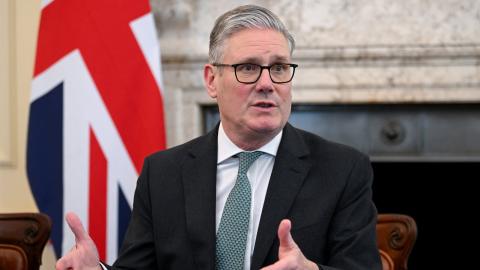
Yet one specific aspect of the transatlantic ties deserves more attention: the “Special Relationship” between the US and the UK, and the breakdown in personal relations between Trump and the British prime minister, Keir Starmer.
What leaders in Washington and London might not fully appreciate is how much of a stabilizing force the close relationship between the US and the UK represents to observers around the world.
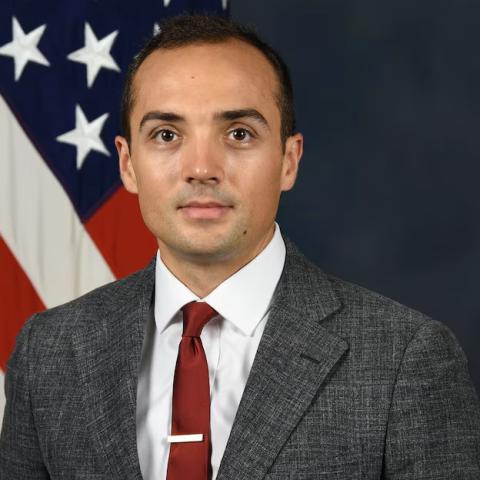
For example, last week I was traveling through the South Caucasus and on a number of occasions senior officials asked me directly about the state of the US-UK relationship. As an American who has worked at senior levels in the British government, perhaps they believed I was well placed to answer. Nevertheless, the fact that they were asking the question at all underscores just how closely the Special Relationship is watched, internationally, and how much confidence others place in its strength.
Many people become disappointed with the Special Relationship because they misunderstand what it truly is. It is not defined by how personally close or politically aligned the leaders in Washington and London happen to be at any given moment. It runs much deeper that that and is far more resilient than any temporary alignment between two individuals.
In 1946, Winston Churchill delivered his famous speech in Fulton, Missouri, which is widely referred to as the “Iron Curtain” speech and often viewed as the geopolitical starting point of the Cold War. Less frequently noted is the fact that Churchill also introduced the term “Special Relationship” in that same address. Had he not warned of the descent of the Iron Curtain, the speech might well be remembered primarily for defining the enduring partnership between London and Washington.
Churchill described this relationship in practical, institutional terms: close cooperation between military advisers, common assessments of threats, alignment in weapons systems and doctrine, and the exchange of officers and cadets. He also emphasized the joint use of naval and air bases and a shared responsibility for global security.
This is what makes the US-UK relationship truly special. Measured against this definition, it remains fundamentally strong despite political tensions at the highest levels.
Recent events illustrate this clearly. Despite Trump’s criticism of what he perceived as a lack of British willingness to participate directly in airstrikes against Iran, the UK nevertheless provided critical support. British bases, both in the UK itself and overseas territories in the Indian Ocean, were used to launch operations at a time when some NATO allies would not even permit the use of their airspace.
Britain also deployed fighter aircraft from bases in Cyprus and Qatar to the skies over Bahrain, Jordan, Qatar and the UAE to help provide air defense against Iranian drone attacks. These contributions helped alleviate pressure on the US and regional air-defense systems.
In addition, for more than two decades the UK has played a leading role in Gulf maritime security alongside the US and other partners. The deputy commander of the Combined Maritime Forces in Bahrain, for example, is a British admiral.
Starmer also responded to Trump’s calls for help to reopen the Strait of Hormuz by supporting a platform through which interested countries could coordinate their efforts. The British foreign secretary convened a meeting of more than 40 countries, along with international institutions such as the International Maritime Organization, to address the issue.
Meanwhile, the UK’s Permanent Joint Headquarters, the British military center from which overseas operations are planned and controlled, hosted a multinational conference to explore potential military options for restoring freedom of navigation.
Given these efforts, it is unfair to suggest that the UK has been absent. Could London have done more? Certainly. Have successive rounds of defense cuts by governments of both major political parties constrained Britain’s military capabilities? Yes. But even if Trump was dissatisfied with the speed or enthusiasm of the British response, it is wrong to suggest that the UK was doing nothing.
Now, with a fragile ceasefire in place, Washington has an opportunity to take a more deliberate view of the broader geopolitical situation in the Middle East. This moment also presents the UK with a chance to distinguish itself from other European allies by contributing meaningfully to a durable peace.
There is also an opportunity to reset the US-UK relationship at the political level. Later this month, King Charles is expected to travel to the US for a state visit. Trump is well known for his admiration of the British monarchy, and there might be no better figure than King Charles to help rebuild the personal bridge across the Atlantic.
Restoring momentum to the Special Relationship is not only in the interest of both of the countries themselves, it is vital for NATO and for global stability more broadly. Around the world, allies and partners take reassurance from the strength of this partnership. When it appears strained, uncertainty grows. When it is functioning well, it serves as an anchor of stability in an increasingly volatile international system.
The sooner Washington and London can realign at the political level, the better it will be — not only for themselves but for the alliance they lead and for the broader international system that depends on their cooperation.