

















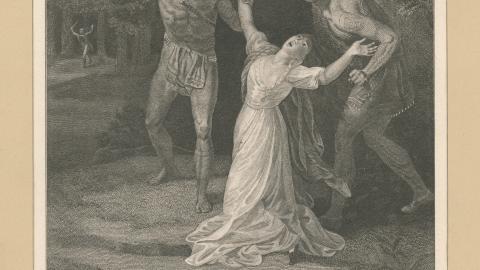
The year 1777 is sometimes called the Year of the Hangman because the last three digits resemble a gallows. The third year of the Revolutionary War saw plenty of violent deaths, military and civilian, on and off the battlefield. Among them was that of a sympathetic young woman who died not by hanging but by scalping. Her gruesome murder at the hands of Native Americans who were working for the British became a cause célèbre, helping to unify Americans in the belief of the perfidy of their colonial masters and the righteousness of their fight for independence.
Paul Staiti’s “The Killing of Jane McCrea” is a masterly, often gripping account of the horrific incident and its long aftermath. McCrea is barely known today, but for a century following her murder, Mr. Staiti notes, every American knew her name. It was invoked, until late in the 19th century, as proof that Native Americans were savages who couldn’t be integrated into the expanding nation and to justify policies that removed them from their ancestral lands.