











Past rounds of violence between the United States and Iran have ended with predictable choreography. After Qasem Soleimani was killed in 2020 in retaliation for the death of an American in Iraq, Iran retaliated by lobbing a volley of ballistic missiles at two American air bases in that country. No Americans were killed, the Trump administration elected not to respond, and the round was complete. It was the same story last summer after the strikes on the Iranian nuclear program. The Iranians all but submitted a permission slip before striking the largely deserted Al Udeid Air Base in Qatar, causing no casualties and minimal damage.
Not this time.
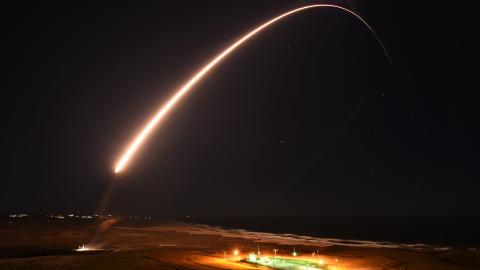
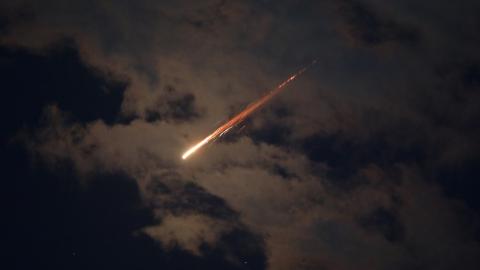
Yesterday’s U.S. and Israeli strikes killed Supreme Leader Ali Khamenei and other senior figures. Within hours, the regime launched a wave of retaliation across the region, relying largely on its stocks of ballistic missiles and drones.
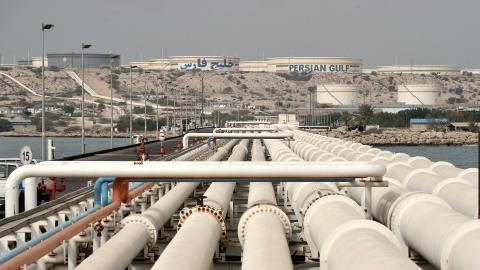
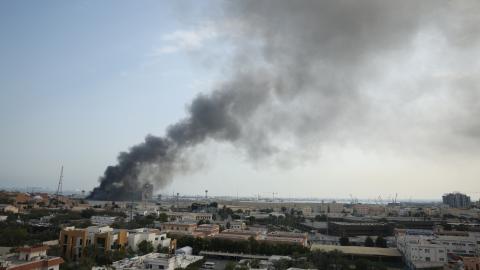
On Sunday morning, the Islamic Revolutionary Guard Corps claimed credit for strikes on 27 American military and diplomatic facilities, and independent reports indicated Iranian retaliatory strikes across Saudi Arabia, Jordan, Iraq, Kuwait, Bahrain, Qatar, and the United Arab Emirates (UAE). The UAE’s Defense Ministry claimed that over 100 missiles and 200 drones had been launched at that country alone. Dramatic videos show strikes on civilian targets across the Arab world, including in major cosmopolitan centers like Dubai. Israel was targeted throughout Saturday, and Iran was also reported to be warning shipping that the Strait of Hormuz is closed. Already on Sunday morning there were reports of new strikes targeting Israel and Gulf countries, including for the first time strikes in Oman.
This is neither symbolic nor token retaliation. These strikes are designed to kill. They are not the behavior of a regime in search of an off-ramp. They show that the Islamic Republic believes this time it is playing for all the marbles.
We haven’t necessarily seen peak intensity yet. While Iran’s missile and drone capabilities may be degraded in coming days, and while the U.S. Navy has surely anticipated an effort to close the Strait of Hormuz (best of luck to the IRGC Navy with that), Iran has another weapon at hand: terror. We should all pray that European airport security officials bring their A-games to work in the coming weeks, as airliners flying American routes are obvious quarries, amidst a wide range of even softer and more inviting targets. Iran could still dial things up.
What’s the regime’s strategy, whether or not it goes to such extremes? The goal is, of course, survival—a dramatic change of fortune since the fall of 2023, when Israel was on the ropes and Iran’s proxies had the initiative. Today, Iranian power is waning as Israel’s waxes, and just making it out of the other side of this round will be achievement enough.
The retaliation, while thus far not militarily meaningful, seems to take as its premise an American intolerance for casualties. If this war turns out to be longer and more costly than June’s strike on Iran’s nuclear program or January’s raid to capture Nicolás Maduro in Venezuela, so the reasoning seems to go, President Donald Trump or the American people or both will look for their own off-ramps.
This is a dangerous game for all involved—but most of all for the Islamic Republic. It is theoretically possible that this war could play out like the American intervention in Somalia, when following the 1993 Battle of Mogadishu (in which 19 Americans were killed) President Bill Clinton hastily ended the mission. The Iranians might also have on their minds Iraq and Afghanistan, where mounting casualties combined with unclear paths to victory led not only to U.S. withdrawal but widespread political and social discontent.
But those two wars played out over many years, with American casualties in the thousands—and Trump in his sixth year in power is a very different president to Clinton not even one year into his term in office. And if Americans have a horror of casualties in hard-to-win, protracted wars, they have a mirror-image tendency to react dramatically to the sudden deaths of Americans in other circumstances—even to overreact, in purely geopolitical terms, as arguably happened after 9/11. Trump himself seems to embody this trend: having remained inactive in the face of Iranian misbehavior targeting our Arab partners through much of 2019, he only ordered the dramatic Soleimani strike after Iranian proxies killed an American.
What remains of the regime’s leadership could stop the madness and sue for peace, pledging to the Americans that they will finally consider nuclear terms acceptable to Washington. But the revolutionary ferocity of the regime rested on a broader base than just one man—indeed, the retaliatory wave only occurred after Saturday’s decapitation strikes.
Tehran’s weak strategic hand has to be balanced with the sheer ambition of bringing about regime change after nearly 50 years through airpower alone. The true potency of Western precision bombing and exquisite intelligence will be tested if this fight continues—as will the resiliency of the Iranian people, murdered by the thousands by the regime only last month, whose presence in the streets again may be the only force that can settle this question once and for all.