Caption
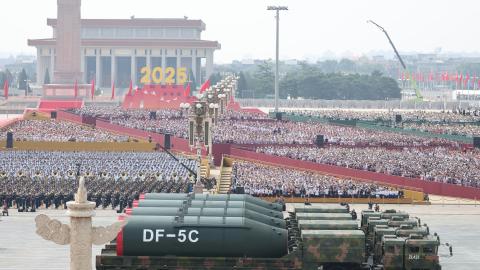
An Air Force Global Strike Command unarmed Minuteman III ICBM launches during an operation test on February 23, 2021, at Vandenberg Air Force Base in California. (US Space Force)







The American industrial base once underwrote the nation's victory. Builders and workers rallied to win World War II. For most of the twentieth century, great American companies from General Mills to Chrysler had defense businesses that sent mankind into space and won the Cold War.
But the forges fell silent, and the furnaces went dark. China took the lead in manufacturing. And the relationship between America’s innovators and its warfighters deteriorated—until now.
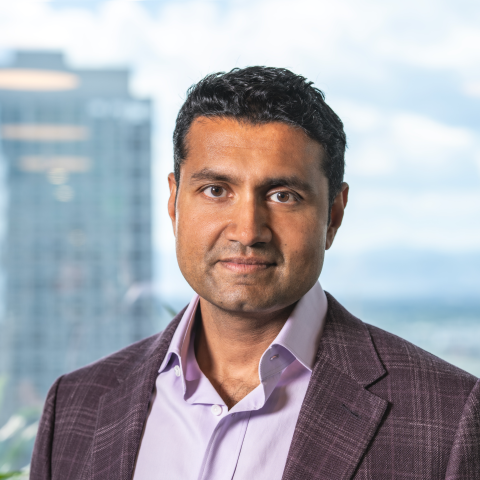
Hudson Trustee and Palantir Chief Technology Officer Shyam Sankar’s new book, Mobilize, spotlights this undeclared state of emergency and the bold reformers in government and industry who are taking action to respond. With Walter Russell Mead, Sankar will discuss his strategy to resurrect the American industrial base, win the twenty-first-century defense technology race, and prevent World War III.
3.11 Mobilize: How to Reboot the American Industrial Base and Stop World War III Transcript
John Walters:
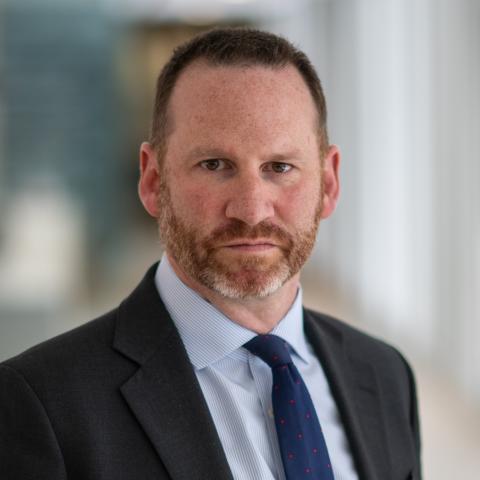
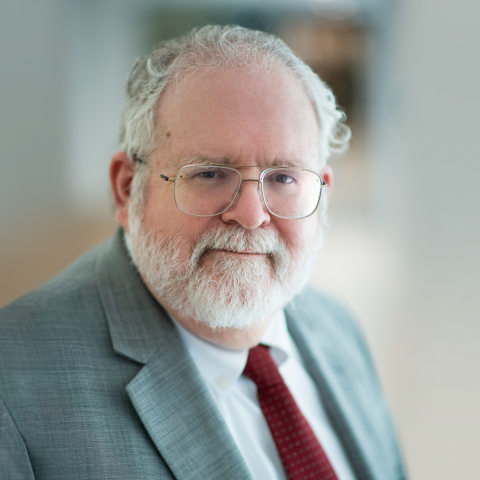
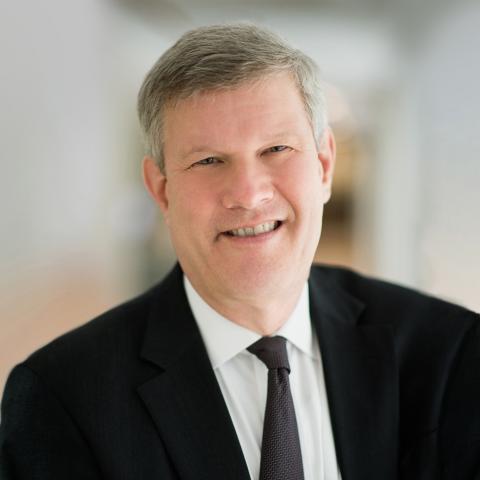
Welcome to Hudson Institute. I’m John Walters, president and CEO. I could not be happier to welcome Shyam Sankar, our trustee and friend here, to talk about his new book with Walter Russell Mead. My remarks will be brief because they are the main event and it’s an important event for everybody to hear.
As some of you know, Mr. Sankar was lucky employee 13 at Palantir and moved it from a startup to one of the most powerful software and security companies in the world. This is not something that happens accidentally. It takes talent and not just talent, but the ability and savvy to work with people and to make things that are ideas into things that exist and have effect in the world.
He appears not only in business and in security realms, but he’s published in The Wall Street Journal, Washington Post, many other places. And I hope we’ll hear more of him because he has important things to say as this book demonstrates. He briefs officials in our government, the legislative executive. And because he didn’t have enough to do, he joined the United States Army recently to help change the United States from the inside on security agencies. We’re all impressed and honored to have you here with us.
We’re also honored at Hudson because he joined our board of trustees in 2024. He’s helped make us more organized, more focused. He’s not yet made us lethal, but we can all have dreams. And we’re here today to discuss his book, which we all recommend that you buy, listen to, consume in one way or another, Mobilize: How to Reboot the American Industrial Base and Stop World War III. If that’s not something that shows that it’s timely, then I don’t know what is.
Shyam will be joined in this conversation by Walter Russell Mead, who’s a Ravenel B. Curry Distinguished Fellow here. He’s also, as many of you know, The Wall Street Journal Global View columnist. He’s a teacher and a thinker. And in this time of great global turmoil, he helps all of us figure out what’s actually happening and what we should do about it. Without further ado, I’m going to turn it over and please welcome Mr. Sankar and Walter Russell Mead.
Walter Russell Mead:
Thanks, John. It’s great to be here back at Hudson. Now that the snowcrete has melted in Washington, we Floridians feel able to venture into the dangerous north again. And so far, I have to say it’s gone okay, but I’m still a little nervous. Never can quite tell. And it’s great to be here with Shyam, or actually Colonel Shyam. By the way, I am Colonel Mead, if anybody is interested. I am actually a Kentucky Colonel. I feel that we are not getting the recognition that we deserve. Next Kentucky Derby, I’ll see you there.
But I think it’s actually at a time when the American corporate elite and intellectual elite has moved away from the armed services or moved away even from a sense of patriotism in some cases, the thing that patriotism equals nationalism equals Christian nationalism equals white nationalism and it’s bad, bad, bad. You’re moving the other way. Why?
Shyam Sankar:
A lot of it has to do with, I think, my own family story and journey. It’s like this country has given us so much. And my father, when I was very young, we fled violence in Nigeria. And dad really raised me with this ever present sense of the counterfactual. No matter how bad things are, this is a man who had a tough life, not everything worked out for him, but for the grace of this nation, you’d be dead in a ditch in Lagos. And I think really being rooted in understanding . . . It was not possible to take for granted all the things that this country actually offers in bounty.
And then as a consequence of that gratitude, like young children of my own, it’s not going to sustain itself. To pass it down to the next generation requires us to invest in it, to be proud of it, to hold it up as something we all cherish. So I can’t think of a more important life mission than committing myself to that.
Walter Russell Mead:
I spoke to a group of Palantir fellows. These are young people who are delaying or in some cases entirely avoiding college in order to study. And it begins, really, with a crash course in humanities, interestingly. And I asked them at the introduction to go around the room and tell me who they were and where they were from and why they were here.
What was astonishing, and these kids were very ethnically diverse. They were very geographically diverse, but kid after kid says, “I’m here because I want to defend the West.” A concept that in so much of our society is an almost unspeakable concept. How did that become so central to Palantir’s thinking?
Shyam Sankar:
I mean, I think it’s kind of congenital. We started the business. We work in 50 different industries, more than half the business is commercial. The commercial is growing faster than the government. But if you go back to the genesis of the business, it was really just a bunch of people who wanted to work on very hard problems in national security. In Silicon Valley in 2004, you could not think of a more contrarian, crazy idea than that.
And I think in the future side of that is it acts as a very hard filter, the kind of selection bias you get of people who are deeply committed in it. And I think, thank God we did that because it hasn’t been an easy 20 years to get to where we are. It is the belief, almost the pathological commitment to that vision and mission that allowed us to deliver on that vision.
Walter Russell Mead:
Yeah. I mean, if we go back to the 1990s and early 2000s, there was a sort of post-Cold War sense that a great corporation could no longer really be a national corporation. So you had companies saying, “We’re not an American company. We’re a company of the world.” And there was a tremendous kind of cosmopolitan ethos that people had and the tech sector was probably the most cosmopolitan post-national, post-historical, a search engine has no home, so to speak. But you now look at the situation and tech competition is now almost the central focus of international geopolitical competition. Is that changing the whole industry? Is that changing attitudes more broadly?
Shyam Sankar:
Well, the precept to begin with is it was a delusion. There were obviously always countries and these things all mattered and you could exist in this kind of delusionary state for a period of time. And now that all has to be marked to market. And I’d say different actors are in different stages of realizing whether it’s a delusion or not. But I think world events, to some degree, until very recent issues in tech, have kind of crystallized the reality of the threat to freedom, great power competition, that yes, one day someone can just wake up and roll tanks across a border and fundamentally change the lives of your families, your coworkers. Things that you take for granted, you really can’t. It drives home in a visceral way that no amount of talking can say that freedom isn’t actually free and that these things have to be maintained and that they’re worthy of investing in.
Walter Russell Mead:
Okay. You mentioned world events, and that reminds me, there’s one thing I really want to make sure we ask you about. You have a pretty good view, maybe better than some of us in the cheap seats, about what’s actually going on in the Middle East right now and what the situation is. You want to share with us your assessment of why are we there, how are things working, how it may end?
Shyam Sankar:
Well, I’ll share the parts I can. So, the part that I think is very clear is that Iran is really a mark-to-market moment of many of the things I wrote about in the book. Deterrence has failed. And you could say we’re maybe starting to reestablish it, but you go back to the annexation of Crimea in 2014, the militarization of the Spratly Islands in ‘15, JCPOA and the breakout capability of Iran with the bomb in ‘17, a pogrom in Israel, thing after thing, the Houthis and the Red Sea, we’re not able to scare our adversaries from impacting our life and the freedom and prosperity of the world, and certainly the freedom and prosperity of America.
This has been a frog boil. And for some of our adversaries like China, they have strategically invested in undermining American power since the Gulf War I, and just methodically doing this. And others have taken advantage of specific opportunities and moments that they maybe misread or read correctly that betray a sense of retreating from the world. And then I think Iran really shows, if you look at Midnight Hammer, you look at Maduro, it’s hard to think about things that have happened that have done more to restore deterrence than those events.
I like to characterize the American character; there’s this sense in which we seem not to react. We turn the other cheek, we turn the other cheek, we turn the other cheek, but there is a moment that comes where we stop. And then to borrow a favorite expression I have is, and in that moment, you really risk the American OODA Loop, which is not observe, orient, decide, act. It’s observe, overreact, destroy, apologize.
Walter Russell Mead:
Yeah.
Shyam Sankar:
And I think this is almost so irrational, but so part of the American character that our adversaries can’t contemplate it. They continue to model us as these rational actors who keep turning the other cheek and they don’t see the discontinuity that’s coming. Now, I think this is one of our great advantages actually, that it’s just very hard to model what we’re going to do because frankly, we don’t know what we’re going to do when we get there.
But a big part of this, I think that the biggest lie of globalization that ought to be marked to market and is kind of the undercurrent of the entire book, is that this facile idea that we’ll do the innovation, they’ll do the production, whoever the they is, that’s wrong. It’s wrong because actually to borrow a phrase from Arthur Herman, innovation is the consequence of production. If you don’t make the thing, you can’t innovate on how you’re going to make that thing.
So letting WuXi grow up and start being a cheap contract research organization in the pharmaceutical industry has now led to a world where 50 percent of all clinical trials are happening in China. This was the inevitable and obvious conclusion. Our experiences from World War II, which we document in the book, show us that it’s amazing that the Saginaw Steering Gear Company who’s never made a weapon in their life can figure out how to make a weapon in a hundredth the time that the US Army could before then.
And when you then reflect on that in a broader sense, the entire American economy was structured very, very differently. We had what I like to call as dual purpose companies. It’s not about the dual use product. I think too much has been said about that and kind of misunderstands what’s happening here. But a dual purpose company is one that understands that yes, maybe their main business is prosperity, but there’s also a part of this that they have to be committed to freedom.
And we see this, Chrysler didn’t just build minivans, they built the Minuteman, they built missiles. Ford used to build satellites until 1990. General Mills, the cereal company built torpedoes and why? Why would that be rational? I like the General Mills example because it’s kind of a crazy one, which by the way, if you go to their corporate website, you won’t find that in the history, but I think it’s kind of interesting. But they built torpedoes because they had a mechanics division. The mechanics division’s job was to build machinery that processed grain. Everything they learned building that class of machinery allowed them to build machine tools to build weapons of war that drove deterrence.
This is profoundly important because it drives the R&D cycle. If the government has to do all of the R&D entirely on its own, it’s unaffordable, it’s inefficient, and structurally, the government is always going to lead to a form of centralized planning. As I like to quip, everyone’s given up on communism, including the Chinese and the Russians, except for Cuba and the DoD. And that’s a consequence. It’s a consequence of being a monopsony. It’s not because they want to be communists. It’s because as a monopsony, you don’t have any market forces. You don’t have someone in the brutal commercial sector, you wake up every day with a competitor trying to kill you. And that is the stimulus that allows you to innovate or die. But that isn’t really there absent conflict in the Department of War. And obviously we don’t want to find out these things in conflict. We want to find out them well before then.
And we actually had a very robust system in World War II and in the early Cold War that solved for these problems really well. We built 154 different airframes in World War II. I’m pretty sure only 10 of them were determinative to success, but in those statistics belies the fact that no one knew which 10 they were going to be, otherwise we would have only built 10. There is a process to the production, the experimentation that led to the innovation.
And a lot of this comes down to the primacy of people. Maybe the second great lie that we’ve been able to imbibe since the end of the Cold War is that there’s a process that will save us. What we really need is acquisition reform, we need this, there’s just a process to do it. But if you really look at what worked, it was the primacy of great people, which I think speaks profoundly to the American character. We understand that founders matter. We call them the Founding Fathers for a reason. Europe has created zero companies in the last 50 years from scratch worth more than 100 billion euro. We’ve created all of our trillion-dollar companies from scratch in the last 50 years. Why?
Our tolerance for, and maybe even proclivity to enjoying the heretical hero, the heretic who does something crazy, who against the odds, succeeds. And the heroism is an ex post thing that what they did worked. But if you look at the history of all defense innovation, I’m pretty sure literally all of it comes down to some heretic who bucked the system, who maybe he didn’t even get credit until he died or she died and delivered the outcome.
And I think telling those stories, which we spread throughout the book is really important because I wanted to motivate the heretics who are latent today. They’re latent in the department. They absolutely are there. Our military is the best in the world. The uniformed service members are better than we deserve as a nation. Part of this is about the employment of the talent, the emplacement of the talent, and motivating them to go take these risks. It isn’t a career. It’s okay if you’re a kamikaze because your kamikaze moves may be the only thing that lead us to win the war.
Walter Russell Mead:
You were saying earlier, and something I thought interesting, that you found the AI talent in the US military much greater than you expected, and you think it may have a bigger role, the talent of the uniform military. You want to talk about that?
Shyam Sankar:
Absolutely. I would even say as evidence there, we recently had a hackathon at a developer conference, a Palantir hackathon, and the winning team, you had all US private sector there, all these AI developers, the winning team was four uniformed service members from the Army. So what I think is very encouraging is that first, I think in many ways the military adoption of AI is ahead of the US commercial sector. And that’s saying something because the US commercial sector is not asleep at the wheel compared to Europe or something.
And I think a big part of that is that I think the nature of AI and its impact on our people, the American worker, is misunderstood. I like to think about this as we are listening to the wrong people about what AI’s impact’s going to be. We’re listening to the inventors of the technology. At first blush, that may seem very reasonable. But if you go back to the microscope, the personal computer, the power loom, the telescope, it was not the inventors that determined its impact on society. It was the people who wielded the technology. Galileo did not invent the telescope. He used the telescope to discover the planets, planetary motion.
And so while it’s very charismatic to listen to these people who are incredibly brilliant, they themselves, just like their creation, have a form of jagged intelligence. Just because they built the thing doesn’t mean they understand the implications of it.
Who should we be listening to? The front line. Listen to the fires officer that’s transforming the work with AI. Listen to the ICU nurse whose entire shift in sepsis management has changed because of this. Listen to them, not only because you’ll hear how excited they are about its transformational impact in terms of their vocation, but also how excited they are about a future in America for their children that has adopted AI.
And these are the voices, of course, that don’t get invited to write op-eds or go to a talk show or join a media thing. But I think this is profoundly dangerous because AI is David’s slingshot against Goliath. Okay, I just told you about all these lies we’ve imbibed, the myth of globalization, the loss of innovation to seeding productivity. But AI, I told you how we don’t even know what we’re going to do. Well, the Chinese are the best at long-range planning. They thought they had the best plan since Gulf War I, and maybe even before, some say all the way to Mao, how to undermine American power. You know what wasn’t on their plan? AI. It’s not on their plan. It wasn’t on our plan. And this sort of reacting to reality is an American strength.
And so the promise of AI is that we realize that it is the way that we give the American workers superpowers. How do we make the American worker 50 times more productive than any other worker anywhere in the world? And that is the basis of underwriting the re-industrialization of our country. And that AI is the antidote to the profoundly negative managerial revolution of the 20th century, where we sucked power away from high agency leaders and from the people who actually do the work to a kind of amorphous middle management layer.
AI is actually pushing agency back in both directions. It is actually the fires officer, it is actually the person on the factory floor who’s building the AI apps. And I think this is profoundly empowering. I think one of the reasons we’re seeing this revolution in the military is that you have profound subject matter experts who actually understand what they’re doing, no longer need to go convince a bureaucratic middle management that their ideas for the future are correct. Instead, in two weeks, they go off and build it. And then they’re arguing about an empirical thing, which they’re going to win that argument because it is delivering results in reality.
And so, it’s massively empowering that way. And I think this advantages people with specific knowledge over general knowledge. And that part of the fellows program we have is recognizing, okay, what will education have to look like in a world that looks like this? Probably the one thing you’re going to learn a lot of stuff on the job in the future. The one thing you will not learn is the humanities, a grounding in the Western canon. As I think Leo Strauss said, some say Einstein too had a version of this: “The same sort of thinking that led you to create the bomb cannot be the same sort of thinking that tells you how to govern its use.”
Walter Russell Mead:
Yeah. No, I think that your optimism about what AI can do, I find really striking. And certainly, as you were talking, I was thinking about how historically, one of the way edges of the US military over other militaries really in every conflict since the revolution has been this sense that in the US Army, NCOs and unit commanders had more autonomy and authority and used that in very creative ways. It sounds like you’re saying this is strengthening our superpower.
Shyam Sankar:
Yes, it’s exactly that.
Walter Russell Mead:
Yeah. And it’s also doing that same thing on the factory floor in an industry, but how many jobs will there actually be if we re-industrialize the country with AI?
Shyam Sankar:
I think a lot. So, I’ll give you one. There’s all of these narrative violations. I think it’s overwrought in the media. People are like, “Look at AI leading to these job losses.” If you actually just even line up the timing, it’s like the original ChatGPT didn’t result in any job losses, but people then want to immediately assign the layoffs at some company. Correlation is not causation would be the short form of answering that question.
On the other side, in the positive, we’ve been working with a parts manufacturer that was able to use AI to automate their planning process. So, when they were doing planning, no production was happening because we got planning down from weeks to really minutes, they found that they had so many more parts to produce and idle capacity to produce it that they hired a third shift. And so here you have a very concrete example of how AI is leading to more blue-collar jobs.
And I don’t mean the facile . . . Look, I’m very happy that we have blue collar jobs, building data centers and all that sort of stuff. But there’s an ephemeralness to that, you build the data center and whatever. I’m talking about the actual real economy that will always exist where AI is deleting dwell time, it’s deleting the dead weight loss that we just kind of assume can’t be moved around today that enables us to employ humans in more productive ways.
Walter Russell Mead:
And as you acknowledge in the book, our de-industrialization has given China all of these advantages in terms of innovation capacity based on production. And your idea is that somehow AI is the special sauce that’s going to allow the re-shoring of and the recreation of the base.
Shyam Sankar:
Yeah. So, if you can give the American workers superpowers, if you can make them 50 times more productive, it’s a directional ambition. What I’m saying is like, no one’s trying to do this to make us 10 percent more productive. I’m talking about orders of magnitude of productivity. Now you bend the cost curve. The cost of making things in the US is potentially cheaper. It also forces you to think about new ways of making things. You’re probably going to use autonomous factories from Hadrian, not legacy ways of doing these things.
And this sort of challenge stimulus is actually going to be a bolus of innovation as we drive the re-industrialization. And there’s a lot of evidence to suggest this is likely possible. Look at SpaceX. It’s a vertically integrated manufacturer; R&D is co-located with production. It’s not true that we’re not good at making things in this country. Actually, some of the most profound things that are happening right now at scale are happening in this country. We’re making them differently. And those lessons we need to spread out as we re-industrialize.
Walter Russell Mead:
Okay. Thinking of applying this cost curve, you’re talking about the increased productivity to military technology. I know we’re all reading in the war in the Gulf that we’re using these $2 million missiles to shoot down $10,000 drones or whatever, and pretty soon we’re going to run out and be unable to buy. You don’t actually think that’s the situation. You want to explain why?
Shyam Sankar:
Yeah. Well, a lot of the munitions we have are pretty old, actually. There’s an opportunity here. Yes, we’re expending munitions. We’re also going to have to restock that. So, I’ve always felt the deterrent is not the stockpile. This is a lesson we should have learned instantly from Ukraine. How do you go through 10 years of production in 10 weeks and not think clearly the stockpile is not the question. The question is your ability to generate and regenerate the stockpile, right? It’s production.
We have an opportunity now to really ramp production, and that means that we can reimagine these munitions. You don’t have to make them the same old way. The thing that used to cost $2 million, I’m not even talking about new classes of munition, how do you make the same munition at a substantially lower cost basis? How do you reimagine some of that design?
By the way, this is completely unprecedented. This is what we did in World War II with anti-aircraft weapons, with machine guns. We went to American industry, and we said, “This is the army spec of the thing.” All of them took that and iterated on it and produced between 10X and 100X improvement in productivity and cost.
Without the stimulus though, it’s not going to happen. Without the precipice, without realizing, hey, we’re going to have to do a lot of magazine regeneration here. We’re going to have to think about these things differently without being forced to say the historical constraints, the bureaucracy we accepted, the things that we thought were rules that are not actually the laws of physics, they’re not real. The primacy of winning comes to the fore when you’re looking down the barrel of a gun. And the only thing you are literally constrained by is physics.
Walter Russell Mead:
And so, these Tomahawks, I guess they’re what? They’re 1980s technology. And so the concept is the replacement doesn’t need to remodel the 1980s tech in the same way.
Shyam Sankar:
Yeah. To just use that as an example, first of all, a Tomahawk’s really a beautiful weapon. There’s kind of a joke, “Hey, I’ve got this one-way attack drone. It flies 1,100 miles. It operates GPS-denied. It’s stealth.”
“Oh, when’s it coming?”
“‘84.”
“2084?”
“No, no, 1984. It’s the Tomahawk.”
The problem, of course, is it’s 1.4 to $2 million a pop. And so, how do you get the price performance to change really? Well, you need volume, you need to capitalize the supply chain, and you need new ways of doing production. And unless you’re going to go from 600 to 2,000 or whatever the number will ultimately be, you don’t actually have the stimulus you need to drive the innovation against it. And the stimulus you need to reconsider the constraints that have kind of congealed since 1984 in the production process.
Walter Russell Mead:
Right. Which again gets you right into your acquisition process concepts. And you say you’re not a guy who thinks there’s a process fixed to everything, but you do seem to think there’s a process problem to a lot of things.
Shyam Sankar:
Yeah. I mean, I think the process ends up being a cargo cult. Everyone likes to make fun of David Packard’s 5000 series DoD acquisition regulations. This is like 2,000 pages of acquisition regulations. Well, when David Packard wrote it, co-founder of HP, while we’re on the theme of founders, it was seven pages. So did David Packard screw us with all this acquisition regulation, or did the entropy of the bureaucracy over 60, 70 years actually just build something that in no way, shape, or form resembles his original intent?
The process really helps you. I think process in service of a principle, process in service of the artist, the founder figure, that gives you a lot of scale. Process in the absence of it, actually, it’s a pathology. It leads you to manage decline.
Walter Russell Mead:
Right. And you would say that in a number of the primes, the managed decline has gone fairly far.
Shyam Sankar:
I think so. I mean, and I put the blame for that squarely—
Walter Russell Mead:
Primes are prime contractors for—
Shyam Sankar:
. . . squarely at the feet of the government. It’s like in a monopsony, as the sole buyer, you get what you pay for. You get what you’re incentivizing. What are you asking of them? What are they supposed to do? If they tried to be heretics all the time, they would’ve gone out of business because they would not have survived that. And so, I think having a Department of War, which we do right now, that realizes that and has blown up JCIDs. I mean, Hudson’s done a lot of great thought leadership there that has been implemented into policy, slashing the bureaucracy, empowering people in the PAEs. There’s opportunity here. None of this is done, none of this is fully realized, but it sets the conditions.
And what I would say is we should expect more variance, not less. A lot of this process and bureaucracy has been built up to try to manage against catastrophically bad outcomes. But I think even in the best case, the process guarantees mediocrity, might guarantee something less than mediocrity. But you can’t get rid of one end of the distribution of outcomes, which is all the bad outcomes, without also getting rid of the other end of the distribution, which is all the exceptional outcomes.
And whether you look at the Minuteman or the Higgins Boat or even the tank, which was Churchill’s heresy against the British army. The Royal Navy invented the tank. Can you think of something more crazy than that, because the British army didn’t think they would need anything other than horses? And so, story after story. The Sidewinder was like a rogue project that humiliated the Air Force’s Falcon missile. It’s like, we know this is what it looks like. And I think we’re finally getting postured to empower those heretics to go be heroes again.
Walter Russell Mead:
We’ve got a lot of young people here watching this. We also have people remotely viewing. So how does a young person listening to this, who’s inspired, say, “Okay, how do I become a heretic? How do I escape the trap of conventional thinking?” What would you suggest?
Shyam Sankar:
Well, I’ll answer it slightly indirectly to start, then I’ll get right to it. But the first thing is like, maybe a version of this question is, in a world with AI, with all these changes that are happening, what do I value my children learning? What do I value my children prioritizing or valuing? And that would be agency. It’s not a specific skill. It’s not, can you code? It’s actually, how do I cultivate agency in you? A belief that you can do these things, a belief that you can change the world. I think that the heretics all have this in spades.
Think about how crazy it is that Hyman Rickover, who built the Nuclear Navy, one of my favorite heretics, Oppenheimer told him, “This is not going to work. Putting a nuclear reactor in a submarine is not going to work.” Think about the chutzpah. The freaking father of the bomb, one of our greatest physicists in the nation is telling you, “Who are you?” some captain in the Navy at this point, that your dream is a failure. And he just kept going. And that was probably the first of a thousand humiliations that he had to go through. And so this is a man with a tremendous amount of agency.
The other thing I’d say, so if you really want to do this, I mean, epistemic humility, which I think is a good topic in the present moment, my advice to young people would be to recognize that all the value you’re going to create in the world is going to come from your superpower. The journey you’re on as a young person is figure out what is that? That’s going to be hard to figure out.
It’s going to be hard to figure out because actually, there are going to be a set of things you actually enjoy doing. Those things you probably enjoy because there’s some effort in figuring it out and you get a little dopamine hit when you solve the problem. But actually, the dopamine hit belies the fact that it’s probably not your superpower; it actually required effort. Your superpower is going to be something that’s more lizard brain. It’s just instinctively obvious to you, and you’re going to discover it comparatively. You’re going to look around to other people who are as talented or more talented than you, you’re going to be like, “Oh, they struggle at this.” And that superpower is really where you have to focus.
But there’s a flip side to the superpower, which is your kryptonite. And I think it’s actually the right way to educate young people, which is work on your weaknesses because it’s too early to call it, premature. But what was Superman’s strategy for dealing with kryptonite? Nothing except for avoiding it. And so having the humility to say, “There are some things I’m just so bad at I shouldn’t touch. I need to find partners. I need to work with other people who have these skills.” This is why I like the metaphor of X-Men more than Superman. Superman, it seems like the whole thing is just him. The X-Men were all highly imperfect humans in their own sort of way, and the thing worked in aggregate. And that would be my advice to them. A little off-topic, but hey, since you asked.
Walter Russell Mead:
No, I think that your book is really about how a nation of heretics can dig itself out of the hole.
Shyam Sankar:
Yeah.
Walter Russell Mead:
And so, trying to help young people figure out how do I join the digging out team rather than the digging in team is very central. You say deterrence has failed. You talk about stopping World War III. I think that’s worth getting into a bit as a concept.
Shyam Sankar:
Yeah. Hopefully, for this audience, it doesn’t need to be said, but of course, the entire objective of the Department of War is to deter conflict. It’s to be so strong and to create so much uncertainty or certain loss for the enemy, the adversary, that they do not even contemplate doing this because it just is an obvious loser. And you can think about the dimensions in which everything I cited there shows you that there’s not enough fear.
One clear element of this is our ability to produce things. If you thought about a China fight, people estimate we maybe have eight days of weapons on hand. Well, what day are we in the Iran conflict? You need to have 800 days of weapons on hand. Not only do you need to have 800 days of weapons on hand, you need to have the ability to regenerate those 800 days of weapons inside an envelope of execution that means you can sustain deterrence.
And I think we just got a lot of the math wrong. We kind of became bean counters. We said, “Well, we’re not using these weapons. Maybe we shouldn’t be producing them. How do we just sustain everything at the minimum rate of production?” And all of this screws over the concept that innovation is a consequence of productivity.
The analogy, I didn’t share this earlier, but I think it’s worth sharing, particularly for a tech crowd, is like the way I communicate this innovation is the consequence of productivity to folks in Silicon Valley is what do you think motivated the Google researchers in 2017 to write the Attention Is All You Need paper that led to the transformer revolution and the current AI? It was a desire to get a 3 percent incremental improvement in the performance of Google Translate. You cannot think of a more banal impetus leading to a more profound change. But I think actually a lot of profound changes start with a banal impetus.
Walter Russell Mead:
Okay. We see this backlash against tech, against AI, and you find it on the left, you find it on the right, you find it among cultural conservatives, you find it among liberals. You think this is profoundly mistaken and you argue very strongly that it is. Why are these people wrong and why actually do we need AI? Why will AI help the average person?
Shyam Sankar:
Well, I think the American people are being lied to about AI. Part of it, it starts with who are they listening to? Who’s out there and saying this stuff? It’s the inventors, not the wielders. The inventors, first of all, do have kind of a religious, and that’s the right word, conviction that they are building a God. That’s what AGI is to them. And so, as Pascal would say, “The God shaped hole in their heart is being filled with this.” And that leads to a series of conclusions that I think are faith-based. There’s actually no empirical basis to say these things. But if you have this as a God, then you believe it’ll lead to 50 percent white collar job loss inside of a year. But these people seem so smart, so people are listening.
On the other end, then you have, what is the empirical experience for most Americans with AI? It’s mostly AI slop, or some version of gambling. So, on one hand, these people are saying it’s going to end humanity or certainly impoverish us. And on the other end, you can’t see anything but vice in terms of its application in your consumer life. So, this is super depressing. And then you start wondering, isn’t this the precondition for something like the French Revolution? Why would rational humans just say, “I’m just going to sit here and let this happen.” And I think the reaction is they’re not. They’re not going to sit here and let this happen.
And what I want to make the case is the case that I see every day out on the front lines from the factory floor to the ICU beds is like, actually this is having a profound impact on the productivity of people. It is improving their jobs and it’s creating benefit for the American people.
And I think we then need a normative view on top of that, which is that the American worker deserves a productivity dividend through the application of AI. Roughly in the ‘70s, there was a profound break between wage growth and GDP growth. Wage growth stagnated. AI is an opportunity to reestablish that linkage that as productivity is realized, we need to make sure as a society that that productivity benefits the worker. It must result in wage growth.
It would be a travesty to lose this almost deus ex machina-like advantage that is an American phenomenon. People look and they see the Chinese have these models. Those models were essentially stolen through distillation. It is something that came out of a 50-mile radius of the Bay Area that is an American phenomenon and that we should not turn our back on.
Walter Russell Mead:
A lot of what you’re saying is that America has a comparative advantage, not just in the development, but in the implementation, use, and further development of AI over other countries. What’s the source of that advantage, and how important is it?
Shyam Sankar:
The advantage is determinative, and I think there are really two pieces of it as it relates to AI. First is just a profound cultural current of America. The popular narrative is something like the Silicon Valley culture comes from the gold rush, this sort of frontier spirit of California. I don’t think that’s right, actually. The modern Silicon Valley culture that’s led to all this creation, it came from Iowa. It came from Bob Noyce, the inventor of the transistor, the co-founder of Intel.
Noyce is literally the guy who came up with the term open-door policy. And it’s rooted in Midwestern values around playing positive-sum games, open communication, transparency, and the ability to sustain those positive-sum games over long periods of time. Noyce was the first employer in Silicon Valley who gave even his secretary equity. There’s a lot in that sort of ideal, that sort of value system.
Now, you could say, look, isn’t it kind of weird that there are zero Indian or Chinese enterprise software companies that are competitive on the world stage? Those cultures do software, but they don’t do software companies. And so that is not a technical skill. It is a cultural capability that I think is uniquely resident in America.
The second part of AI that is probably more unique to AI and our ability to seize it is ambition. I think the military is the ultimate expression of this, but the companies that are succeeding in adopting AI, they don’t have lame goals like, “Hey, I want to be more efficient.” I’ve never had a customer come to me and say, “I want to fire these people.” They say, “I want to dominate my industry. I want to rewrite the rules of this segment.” There’s ambition.
I think that sort of ambition is uniquely American. It is manifest destiny through another means altogether, and then the capitalist context. And I think if you go to a lot of other countries, the ambition is much more incremental; it’s lacking. It’s like, “Hey, I just want to do something safe.” And I think that’s explaining a lot of the growth and opportunity that we have right now and why I’m so optimistic that we will succeed in re-industrialization.
Walter Russell Mead:
When you look at Chinese tech companies and Chinese tech capabilities, where do you see gains that we really need to worry about, gains where they might be challenging this edge that we have? And where do you see an enduring source of strength that maybe makes you optimistic that we’ll win?
Shyam Sankar:
Yeah, well, don’t underestimate the Chinese. One of the things that we talk about in the book is, I don’t like the term, near peer. It completely lets us off the hook. It’s kind of a shibboleth. We get to pretend like, “Oh, we’re still in the lead.” Yes, you’ve already heard my opinion that we are the best military in the world. I think that is a true statement. But I think we’d be better off thinking of the Chinese as a peer adversary. And they are very good at fast following, but that doesn’t mean they’re not good at innovation because of everything I just talked about, which is that innovation is a consequence of productivity.
So now, without having to spend the time and capital to get to where we are, they’re able to get there very quickly through other means; we’ll leave that unsaid. And then that creates more dilemmas for us. It reduces the gap. It increases how much we have to spend in R&D. It increases the calories we have to spend in trying to stay ahead. Necessity is the mother of invention. When you look at something like DeepSeek, even though it is the result of distillation, because they have inferior GPUs, they had to do all sorts of legitimately clever optimizations. So, the stimulus we’re creating for them is also going to cause them to innovate in other ways that pose challenges for us. Now, I don’t think we should reduce those stimuluses. I think that’s a different form of suicide, but it will have consequences.
Walter Russell Mead:
Yep. Okay, you see something like DeepSeek comes out, and all right, there are clever optimizations and so on. Can we then feed that back into how we work?
Shyam Sankar:
Yeah, absolutely. If they’re going to fast follow, we should too. Yeah, and people are doing that.
Walter Russell Mead:
People are doing that. What would you say? You talk about the need to really surge in procurement and so on in order to get the volume that will really cause the innovation, the transformation that’s needed. What kind of surge in the defense budget do you think is needed? Is it an overall surge? Is it a reallocation of existing funds? How should we be thinking about this?
Shyam Sankar:
I think the president is thinking about this correctly. So, here’s a place that I think I’ve been wrong over the last little bit. I’ve said we don’t need more money. Maybe we actually need less money. And I think there’s some truth to that. If you had some sort of magical wand to eliminate human feeling and emotion and could just reallocate the money, but that’s not reality. And I think going back to this example of, hey, we needed to build 154 airframes to get the 10 that we needed, this bolus and surge, actually you need more chaos, you need more investment, maybe over investment, to figure out how to get the things to work that you need to work that gives you the opportunity to pair back in the future.
And so, I think the 1.5 trillion top line is roughly right. And the thing that we also need is less time. We need to give ourselves less time to deliver outcomes. We fired Edward Hall once before Schriever bought him back to finish up the Minuteman. Why would you tolerate someone as notoriously difficult as Edward Hall if you weren’t staring down the barrel of the Soviets getting to an ICBM before you with more capability? Somehow we have become inured to some of these facts, which is why I think the peer adversary comment is important.
I thought over the last probably four years, we should have had four different Sputnik moments, but we’ve had none, even though they are legitimately Sputnik moments. And so how is it the Sputnik moment catalyzed such clarity in the mind of the American people? And we’ve had four that we can’t seem to grip.
Walter Russell Mead:
What are the four?
Shyam Sankar:
Chinese hypersonic glide vehicle, the ability for the Russians to sustain the fight as long as they’ve had here, the asymmetric ability for people like the Houthis to hold so much of not only world trade, but our assets at risk. And then the 10 years of consumption in 10 weeks, that effectively we’ve gotten the math completely wrong. That has a lot of implications. An example of this stuff is, and to the point that we may not be spending enough, if you’re going to make munitions, we should be treating all of these musicians, potentially even our exquisite munitions as consumables. They’re not pieces of art that you put on the shelf, and you make sure are in temperature-controlled settings. You make it, at the point of making it, you already have a plan of how you’re going to consume it in the test.
And that means that you’re going to have to make another one to replace it, which drives the stimulus to industry to keep going and an opportunity to drive re-competition, new entrants have some sort of footing to go get work. And this is where this part of it is a consequence. Okay, if you’re going to be a monopsony, which is reality, this is what you’re going to have to adapt to in order to overcome the pathologies that come from being a monopsony.
Walter Russell Mead:
So, you’re really talking about a spate of spending that is just so great that it kind of washes away a lot of these obstacles and forces a new look. Now, I don’t know how many budget hawks we have at Hudson, but I know plenty of budget and deficit hawks out there who are probably getting great indigestion at this moment and would say, “We can’t do it or we shouldn’t do that kind of spending.” What’s your response?
Shyam Sankar:
Well, I share those concerns. I’m actually very fiscally conservative, and I would strongly prefer a balanced budget, and I would like to work these things out, but I think we’re stuck between a rock and a hard place, and the reality is that our deficit doesn’t really matter if we don’t have a country. And so we got to solve that problem first, and then we’re going to have to figure out these other pieces as we go along.
Walter Russell Mead:
Okay.
Shyam Sankar:
Now, I think another argument we make in the book that I think is important is that we’ve lost the plot on how national security is the other side of the coin of prosperity and that you need to get these things to work together. If you think about Fairchild, and I think in ‘68, ‘69, 96 percent of all the integrated circuits they produced went to Apollo. There was one customer in the entire world for an integrated circuit, and it was the mission to the moon.
But Noyce, who was at Fairchild at the time, would not let the Air Force PM tell him what to do in terms of R&D. I invented the transistor was his rhetoric, like, who are you to tell me what I should be investing my R&D in? He never took more than 4 percent of his R&D budget from the government so that he could be in control of it. He didn’t have to listen to anyone else. This was critical, not only to the future prosperity of America, the ability for us to build the microchip industry, but also in return back to the government.
So, Assault Breaker One, which was our answer to the vast Soviet quantities of munitions produced. Soviets made so many munitions, our thing was like, well, we’re not going to compete with them on quantity. We’re going to compete on quality. We’re going to invent precision-guided munitions. We’re going to have many fewer munitions, but they’re actually going to go where they’re supposed to go.
People forget that in World War II, only 6 percent of bombs dropped actually hit their intended target. In the prep fires for Normandy, we killed roughly 50,000 French civilians. That’s how imprecise these things were. Well, that cost performance was only possible because of Moore’s law from the ‘60s to the ‘80s meant that we could put these microprocessors in literally every munition we ever built. And that gave us a lot of national security.
Now, we could also look at the inverse where we have totally ceded the lead. We invented the drone. The Predator, that’s really an American scaled invention, but we got in our own way. We viewed the drone as an ITAR item. Wait, wait a second. This is a flying missile. And then the FAA domestically said, no, no to beyond line of site operations. So you basically killed any commercial utility out of this invention out the gate.
But of course, if you had commercial utility, DJI would not exist. DJI would be an American company. It might be a subsidiary of General Atomics. It might be something they spun out altogether. All that prosperity would be here. And in return for that prosperity, the price performance that we now struggle to get out of our drone industry would be an American phenomenon that the military could benefit from.
Walter Russell Mead:
I want to turn it over to the audience for a few questions at the end, but we’ve talked about this 10,000-drone target for Taiwan, I guess. How close are we to reaching it and what, if anything else, do we need to do to get there, and when do we get there?
Shyam Sankar:
Well, I have a lot of confidence that the present team’s going to get there. I would view the 10,000-drone target as a starting point. You think about the Ukrainian production this year is going to be six million drones. So, let’s put that—
Walter Russell Mead:
We’re struggling for 10,000.
Shyam Sankar:
Hopefully for not much longer. I think a bolus of energy investment to the point of there is no process, only people. I think we have the right people driving this thing now. And I’m very optimistic that we’re going to get there now. A big part of maybe the American phenomenon is we tend to get our ass kicked in the first third to first half before we get our stuff together and then start winning. And I think we’re in the we’re about to start winning phase of this.
Walter Russell Mead:
Well, great. On that note, I think this is a great moment to turn it over to the audience. Please identify yourself and remember you’re going to ask a question, which is a short, short interrogative sentence ending with a question mark. Yes, sir. We have a microphone here.
Audience Member Ken Moriyasu:
Hello, I’m Ken Moriyasu. I used to be with Nikkei Asia. Very excited to join Hudson from next month. I was very interested in how you said that nothing has restored deterrence as much as the Midnight Hammer and the Maduro operation. I want you to compare that with the withdrawal from Afghanistan, which I think hurt American deterrence. But the whole idea of the Afghanistan withdrawal was to save American assets and munition for the China fight. Do you believe at this stage it is more important for America to finish the job in Iran for deterrence rather than save the munitions for a future China fight?
Shyam Sankar:
Well, I think no matter what, even if . . . So, you could say Iran is a proximate cause, but it just illustrates really the rot over the last 30, 40 years that we have been underproducing munitions. And by not expending them, we were able to tell ourselves a lie that that wasn’t the case, but now we’re confronted. The consequences of a lack of deterrence have meant, well, yeah, it doesn’t make sense to shoot down a $2,000 Houthi drone with a $2 million missile. And you only have to do that so long before you realize there’s a problem. But I think the present moment, you need that on steroids. You need to scale to confront the issue at a scale that gets you to fire up the forges of the arsenal of freedom, which we’re clearly at that point.
I think I would agree with the assessment. First of all, the deterrence from Maduro and Midnight Hammer is twofold. The Russian and Chinese equipment didn’t really work. So, if you’re a third-party country sitting there thinking, “Hey, I just bought all this kit, crap.” And then you also have the fact that it’s not like the Chinese really came to . . . What does Maduro think about his alliance with the Chinese right now? They did nothing to help him. So, it changes, it makes very real, the calculus, for these countries.
And the other part of it is it reminds the world of what I said earlier, which is we really are the greatest military by a lot. It’s not just raw capability, it’s know-how. It’s an ability to fight. It’s the trade craft behind it. It’s the absolute readiness of what we have. And then you think about the Chinese system, it’s endemic with corruption. You get paid nothing, you have low respect in their society as a military officer. The whole thing is only worked through graft.
So, will any of this stuff actually work when it matters? Okay, you figured out there was water in your rockets instead of fuel. What else have you not figured out? How long is it going to take you to bottom all that stuff out? All of that increases the amount of uncertainty. And then you recognize like, oh, America is not like that. They’re not siphoning off fuel. Their shit actually works. And I think seeing that in two different scenarios really play out shows that we have both will and an unmatched capability.
Walter Russell Mead:
John? You don’t need to introduce yourself.
John Walters:
No. I couldn’t help thinking in your discussion about this is the way we understand the world more than anything else, that what you’re trying to do is to make people wake up and see that the old ways have to be challenged. That’s what the heresies are. I wanted to get your opinions about the way in which our kind of literature or our poets operate against technology. I mean, the great opposition to AI is The Terminator or Hal, or every time you use this stuff, it’s evil, or it’s suicidal. There’s a way in which you’re talking empirically about the world, and the imagination is being taken over by people who are against you. How do you think about that problem and how we can solve it?
Shyam Sankar:
Well, I think about this problem a lot. So, you could just start with a historical version of it. I grew up in the shadow of the Space Coast in Orlando, and when Shuttle launched, you would go out to the courtyard, and you could actually see the contrail. On reentry, the double sonic booms would wake you up early on Saturday morning. It always seemed to be Saturday morning at like 5:00 AM, 6:00 AM. As a kid, that was great cartoons for the next destination.
But you’re literally growing up in the shadow of optimism, look at what science and technology is going to benefit humanity. Look at the aspiration, the ambition. It’s so crazy there’s a frontier to go explore. And I would say generally, our media was pretty optimistic then. You think about Hunt for Red October, national greatness, even kids stuff like Red Dawn, there was heroism in the content. And we had like the Gene Roddenberry optimistic sci-fi. Maybe Star Trek’s a little too communist for me, but still, nonetheless, it’s a very optimistic view of the future.
And I think things like Terminator do a lot of damage. They send a lot of subconscious signals. At some point, Jurassic Park became about a subtle warning that of course there are consequences of technology, but most of the people I know were inspired by it, like, “We should bring dinosaurs back. This is really cool.” But if you look at Jurassic Park 17 or whatever the last one was, it’s really like environmentalism and science is bad and we should just turn our back on all this stuff. And it’s gone too far.
And of course, you don’t want to be totally Pollyannish, you don’t want to be oblivious to the consequences that technology will drive change, but you can’t be so pessimistic as to be so retrograde and turn your back on these things entirely. And so, striking that balance, I think it comes down to the stories we tell each other. And so, what is our art is absolutely critical. And I think there’s an opportunity. I think people are also kind of tired of the cynical stories, and there’s going to be an opportunity.
You think about, I’ll give you a silly example, which is Landman. I think Landman has done more to get people to kind of internalize the necessity and value and how hard it is to actually get these fossil fuels out of the ground two miles down. In some sense, it’s a miracle that it works at all, but the message is just entertainment. And so, I think telling the right stories really does matter.
Walter Russell Mead:
Okay. Yes, sir. Yeah.
Audience Member Jay Kansara:
Hi, thank you, Jay Kansara. The question is the Iran war, or I don’t know if we call it a war or what now, but it’s demonstrated that resources are the constraining factor. And as much as we want to say that the innovation curve is infinite, how do we square that with resources are finite and our ability to protect them is even finite?
Shyam Sankar:
When you say resource, do you mean—
Audience Member Jay Kansara:
Oil, for example.
Shyam Sankar:
Okay.
Audience Member Jay Kansara:
Then also with China, critical minerals. I know we have the project, Vault, and I’d love to hear your thoughts on that too.
Shyam Sankar:
Yeah, I think you need more diversity of supply. So, there’s obviously going to be a short-term price shock and the longer it goes, maybe it turns into a long-term issue, but not every part of the world is dependent on oil that’s coming from the Middle East, even if the price of oil is dependent on the oil that’s coming from the Middle East.
So, this is part of the myth of globalization, the same way with cloud computing. What is cloud computing? There’s no cloud. There’s some physical infrastructure somewhere else that is still your point of vulnerability. And I think you have to pierce these layers of abstraction to realize that. I think with rare earths, we were able to live in this world where we thought there’s not that much economic value here. There’s no real margin. Why would we invest in this part of the supply chain? We’ve now learned painfully, you have to view it through the risk lens of this, which is the opportunity for this stuff to be deprived is a choke point for the entirety of the economy.
I push in this direction of being a re-industrialization maximalist because of that, that I think at some very basic level. So, let’s take pharmaceuticals and national will to fight. So, 80 percent of our APIs for generics and generic drugs comes out of China. What do you think the American people’s will to fight is going to be when they have to suddenly decide whether their five-year-old is going to die from what was previously a trivial ear infection because we no longer have antibiotics or fight a war? There’s all these ways in which purely viewing this stuff economically doesn’t work when the other side isn’t interested.
The way I put this, particularly with China, is that the CCP, it’s not enough for China to prosper, America must also fail. It is totally an economic business decision whether you want to buy American soybeans or Brazilian soybeans. I don’t actually begrudge you for that. That’s trade. But when you’re trying to smuggle in agricultural funguses so that we can’t grow soybeans, that’s not trade. That’s something else. And being clear-eyed about what are their intents, and then as a consequence, what sort of deals can you even have with them that aren’t going to just be purely conquest economics is the critical conceptual understanding to underwrite the basis for re-industrialization.
Walter Russell Mead:
Yes.
Audience member Tsiporah Fried:
Thank you. I’m Tsiporah Fried. I’m a Senior Visiting Fellow at the Hudson Institute. In 2018, there was a clash between Google and the Pentagon on the project, Maven. Today we have another clash between Anthropic and the Pentagon. What do you think it reveals about the relationship between AI firm and national security imperatives?
Shyam Sankar:
Well, first of all, I think it’s a tragedy because it is in the national interest for all these labs to be in the fight. My personal view is there’s a lot of lessons from history that we ought to reflect on, and the kind of knee-jerk reaction to have this sort of simplistic view of like, “I want to govern how my technology is used,” is very understandable. I think a lot of engineers, myself included, start there.
But then if you set this in the context of democracy, it’s intolerable, I think, for the American people to say that a unelected official that they’re unable to hold accountable is actually going to be driving policy. It becomes tyranny by tech bro in a hoodie. And I think that perspective is not understood certainly by the technologists as they view it as like, “Well, this would be immoral.” And they’re free to have that view in America, but also recognizing that maybe other people don’t have that view.
So that’s one layer of just epistemic humility, like how did the Soviets get the bomb? People like Theodore Hall, who was Edward Hall’s brother. So Edward Hall makes the Minuteman, one of the youngest scientists in the Manhattan Project at 18 years old, fresh out of Harvard. Theodore Hall, he says in his infinite wisdom, because he’s one of the world’s best physicists and he was, “I know geopolitics too. The world will have peace if there are two countries with the bomb. An American monopoly on the bomb is dangerous.”
So, he walks into the Soviet trade mission in New York and gives them secrets. And so a fairer accounting of Theodore Hall is every death from communism since 1949, that blood’s on his hands, certainly in part. But that’s not how I think the engineer views that and I think that’s part of the challenge.
Now, and I also feel like there were very pragmatic compromises that can be made here. We’re going to have to have a national dialogue on these things because I don’t think you just brush this under the rug and kind of move. But if I had a note of cynicism or lack of optimism, it’d be like, wow, I thought we were past this. Because if you look at Google, it’s a totally different company today. They are very invested in freedom and prosperity. And you shouldn’t tarnish them with the brush of the views that they had in 2018, which might even have been more like a populist reaction inside the institution versus an institutional view. But we’re going to have to reconcile with those things once again.
Walter Russell Mead:
Great. Well, unfortunately, our time is up.
Shyam Sankar:
Can I make one comment?
Walter Russell Mead:
Go right ahead.
Shyam Sankar:
I want to make sure to thank and introduce my co-author, Madeline Hart.
Walter Russell Mead:
Yes.
Shyam Sankar:
. . . who’s in the audience as well.
Walter Russell Mead:
Oh.
Shyam Sankar:
Thank you, Madeline.
Walter Russell Mead:
Terrific. Welcome. And this is a great book, and I hope you all get a chance to read it. And for those of you who don’t snatch one here, buy it. Sometimes they say in the 21st century, “If you want to keep something secret, publish it in a book.” But this is a book that deserves to be read. I think we’ve had enough of a sample of what’s on Shyam’s mind that we know this is a mind that is worth following. I am certainly glad, Colonel, that you are a patriot doing what you’re doing for the United States, and God bless.
Shyam Sankar:
Thank you, Walter.
Walter Russell Mead:
Thank you.


This certificate program is designed to provide policy professionals with a crash course in military tactics and operational realities.


Join Senior Fellow Matt Boyse and Minister of European Investments Dragoș Nicolae Pîslaru for a fireside conversation about how infrastructure investments are enhancing security and economic resilience in Romania and Southeast Europe.

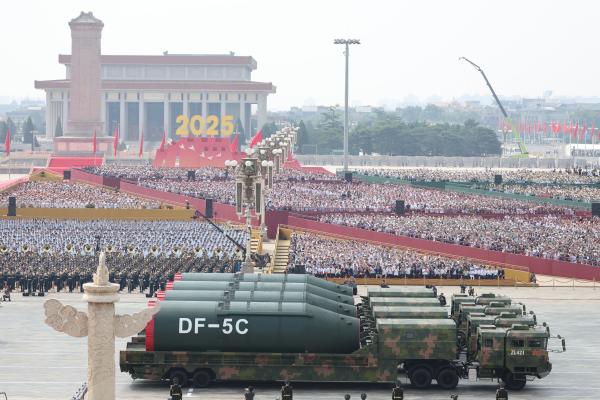
Join Senior Fellow and Keystone Defense Initiative Director Dr. Rebeccah Heinrichs and Administrator of the National Nuclear Security Administration Brandon Williams for a discussion on the administration's priorities in strengthening the US nuclear enterprise.