Caption
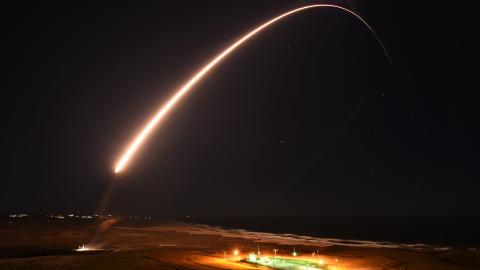
An Air Force Global Strike Command unarmed Minuteman III ICBM launches during an operation test on February 23, 2021, at Vandenberg Air Force Base in California. (US Space Force)
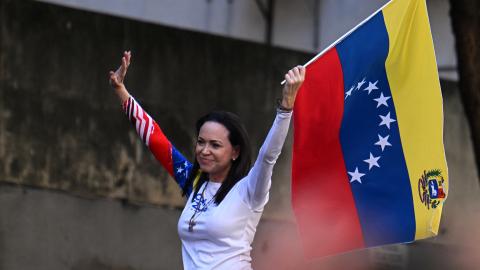
Since Venezuela’s July 28, 2024, presidential election, which opposition candidate Edmundo González Urrutia won decisively, Nicolás Maduro’s regime has defied the will of the people and intensified its campaign of repression and terror. Over 1,600 political prisoners remain behind bars, while opposition leaders have been forced into hiding or exile. Despite international condemnation, Maduro had himself inaugurated for a third term in January.
Under Maduro, Venezuela has transformed into a criminal hub, facilitating illicit activities that threaten regional stability. Although the regime released six American citizens in February, Maduro’s Venezuela continues to deepen its strategic alliances with rogue states like Iran, posing a growing threat to the security of the United States.
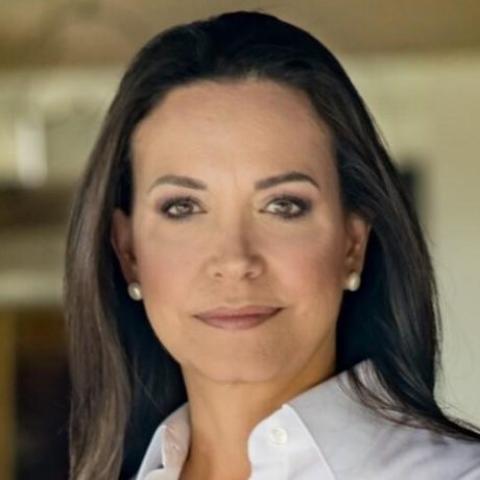
Join Adjunct Fellow Daniel Batlle and the leader of the Venezuelan opposition, María Corina Machado, for a discussion on the implications of Maduro’s dictatorship for Venezuela and the United States.
Listen on:
Dan Batlle:
Good morning and thank you for joining Hudson Institute for today’s discussion on the Maduro menace. My name is Daniel Batlle and I’m honored today to be joined by one of the most courageous leaders in the world today, María Corina Machado.
In January, six months after losing the presidential election of July 2024, Nicolás Maduro ignored the will of the Venezuelan people and embarked on a third term as president of Venezuela, marking 26 years since his predecessor Hugo Chávez first came to power. The violent repression that followed the elections has continued to this day. More than 1,000 Venezuelans are being held in prison for their peaceful opposition, including children. Many members of the democratic opposition have been forced into exile or into hiding or are in prison. However, the focus of today’s discussion is not the regime’s repression, but the threat that Maduro represents for the region and for the United States.
Venezuela has deepened its relationships with other authoritarian states. It has allowed its territory to become a haven for armed groups and it is working hand in hand with criminal organizations to carry out a range of illicit activities. Our guest today is the leader of the democratic movement in Venezuela. Although she was barred by the regime from running in last year’s elections, it is her fearless leadership that brought democratic groups together and mobilized the Venezuelan people, leading to voters overwhelmingly choosing democratic candidate Edmundo González Urrutia. María Corina Machado, it is truly an honor to speak with you today. Thank you for joining us.
María Corina Machado
Thank you, Daniel. This is a pleasure to speak with you. Thank you very much.
Dan Batlle:
Before we get into our main topic, I want to ask you about a recent development. President Trump announced that the United States would be revoking the license that allows Chevron to export Venezuelan oil. What does this mean for Venezuela going forward?
María Corina Machado:
Yes, of course. I think it’s a correct decision in the correct moment, and it sends a clear signal to the regime that they will not stay by force and the world will look the other way because Venezuela is the biggest threat for hemisphere security, I have no doubt. Nowadays, we are not facing a political structure or a dictatorship, conventional dictatorship as we have seen before. This is a criminal structure. I mean, Venezuela has been hijacked by a band of drug kingpins. So it should be addressed as a law enforcement problem and not as a conventional approach from politics. And these structures start to break down when you close the flows from money that they get from illicit activities and also for those that are permitted. And those resources you have to ensure are not used for schools or hospitals. They are used for repression, arms, propaganda, and corruption.
Dan Batlle:
Yeah. So the range of illicit activities in Venezuela right now is breathtaking. Can you talk about how the regime works with criminal organizations?
María Corina Machado:
Absolutely. I mean, the estimate of the illicit economy ranges from 16 to 30 percent. It’s hard to tell because it’s all very obscure. And every single of these activities, the regime is absolutely in control of. They ally with other groups, but it’s controlled and promoted by the regime. And this is something very important to understand. I think President Trump has been very clear. He has stated it for years. So has Marco Rubio, the secretary of state. Mike Waltz, the national security advisor, our strong allies in Congress such as Senator Rick Scott, María Elvira Salazar, Mario Díaz-Balart. I mean, warning about the magnitude of the criminal activities that are currently taking place in Venezuela. Venezuela is the criminal of the Americas. Look, I brought here, I wrote down what the commander of the SOUTHCOM Alvin Holsey said just a few days ago in Congress, he said under Maduro, Venezuela has become a major cocaine and arms trafficking hub, transforming the country into a destabilizing force in the Western hemisphere.
So we’re talking about drug smuggling and drug trafficking that could be over $5 billion or even more a year. Gold smuggling, it could be over $2 billion a year, extortions in ports that could be around a billion dollars. And then smuggling of gasoline with Colombia and Brazil that could reach above two billion. So we are talking about in terms of Venezuela’s GDP, this is huge. And I repeat, these resources are used to strengthen relations with groups that look to politically destabilize the region and especially the United States. Remember that Venezuela has very strong ties with Iran, Hezbollah, Hamas, Cuba, China, and so on.
Dan Batlle:
So you mentioned cocaine trafficking, and Venezuela has long been a transit country for cocaine, but it seems to be increasingly involved in production of cocaine as well. Can you speak to that?
María Corina Machado:
Yes. And this is something, of course, the regime denies, but it has been stated in many specialized reports around the world. And the estimates now is that Venezuela has turned from that channel to one of the main producers of cocaine in the world. And actually yearly, between 250 to 300 metric tons of drugs pass through or are produced in Venezuela. And this is huge. But again, I want to insist in this. You have cartels in Mexico that fight with the government. In Venezuela, the cartel is the government, is in power. So this is a totally different situation. And that’s why it’s such a huge threat for national security of the United States because these are individuals that not only get involved in drug trafficking, but they have also promoted the creation of transnational criminal organizations, TCOs. This has been also denounced by Admiral Alvin Holsey in Congress and about the number of TCOs that have been promoted by the regime. And one of them is very well known in the United States, which is the Tren de Aragua. And these are organizations that were created, sponsored and directed by Maduro and his regime. Actually, I insist Maduro is the head of the Tren de Aragua.
Dan Batlle:
Yeah. To your point, the Attorney General Office in Chile, which is investigating the death of former Venezuela Officer Ronald Ojeda has witnesses that say that the command to assassinate Mr. Ojeda came directly from Diosdado Cabello. This comes after a period in which it seemed that the regime was distancing itself from Tren de Aragua, but do you believe it’s the case that Tren de Aragua was getting orders from the regime?
María Corina Machado:
Nobody doubts it. And look, these are structures that in order to grow so fast, they need to get support and nobody doubts that it comes from Maduro and the regime. I mean, they were created by the regime many years ago, and they have used those as tentacles to destabilize the region and to harm people inside Venezuela as they did in the year 2017. They used members of the Tren de Aragua to attack peaceful protesters at that time, but also to commit crimes such as the one you have cited. If the main prosecutor, general prosecutor, states something as this, of course, it is obvious they have enough proof to say that the orders to murder Ronald Ojeda in Chile came from the very top of the Venezuelan regime and government.
Dan Batlle:
Shifting gears a little bit, the conflict in the Catatumbo region has intensified recently. The [Colombian National Liberation Army] has been using Venezuelan territory as a haven from which to attack rivals in Columbia and then retreat to Venezuelan territory leading to 80 deaths recently and 11,000 displaced people. It seems the regime is complicit in ELN being able to use Venezuelan territory. What can we say about that?
María Corina Machado:
Well, this is something that has been warned about and denounced for years. The fact that the ELN has found not only a safe heaven, but a great partner in the Maduro’s regime, and they exchange information, arms, resources, technology, and Maduro has given the ELN the possibility to regroup and grow and take control of more and more areas. There are reports that out of our 24 states that we have in Venezuela, ELN or FARC or both are present in at least 22 out of 24. Imagine what that means. It used to be a problem in our borders. It has come—taken all over the country because they have an alliance with the region, and they had created what’s called a gray zone in the border in which they are the law. And the only way you can fight and dismantle a terrorist group such as this is that you have binational approach and cooperation between the two governments. And that’s never going to happen with Maduro because Maduro is a partner of the ELN. And that’s why, as we just said, in this last conflict, an emergency that’s still evolving, it has been proved that the ELN used and moved through Venezuela with protection of the Maduro regime in order to attack the FARC group that was operating in the area because they had a packed divided an agreement in which they were dividing the area. This is one of the most productive cocaine zones in the world. I mean, they can have even eight, how do you say? Cosechas in English?
Dan Batlle:
Harvest.
María Corina Machado:
Harvest. Eight harvest a year. This is huge. And the number of displacements, unfortunately, has been growing more and more. So this is something that should be the main concern of Colombia because this gray area is pushing and pushing and taking more and more control under Colombian territory. So I wouldn’t say, and I was invited a decade ago, it was perhaps one of my last trips abroad before I was banned from leaving my country to talk at the Colombian Congress. And at that time, Daniel I said, look, there is no way there would be peace for Colombia until we have freedom in Venezuela. Because if you have a tyranny that is allied with your enemies, with guerilla groups, with the drug cartels, there’s no way Colombia could have a peaceful future. So it’s time to move ahead. And believe me, with our new government, we will work together and dismantle these criminal groups.
Dan Batlle:
Iran and Venezuela have been forging a deeper and deeper partnership. Reports that the regime has offered asylum to Iran’s leaders if there’s ever a coup there and there’s evidence that Iranian leaders have been buying real estate in Caracas. What should we know about this partnership?
María Corina Machado:
I think we only know a small part of it. I think when we find out everything that has been going, we would be terrified because it started a very long time ago when Chávez was still alive. And this is a partnership that had evolved into many different dimensions. Venezuela landed or it had used our financial system before sanctions so that Iran and Hezbollah could bypass their own sanctions. Venezuela has given the regime of Maduro, Chávez and Maduro has given more than 10,000 passports to Syrian and Iranian citizens, many of whom there’s no doubt are Islamic terrorists that have move all over the region.
Venezuela has offered also safe heaven for Hezbollah activities. There are at least four states in Venezuela while they have currently operations. Venezuela has also been working on a facility to produce Iranian drones of three types of Iranian drones and receiving lots of training on how to deal with them. And certainly, of course, and there’s the energy cooperation and the way the regime, because it’s a circuit, Venezuela has given the ELN and the guerrilla groups shopping lists of Chinese arms that once they get paid, part of that money goes to Hezbollah. So you get a link between the enemies of Western democracies and the United States joining together in a safe haven in Venezuela in coalition with the Maduro regime. So it’s certainly a huge threat. But the other side of the reality here, Daniel, is that these allies of Maduro and enemies of the United States are in their weakest position now.
So this is a really bad moment for Maduro in terms of the position where his allies around the world are situated right now.
Dan Batlle:
So given the weak position that these regimes are in with sanctions regimes that seem to be tightening pressure on them, what can the US and others do to ratchet up the pressure so that they pay a greater cost for what they are doing?
María Corina Machado:
Look, this is very important because we have a unique opportunity. This has never happened before in terms of the relative strength. I mean, believe me, the regime has never been weaker as it is right now. Not only it is totally abandoned and cornered in terms of popular support, as you mentioned, we had a landslide election under the rules of the tyranny, absolutely unjust terms. No other society would have accepted to compete under those conditions. And we won 70–30 and we proved it. If there had been minimum, minimum competitive conditions, it would’ve ended at least 90–10. So imagine, I mean, this is a country that is together. There are no religious racial, social, political, or regional differences in Venezuela unlike other countries. So this is a country that wants the same. And this reality is also true in our armed forces and police. And when you see the electoral results in every single polling statement where the military voted, we won by a landslide, and then we wouldn’t have been able to collect the tally sheets if it wasn’t for the huge cooperation, massive cooperation we got from the military in every single polling station in the country.
So Maduro knows that. So what has he left? Violence, repression, and terror. That’s it. If there wasn’t repression, this regime would fall in seconds. So we need to weaken, to break, to fracture that killer that supports the regime. And how do you do that? You close the flows of money. That’s what we need—to close the flows of money. A criminal structure that runs out of money fractures, divides, and finally falls. So that’s very important. Where the money come from, you started asking me, from illicit markets and business. That’s where you have to go—close the flows from drugs, from the black market of oil, from the smuggling of gold and other minerals. And that’s something the United States and countries in Europe and Latin America have the information and they know how these circuits work and where that money is going. And then you send a clear message to the regime and the militaries in terms that whoever commits crimes will be held accountable. Then now we’re talking.
And on the other hand, of course, we are doing our work here. I mean, we’ve done a great, massive achievement, as you mentioned on July 28. We are under terror right now, but we are reorganizing to relaunch our forces. But meantime, we need to weaken and break the repression pillar.
Dan Batlle:
You mentioned the role of the military, the assistance some members of the military must have provided during the elections, but since then, Maduro seems to have consolidated support of certainly the top brass of the military. Are there things happening in the military that we’re not seeing? Is there a reason to believe that some in the military might not be completely loyal to the regime?
María Corina Machado:
Absolutely. And much more after President Trump’s decision on lifting the licenses because Maduro tells the military that he will get along with international community and that he will get more and more opportunities to have business in Venezuela with him in power. That means that in order to do that, these international companies or businesses and businessmen have to have a partnership with the drug cartel under conditions that violate the Venezuelan constitution and practices of transparency internationally accepted. And at the end, this is very little money, very little, Daniel. These are crumbs. And that’s what we tell international energy sector, “Hey, we want you here, not for crimes. We’re talking huge, huge opportunities because we are going to turn Venezuela from the criminal hub of the Americas into the energy hub of the Americas.” There’s no other country that has the reserves, Venezuela has in all gas, even in clean energies. We have very low production costs and we’re going to reform with transparency. Our laws, we’re going to have international jurisdiction to have security in front of the law, and we’re going to have the most competitive fiscal arrangement. That can only happen in a democratic government, and that’s precisely what we want to do. So I think now, going back to the military, they realize that it is in their own interests to facilitate a transition. Is this enough? No, I don’t think it’s enough. We need to keep pressing from within, from abroad, but this is huge and we are moving in the right direction.
Dan Batlle:
I want to talk about another partner of Venezuela, which is China. China’s role has been that of a silent ally, but its support for the regime has been steadfast and was critical over the last year in providing support to Maduro in stealing the election. Venezuela seems like the main beneficiary of this partnership. What is China getting?
María Corina Machado:
Well, that’s a good question. I would start telling you what is Maduro getting from China, and it is important to remember that actually China has lent the regime over $65 billion, turning Venezuela into the single most important beneficiary of China foreign lands credits. Secondly, Venezuela and China have signed over 800 cooperation agreements in the last years, and they go from hydrocarbons and energy, oil and gas to telecommunications. Those are the main areas of interest. And it is important to note that last year, a couple of months before the election, the Chinese government sent an anti-drone system to the Venezuelan armed forces in order to block all video, disabling video and control of drones in our territory. And finally, what I said before, I think all the arms arrangements, China having these shopping lists of Chinese arms that end in the hands of the Colombian guerillas. And this is something very dangerous because remember, Venezuela has Russian anti-missile equipment, and this is something that it’s really concerning that will arrive as well into the hands of the guerillas as these Chinese arms have done so far.
Dan Batlle:
The breadth of the malign influence in Venezuela that you’re describing is really astounding. I mean, we’re talking about the most malign influences in the form of other authoritarian governments, but also in the form of criminal organizations and armed groups. From the outside observer’s perspective, it seems like more than what one regime can manage. How does the regime organize itself to manage all these different fronts of illicit activities and malign partnerships?
María Corina Machado:
That’s a super good question because you might think, well, they have so much support, they are so cohesion, but it’s happening quite the contrary, because these are systems that are not hierarchial but heterarchical. I mean, they are different groups with different interests and they start to chuck with each other. Chávez had the kind of leadership that maintained all these structures working and cooperation, and as the resources have been getting more and more scarce because they have destroyed our economy, they have destroyed the oil sector, they have sapped the country. I mean, the levels of corruption, believe me, this is going to be a record in the history of humanity in terms of the magnitude of the kleptocratic system that has been built in Venezuela. But then when resources start diminishing, the problems arise. And that’s exactly what’s happening right now. And that’s why it’s so important to reduce the flows of resources to their regime because they will break apart.
And that’s something we need to incentivize at this point. And I want to insist in this. When you mention all these criminal and secure relations, and you have to be very clear, this has been designed by all these external factors in order to damage the United States. It’s not only to take control of Venezuela, to damage the region, to damage the United States. That’s why the Commander of South Command and Secretary Rubio and many others insist this is an existential threat for national security of the United States. But I have to insist on this. They are weaker than ever. They are weaker than ever because they lost totally their legitimacy. They know that all countries against them. They know they can only control the armed forces so far because they have been absolutely evil and so cruel against the old military structures. I mean, I would say that’s a sector that is the worst persecuted nowadays in Venezuela.
There have been thousands of militaries that have been persecuted. There are hundreds that are in prison or disappeared. So that shows you that the regime doesn’t trust the armed forces and they are internationally isolated. So I think this is a moment to move forward. We have a unique opportunity. And believe me, the fall of Maduro regime, which will happen, I have no doubt it is a matter of when, not of if it will happen, will also mean the fall of the Cuban regime and the Nicaraguan regime, I have no doubt. So for the first time in almost a century, we will have a country free of dictatorship and strengthened democratic institutions. This is a huge moment. And even though things sometimes look like a dream, I am very optimistic. I have so much hope that we will be able to achieve this goal of a free Venezuela.
Dan Batlle:
Are you concerned about Venezuela moving further in the direction of Cuba where you have a relatively weak state that is unable to provide food or power, yet you have a military that is in control of all of the profitable parts of the economy and that is able to reward military leaders for their loyalty, and in that way, ensure the longevity of the regime? Could we see movement in that direction?
María Corina Machado:
Look, I have no doubt that Maduro would like to move in that direction. It would be for him very comfortable. Perhaps even more, the model I think they admire more is a North Korean model, but the thing is not what they want, it’s what they can. And believe me, here in Venezuela, the democratic sentiment, the movement we were able to build is so strong. And it’s not only the will, it’s the organization. A year ago, there was huge will to get rid of Maduro, but we didn’t have the kind of organization we needed to fight under such unfair conditions in which they thought they were simply going to have another fraud and call the results and nothing could be proved. We organized, trained and communicated over one million volunteers and they didn’t see it coming. So they were very surprised. I think everybody was, when we were able to prove with our tally sheets in hand, digitalized on a webpage, this is the truth. Not even Maduro’s political allies in the region were able to recognize the results because it was so obvious. So at this point, we are doing our job here in a very different moment, in a very different phase and dynamic of this fight, certainly the most dangerous one, and the final one. And we will win. We will win.
Dan Batlle:
The regime has called for local elections in the next few months. Elections, of course, are what provided an opportunity for mobilization, which you took advantage of so effectively. What is your position on these local elections? Will the democratic movement in Venezuela participate? How do you see that?
María Corina Machado:
It’s an opportunity because they will have another defeat, but not by complying with their rules and lowering the head and praying for crimes on the country. It will be such a defeat because nobody will participate, not even the people, even if they threaten them. I want to be very clear. I mean, elections, free and fair elections are, for me, sacred in a democracy. When you face a tyranny, a dictatorship, they are a tool for different things, to mobilize, to organize, to denounce, to show the lack of support. No one in Venezuela trusts the electoral system because not only they did not produce the results, they had a fraudulent process. They even went and put in prison people that worked as election monitors, people that refuse to give away the copy of the tally sheets, they have them in prison. They have gone against every single director of our campaign.
My top team of the campaign are all either in prison or under asylum in the Argentinian embassy, which is not asylum anymore, but a prison under search and torture because they have been cut electricity, water, food supplies, and so on. This is what’s happening in Venezuela right now. You know what the regime is doing, Daniel, it’s going to prisons where they have political leaders and they are telling them they would be free if they participate as candidates, but first they have to recognize that Maduro won. Those are the conditions in order to have candidates and many courageously are refusing. And the regime is going against political parties and telling them that they would get resources, they would get media and they would get security if they accept to be part of this force, but they are refusing as well. So perhaps a few will simply lower their head and be part of this scam because they’re scared or because they’re morally broken, but it will be a minority.
And once again, the Venezuelan people will stand up firm and we will prove the kind of mobilization and pressure that we need right now in order to get rid of the regime finally.
Dan Batlle:
Thank you. Well, you’ve provided a very, I think, a compelling picture of a regime that is at its weakest, but also at its most dangerous. What would you like to see from the United States and other democracies? What types of policies and measures could help bring about the end of this regime?
María Corina Machado:
Well, first of all, we need Latin American countries to be very active. We have managed to make this something above the ideological fight because it is about existential issues and values of a republic and a democracy. So we need these governments to speak out clearly about what’s going on in Venezuela and the nature of Maduro regime. Send clear messages to Maduro that he will be held accountable and that this is simply unsustainable. Nobody’s going to turn the page. Secondly, we need to increase the cost of repression, as I said before. Make these individuals understand that whoever represses or violates human rights will pay for it. Make it costlier and costlier so that we can do more and more things locally, the citizens in terms of internal pressure. Third, we have to cut the ... And that means sanctions, individual sanctions, Daniel. And the international criminal court, the international justice, I mean, make all the information available public.
There are so many indictments that have not been made public yet disclosed so that these criminal structures are put into the public eye and could be addressed and witnessed. And that’s finally my main suggestion. And right now, I mean, we need to work really hard in blocking the resources that come from illicit activities—drugs, oil black market, the gold circuit, other minerals, money laundering, and so on. Believe me, with these measures taking place, the support of the regime will crack. So as I’ve said before, and I repeat it now, we don’t need military action in the ground. Not one, that’s not what is needed in Venezuela. And we don’t need resources as well because fortunately Venezuela has enough resources to pay for our liberation and for reconstruction in the future. And we know exactly what we need to do the first day we get to power. We know what we have to do in the first hundred days in every single sector that is under a crisis now. We have great teams, we have the best experts, and we have most important team, the will and the love for our country because we want our kids back home. We want Venezuelans coming back to rebuild a proud and bright and great nation.
Dan Batlle:
Well, your love for your country and for your compatriots and your love for freedom is very evident in everything that you say and in your actions. I commend you for your courage, especially given the personal cost that you and your family are paying for your work. We stand with you, and I know that because of your work, a brighter day will come for Venezuela, and I hope that that day comes soon. Thank you, María Corina Machado.
Please join Under Secretary Helberg and Hudson Executive Vice President Joel Scanlon for a discussion on the Pax Silicia initiative, America’s strategy to win the global AI race, and the new geopolitical imperatives of economic security and technology.
Please join Ambassador Greer for a fireside chat with Senior Fellow Peter Rough on the Trump administration’s first year back in office and what’s next for US trade policy.
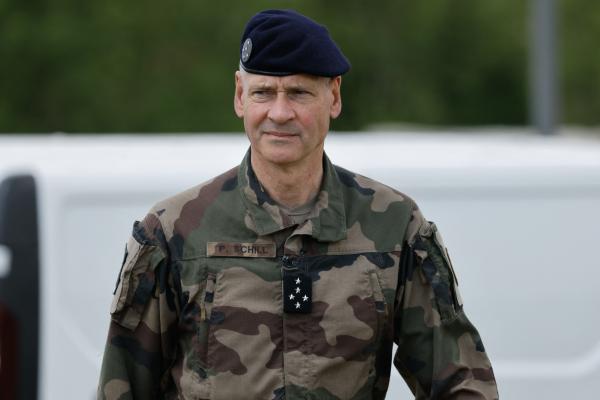
Hudson welcomes French Army Chief of Staff General Pierre Schill, one of Europe’s most senior military leaders, for a discussion on the evolving strategic environment and the French Army’s transformation in a rapidly changing world.
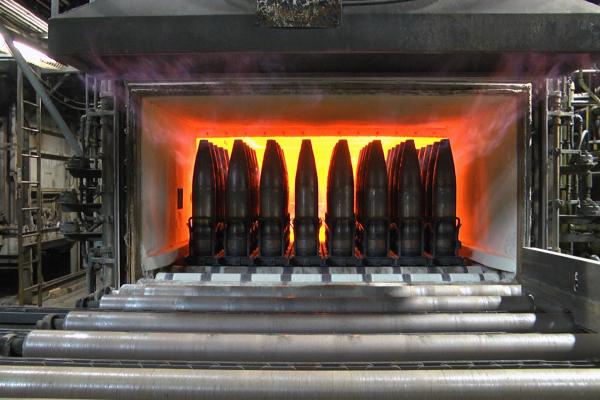
Join Hudson for a conversation with Assistant Secretary of War for Industrial Base Policy Michael Cadenazzi, who leads the DoW’s efforts to develop and maintain the US defense industrial base to secure critical national security supply chains.