Caption
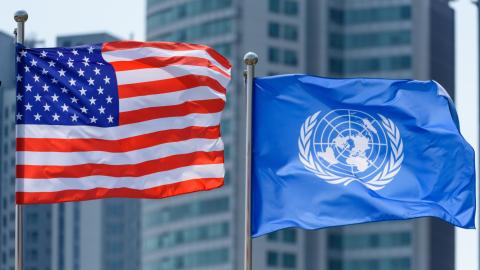
The United States and United Nations flags. (Getty Images)

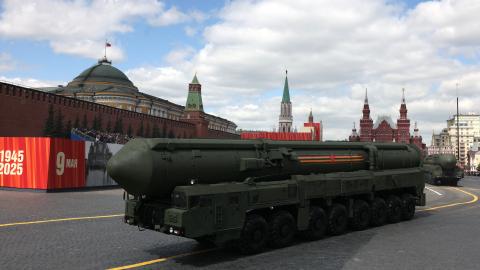


On February 5, 2026, the United States’ last bilateral nuclear arms control agreement with Russia, the New Strategic Arms Reduction Treaty (New START), expired after 14 years. Russia had been violating the terms of the agreement since 2023.
Secretary of State Marco Rubio recently reaffirmed President Donald Trump’s commitment that “future arms control must address not one, but both nuclear peer arsenals.” Rubio also said that even as the United States remains open to diplomacy, it will maintain a “robust, credible, and modernized nuclear deterrent.”
Join Senior Fellow Dr. Rebeccah Heinrichs and Assistant Secretary of State for Arms Control and Nonproliferation Dr. Christopher Yeaw for a discussion on the administration’s priorities for arms control, nonproliferation, and strategic deterrence in an era of complex nuclear threats.
Listen on Spotify and Apple Podcasts.
Rebeccah L. Heinrichs:
Good morning. Welcome to Hudson Institute. My name is Rebeccah Heinrichs. I’m a senior fellow here at Hudson and the director of our Keystone Defense Initiative.
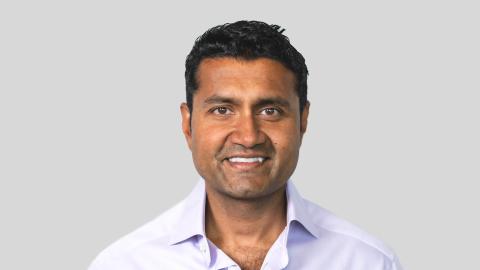
This morning, I have the great privilege of sitting down and having a conversation with Dr. Christopher Yeaw, the assistant secretary for the Bureau of Arms Control and Non-Proliferation at the US Department of State. Dr. Yeaw is going to come up and give some remarks, and then the two of us will engage in a conversation.
Many of you know Dr. Yeaw. He leads the US effort to prevent, impede, and roll back the spread of nuclear, chemical, and biological weapons. Their delivery systems are destabilizing advanced conventional weapons as well as related materials and technologies.
His work also includes protecting and promoting US technological leadership through export controls and expanding the peaceful uses of US nuclear technology.
At the same time, Dr. Yeaw leads the Bureau’s focus on increasing global stability, reducing the risk of unintentional escalation, and preventing conflict through our deterrence posture by negotiating nuclear arms control agreements and strengthening bans on chemical and biological weapons.
And that is what we’re here to talk about today. It’s a great privilege to have Dr. Yeaw here today. So the Assistant Secretary, please join us. Thank you.
Assistant Secretary of State Christopher Yeaw:
Thank you. Thanks Rebeccah. Well thank you Rebeccah, and thanks to Hudson as well for hosting this important conversation. It’s a great pleasure to be here and I appreciate the opportunity to speak about this important issue, the President’s objective to get a better nuclear arms control agreement.
I think most people here today have already seen Secretary Rubio’s Substack and are familiar with Under Secretary DiNanno’s remarks in Geneva two weeks ago. This will build on those.
Those were important and necessary for many reasons. Perhaps chief among those reasons was because it’s time to recalibrate ourselves on how we view arms control. Particularly those of us who are in the arms control business.
In order to be effective, arms control needs to be suitable for the moment, suitable for the need must be verifiable and cannot stand independent of current and changing security environments. Threats evolve, and so to must we if we’re to effectively mitigate and manage those threats.
Following the expiration of the New START, that is New Strategic Arms Reduction Treaty, called New START. The United States proposed multilateral strategic stability talks as a means to achieving future nuclear arms control.
A multilateral approach can prevent an unmitigated nuclear arms race, limit the buildup of nuclear arms, and, as appropriate, address issues surrounding non-NPT states with nuclear weapons.
And I think we have flexibility here to be creative in the way that we approach and ultimately achieve this objective. We’re not going to unduly limit ourselves in how we think about the problem and how we implement the strategy.
We’ve already seen China recycle longstanding statements about arms control that attempt to shift primary responsibility for progress on Russia and the United States. All the while, Beijing rapidly builds up toward parity. As an aside at ask, is it parity with the United States? Is it parity with Russia? No one knows.
They’ve been using these lines in tactic for several decades. Frankly, I think the rest of the world has been enabling this behavior by giving a pass to those that make this argument.
But for those who buy the narrative, let me ask, do you really think that the People’s Republic of China will be incentivized toward meaningful arms control after they’ve already achieved parity or better?
I think we know the answer to that question. And to put it plainly, last time I checked, those of us who are party to the NPT agreed under Article VI, we’ve each committed to, quote, “Pursue negotiations in good faith on effective measures relating to the cessation of the nuclear arms race at an early date and to nuclear disarmament.” End quote.
Now, I may only be a nuclear scientist, so maybe I missed the nuance in this diplomatic speak, but I don’t see anywhere in Article VI a special caveat or assignment to the United States and Russia for special responsibility in this matter.
As we look to implement President Trump’s vision of a better agreement, there is an opportunity here that China should examine closely. China says it wants to avoid an arms race, but provides essentially no transparency to verify that statement.
The President is offering an opportunity to prevent an arms race by engaging in strategic stability talks, multilateral or otherwise. As we head into the NPT Review Conference in April, I sincerely hope that China takes up the President’s offer in his outreach efforts.
And why is this important and why now? Because as I said, today’s strategic environment is drastically different than the one in which New START was negotiated. In fact, in providing its advice and consent to the ratification of New START, the Senate rightly underscored one of the treaty’s biggest flaws.
It did not address what they called at the time, theater non-strategic nuclear weapons, what I usually refer to as theater nuclear weapons. A requirement was for the Obama administration to pursue a follow-on agreement on those. Russia, however, never agreed and the administration didn’t press and the Senate was right to want that as a part of the next treaty.
Today as a result of being unable to achieve that follow-on agreement, the United States stands in a position where our theater range weapons are vastly outnumbered, vastly outnumbered by Russia’s nearly fully modernized theater nuclear force.
Of course, that also says nothing about Russia’s novel intercontinental systems that would not even been accounted for under New START. That’s one flaw. But perhaps the biggest flaw that was baked into New START was that it constrained the United States while allowing China to remain completely unconstrained.
Maybe this was a gamble we were willing to take in 2010 when it was signed, but surely by 2021 when the Biden administration rushed into extending New START for five years, we should have known better. We should have known that we were fast approaching a two-peer nuclear challenge.
And so partly as a result of this lack of foresight or political ambition by the previous administration, here we sit trying to wrestle with how we address that challenge. That brings me to another aspect that Under Secretary DiNanno spoke about in Geneva and that greatly influences the strategic environment nuclear testing activities.
As shared in Geneva, the United States government is aware that China has conducted nuclear explosive tests including preparing for tests with designated yields in the hundreds of tons.
China has used decoupling, a method to decrease the effectiveness of seismic monitoring to hide its activities from the world. But the United States is paying close attention and we are aware that China conducted one such yield-producing nuclear test on June 22, 2020. I think there’ll be some more details in the Q&A segment.
Let me take the opportunity to affirm right here now though as I did privately with Senate staff just before my confirmation. I’m data-driven, I’m a scientist, Iowa’s Air Force Global Strike Command’s first chief scientist. I have personally examined the data and I concur with the United States government assessment in this.
As the president has said, the United States will return to testing on a quote, “Equal basis.” But equal basis doesn’t mean we’re going back to Ivy Mike-style atmospheric testing in the multi-megaton range as some arms control folks would have you believe hyperventilating about this issue.
Equal basis, however, presumes a response to a standard. Look no further than China or Russia for that standard. It certainly was not lost on us that after the president issued his equal basis statement, the CTBTO Preparatory Commission issued a statement declaring that its IMS network could detect any test anywhere.
After the Geneva speech on February 6, a new statement acknowledged that there might be some limitations to that capability. On this, I think, we can for now ignore the fact that they came late to the party and embrace that they came at all.
Perhaps there’s a renewed opportunity here for Dr. Floyd and his staff at the CTBTO to reassess priorities and how they balance pursuing entry into force, against detecting or preventing tests. But this all comes back to one’s salient and undeniable fact.
To realize a world with fewer nuclear weapons requires more than just one state to act with restraint. Reciprocity in restraint is required for there to be mutual benefit. That’s why President Trump has reiterated that we need a new agreement with others.
America first arms control cannot and does not mean America only arms control. As Secretary Rubio stated, “Other countries also have a responsibility to help ensure strategic stability. None more than China.”
I came here today in recognition of these problems, as I’ve described them, have no easy answers. But to begin addressing them, we must first be honest about what they are and how we got here.
I want to end where I began. President Trump has long called for a world with fewer nuclear weapons and New START’s expiration provides the United States and others, an opportunity to enter the next era of strategic stability and arms control to get there.
Perhaps a golden opportunity for an arms control renaissance. Thank you very much.
Rebeccah L. Heinrichs:
Join me here. Thank you. Let’s get right into it. Chris, you had alluded to Secretary Rubio’s Substack, which came after Tom DiNanno’s, Under Secretary Tom DiNanno’s speech, where he made the announcement that future arms control must address both nuclear pure arsenals of Russia and China.
And President Trump has said that he wants a better agreement that would include Russia and China. And this is in fact consistent with his first administration, which was really determined to get some kind of trilateral agreement.
So, can you talk to us about what’s different now from the first administration’s efforts on this front? And then are there things that we learned the first time around that we’re going to apply and try . . .The things that we learned the first time around that we’re going to apply and try to pick up and make some progress.
Christopher Yeaw:
That’s a great question. Thanks, Rebeccah. Yeah. I was there in 2020, in the summer of 2020, mostly the summer, when we tried to get past New START to a better agreement. That was our objective, even back then under President Trump. The changes to the environment, really, to my mind they fall into two big areas. One is baked in flaws to the arms control approach, and to New START in particular. And one is to changes in the actual threat. For the first, what I would say is imagine . . . and I guess I’m going to ask everybody to use their imagination since they don’t have a whiteboard here. Imagine a matrix where you have three columns, United States, Russia, China. We’ll just deal with those three right now. And two rows, intercontinentally deliverable warheads, theater nuclear warheads. So you have six blocks.
Treaties to date, the strategic treaties, have dealt with only the first two blocks. The US and Russia. Only intercontinental warheads. Intercontinentally deliverable warheads. INF Treaty, of course, also dealt with theater range systems as well, but again, only for Russia and China. I mean, for United States and Russia. And only for a time, because then obviously we had cheating, and then we got out of that treaty because it was seen to be bad as well. It’s not great when only one side abides by a treaty. But you can see that at the end of New START, February 5, only two blocks out of six were captured by the treaty. That’s a problem. That’s a big problem, especially since China’s two blocks are rapidly increasing. Rapidly increasing. In terms of intercontinentally deliverable warheads, I think everyone here knows about the three very large missile fields newly developed by China. They look a lot like our three missile fields in the great northern plains. And then, also all of their theater nuclear forces.
And there is complete opacity there on the part of the Chinese. We have no idea. In fact, here’s a . . . And I’ll ask this for analysts out there, Western analysts. At some point, Western analysts just decided that there were no more gravity weapons in China. No more nuclear-gravity weapons, nuclear bombs. China never said they gave them up. We don’t know if that material was recycled. They just went away off the charts of the so-called experts. That’s just how opaque China’s nuclear force structure is, and how opaque the PRC is with its nuclear issues. We don’t even know if they have nuclear gravity weapons. We do know that they are building, developing, and prototyping a stealth bomber. It would be the only and first stealth bomber ever to not incorporate nuclear gravity weapons. That’d be a first. There’s a lot there. A lot of opacity.
That’s, I guess, the flaws in the New START that were really baked in, along with some of the changing strategic environment. Now, for the United States, there wasn’t really a huge difference between February 5 and February 6, except that we are no longer bound by New START treaties limits. Russia was already not bound by New START treaties limits. Russia had already decided that they were going to walk away from this. We can now meet our requirements as flexibly as we would like. I’ll leave that to the Department of War, but there are obviously a bunch of options on the table for them. From uploading ICBMs to reconverting heavy bombers, to opening up SSBN tubes, et cetera. All those decisions are yet to be made. And they’re in DOW space, so I won’t speak to those. But the point is, the President has the opportunity at this point to build out the credible modernized nuclear deterrent that he wishes to see.
Rebeccah L. Heinrichs:
Just to put a finer point on this, because there is some reporting from the Russian side that, though New START has expired, there is some other gentleman, and I use the term loosely, agreement between the two sides that we would continue to abide by the New START treaty. Is that true?
Christopher Yeaw:
I know of no such agreement. And that is still in the President’s hands.
Rebeccah L. Heinrichs:
Great. And then, I did want you to touch on the last question I asked in the first round, which was lessons learned from the first time of trying to get the two. As you pointed out, we withdrew from the INF Treaty. Really, for similar reasons that President Trump allowed New START to expire. But we tried then to get some kind of trilateral agreement after that, that would be a follow-on to New START in the first term. Are there lessons that we learned from that, that we might . . . How do we get the Chinese to talk? And how do we get the two of them to talk with the United States trilaterally?
Christopher Yeaw:
I think that’s also part B of the question was very good. It’s hard. There are no easy answers. As I mentioned in my remarks, we took various policies in the past, and those shape our current and our future. And we’re left dealing with challenges that perhaps could have been avoided. Nevertheless, that said, despite the fact that it will be a difficult road, it’s a presidential priority. President Trump’s objective is to get to a better arms control agreement and use multilateral strategic stability talks to get there. That’s our marching orders, and they’re from the very top.
Rebeccah L. Heinrichs:
Great. During the first Trump administration, the DIA, Lieutenant General Ashley, the director of DIA, came here to Hudson. And he engaged in a fireside chat with me. And it was here, I think it was 2019, that he announced that at an event actually, which then senior bureau official DiNanno was there, and now he’s Under Secretary DiNanno, also participated in that event. But there was announcement that the United States assessed that Russia had conducted nuclear weapons tests that created nuclear yield. And he also raised questions about China’s adherence to its testing moratorium and the zero-yield standard. And then in Geneva, two weeks ago, DiNanno again announced that China conducted, and you affirmed that here today. You had alluded in your opening remarks you might give us a little bit more information about that during the Q&A. What does an equal basis mean? What does an equal basis mean, and how possible . . . What should we anticipate from the United States on this front?
Christopher Yeaw:
A lot of good questions there. Thank you. Yeah. Certainly, going back to Under Secretary DiNanno’s remarks in Geneva, we are aware of yield-producing nuclear explosive testing in China. We are aware that they are using decoupling, which is essentially a method to reduce the effectiveness of seismic apparatus to detect this. We’ve been paying very close attention to this. Obviously a very important issue. On June 22, 2020, we are aware that China conducted a nuclear explosive test. The probable explosion occurred right near the Lop Nur nuclear test site. That’s China’s nuclear test site. A few details. I’ve noticed on X, and et cetera, folks are really looking hard for this. I’m going to make it a little easier. Zero-nine-one-eight, 9:18 zulu, Greenwich Mean Time, Kazakhstan station PS23. And it detected a 2.75 magnitude. That is in Makanchi, Kazakhstan.
Looking at the data, and I’ve looked at additional data since then, there is very little possibility, I would say, that it is anything but an explosion. A singular explosion. It’s not consistent with the ripple fire explosion that you get in mining. It’s also entirely not consistent with an earthquake. It is quite consistent with what you would expect from a nuclear explosive test of some certain yield. That would be obviously super critical, and not sub-critical as the United States tests currently.
Now, as far as equal basis goes. . . . So 09:18 Zulu for all those who are playing at home. As far as equal basis, that’s really up to the President. What I can say is that the basis, at least, is that we know that they were preparing tests with designated yields in the hundreds of tons. That’s a basis. And what the President decides to do with that is up to him. I think he’s not made that decision yet. There are a lot of things that the United States could do. I think NNSA probably would have a lot to say on this issue as well. I would defer to them on some technical matters.
But I will say that this came up in the run-up to the ratification of the CTBT, and I think this was 1999. And I love to quote Ambassador Robinson on this. He was formerly the director of Sandia National Lab, knew some things. Smart guy. And when he was testifying, he said that “If the United States’ adversaries were able to test at some yield that we couldn’t detect, while we maintained a strict zero means zero policy, that the United States would be living at an intolerable disadvantage.” I love that quote, because that’s exactly what’s happening. Intolerable disadvantage. And what President Trump has said in equal basis is, “We’re not going to play on a non-level playing field anymore. We’re leveling the playing field.” Just as he has in tariffs, for example. Level the playing field, equal basis, we’re not going to remain at an intolerable disadvantage. What is that disadvantage? Well, ask our Russian and Chinese counterparts, what are they gaining out of these tests? They’re conducting the tests. Again, opacity, silence, obfuscation, and deflection comes—
Christopher Yeaw:
Obfuscation and deflection comes from them. So, I’m aware that they are repudiating the facts. The facts are the facts. I have seen them, I’m data-driven, I’m a scientist, and I would challenge them to come forward and come clean on this.
Rebeccah L. Heinrichs:
So this question came up in a hearing before the Senate Armed Services Committee with former Commander of Strategic Command, Admiral Chas Richard and Tim Morrison, who was also serving in the administration, and both of them said that, I think it was Senator Cotton, Tom Cotton asked them if there would be an advantage, getting to your point, about an advantage for them to be doing this. In other words, there’s a reason that the Chinese would be willing to do something like this, knowing that it would create a potential issue where the United States would let New START expire for one, and then also might decide to do the same thing. Can you give us, just from a scientist’s perspective, what are the kinds of advantages that China would have for testing like this?
Christopher Yeaw:
I can’t go into too much detail here, but there are advantages. I will say that in the Strategic Posture Commission report of 2009, so this is the first one, some of the commissioners reflected that at the time, Russia might be gaining, and potentially China, might be gaining from conducting low-yield nuclear tests to help their capability for, and I think the quote was, “Nuclear warfighting capabilities.” So, as we see a modernization and expansion of the theater nuclear forces in Russia and China, I think we should be particularly alarmed that potentially these types of supercritical, yield-producing nuclear tests flow right into those capabilities. And I think I’ll just leave it at that.
Rebeccah L. Heinrichs:
And so, I believe in the 2009 Strategic Posture Commission, that was the one issue where there was some disagreement. Only the one issue where there was a dissent or disagreement among the commissioners was on whether or not to ratify CTBT then.
Christopher Yeaw:
Right, that’s my understanding as well.
Rebeccah L. Heinrichs:
Yes. Okay, and I had the privilege of serving on the most recent Strategic Posture Commission, and we had no dissents, it was fully unanimous, totally consensus document. And we also came to the consensus that the current nuclear modernization program was necessary but not sufficient for dealing with the two nuclear peer threats. And so, that appears to be something that the administration agrees with as well, as you can see in almost very similar verbiage from the under secretary and from the secretary himself.
Okay. My third question, President Trump. I mean, one of the things I note to people is I keep a running document and track everything that President Trump has said on nuclear weapons or continues to say on nuclear weapons, all the way back in the ‘80s, and I just keep this running document. And he’s actually, he’s been remarkably consistent on the point about nuclear weapons. He is consistent on denuclearization, and his view has been that if you are a country that does not have nuclear weapons, you should not get nuclear weapons. And then in particular, at the time in the ‘80s, ‘90s, he was focused on the North Korea file. And then of course now he’s really focused on the Iran regime as well, but. So, the NPT Review conference is coming up in the next two months. So, how should we understand the administration’s objective going into RevCon?
Christopher Yeaw:
Yeah, the Nuclear Nonproliferation Treaty Review Conference is a high priority for the administration, and we certainly have some things that we want to see advocated and advanced there. One is what we have already been talking about, is this so-called pillar one or the disarmament pillar dealing with Article VI of the NPT. And the obligation, the obligation of nuclear weapons states, all of them, not just Russia and the United States, to enter into good faith negotiations toward a cessation of the nuclear arms race and toward arms control and of eventual nuclear disarmament. That’s a high priority for us. And there we need, frankly, the countries of the world to continue to press that all nuclear weapons states need to be involved in this. It’s not a special responsibility for the US and Russia, particularly given the geometric expansion of the Chinese nuclear force structure, I would say. And these allegations, and in fact, facts of supercritical, yield-producing nuclear tests.
Of course, nonproliferation is also a high objective as well. We have a commitment to the highest nonproliferation standards for ourselves, for our allies, for our partners in all of our nuclear cooperation. We have the highest commitment to nuclear nonproliferation, that will come across very clearly at the NPT Review conference as well. There are a number of objectives that will advance at the NPT Review conference.
I think sometimes it’s not well understood that in extending deterrence to our allies and creating that nuclear umbrella that stretches over our allies, the United States is doing more for nonproliferation than frankly, almost any other tool through this extended deterrence. So, that’s come across very clearly from the secretary, from the president, from the vice president recently—
Rebeccah L. Heinrichs:
USDP Colby.
Christopher Yeaw:
Exactly.
Rebeccah L. Heinrichs:
Very, very specifically . . .
Christopher Yeaw:
Exactly.
Rebeccah L. Heinrichs:
. . . reaffirmed US commitment to extended deterrence.
Christopher Yeaw:
Absolutely. And it goes back to what you said about President Trump’s desire to see, to assure that states that do not have nuclear weapons, don’t get nuclear weapons. And that was one of the motivating factors of extended deterrence from the beginning. And so, we’ll highlight that at the review conference as well. And hopefully, we’ll be able to celebrate a success in universalization of comprehensive safeguards agreements as well. There’s only three nations left, and we think that we’ll get them across the finish line soon, so.
Rebeccah L. Heinrichs:
Great, if I could plug too, I co-authored a piece with Yashar Parsie on the very thing that you just mentioned, a report on how extended deterrence is one of our, if not the most powerful tool that the United States has for nonproliferation.
Christopher Yeaw:
Absolutely.
Rebeccah L. Heinrichs:
Okay. We do have about 10 minutes of Q&A, and so if you could please state your name and affiliation, and keep it short, right here in the front with Michael. And then we’ll get Chris to answer some questions.
Michael Gordon:
Michael Gordon, Wall Street Journal. And I remember tracking this issue from 2019 when the DIA talked about supercritical Russian tests.
Rebeccah L. Heinrichs:
Thanks for coming along for the ride.
Michael Gordon:
And I have a nuclear testing question. Since you’re at the State Department now and you’re also a chief scientist, has the State Department has the US sought to engage China and Russia diplomatically about the allegations recently surfaced by Tom DiNanno in Geneva and by you today, that they’re engaged in supercritical experiments? Have you sought to talk to them about it? And as a scientist, are there any steps that could be taken to try to resolve these concerns? Not exactly parallel, but like the Joint Verification experiment of the TTBT.
And then lastly, a point of clarification. Tom DiNanno said in Geneva, and you said today, that China had prepared to carry out tests with yields in the hundreds of tons. He didn’t actually say that China had carried out such tests with that yield. Has China carried out tests with yields in the hundreds of tons, and what was the yield of the June 22, 2020, test?
Christopher Yeaw:
Excuse me. Well, on the last point, since it’s freshest in my mind right now, it’s of course impossible to tell. So if China is using decoupling methods, it would be impossible to tell from a magnitude 2.75 seismic reading just how big the explosion was. It depends on the decoupling factor. There’s a lot of science there. I know the National Academies have also authored a report on this a number of years back. That decoupling factor can be 20, 40, or even more, and there are various equations that they use. So, really with just a reading, it’s impossible to tell exactly what the yield of the yield-producing test was. That it was super critical, that it was yield producing, is pretty obvious from the seismic graphs. What the yield was is impossible to tell. I have no more additional information on the hundreds of tons, designated hundreds of tons tests.
And yes, I would agree that there are things we could creatively think about. As we look forward, as we look into this strategic stability talks, these strategic stability talks, they may well address nuclear testing issues and some means of verification. Again, that goes right back to the flaw of the CTBT baked into the treaty, which is, if you can’t detect ultra-low yield tests and if a state can gain significant information from the such tests, where do you stand with the treaty? The treaty becomes basically a fig leaf so that states can say they’re abiding by things by a treaty but not actually be abiding by a treaty. And thus, putting the United States at an intolerable disadvantage. So, I think that goes right to the heart of the issue.
We’ll see. We’ll see where talks go, I’m hopeful. We have raised it, we’ll continue to raise it. Of course, we’ll continue to raise it. I think seismic scientists all over the world, I encourage seismic scientists all over the world to raise it as well with their governments and with their Chinese and Russian counterparts. This is a serious matter. It’s a serious matter to undertake actions that undermine a declaration that a state has made. Basically puts us at, as I said, an intolerable disadvantage, and one that we will not stand for anymore.
Michael Gordon:
Just to clarify, have you asked to talk, asked the Chinese that you want to talk to them about this and address these concerns, and ditto with the Russians?
Christopher Yeaw:
They have received—they have received cables from us, yes.
Rebeccah L. Heinrichs:
Geoff, just one minute, yeah.
Geoff Brumfiel:
Sure. Hi, Geoff Brumfiel with NPR. Okay, two questions. One, following up on Michael, could you give us a range of what you think the yields are? And I mean, there’s this distinction of hydronuclear testing, which is super critical but still quite small, and you keep calling it a yield-producing test. Can you just give a more assessment? And then question number two, you say you’re at an intolerable disadvantage. Of course, the Chinese have conducted, what, 45 tests, and the US has conducted over a thousand. Rather than returning to testing on an equal basis, isn’t it in our interest to pressure the Chinese to stop whatever they’re doing?
Christopher Yeaw:
Good questions. Of course, calling them out with the evidence that we have is trying to do the latter, for sure. If that doesn’t work, I mean, that’s obviously up to China. They have the deciding vote in that matter. The president has said we’re going to begin testing at an equal basis, and that is US policy. As far as just how big a yield, well, hydronuclears, as you know, are super critical, which means, technically, K effective greater than one, which means, technically, that you have a chain reaction, a fission chain reaction. That is what I mean when I say a yield-producing test. Not that fissions are present, but that you have a fission chain reaction. I think they used to be called in some quarters unexplosive chain reactions or nonexplosive chain reactions. The Russians have a very long history with these. We have a far smaller history with these.
And so, I think as far as intolerable disadvantage goes, we don’t know what the Chinese are getting out of this. We don’t know what the Russians might’ve been getting out of it, as Lieutenant General Ashley mentioned back in 2019. We do know that nations don’t take these risks, as Rebeccah has mentioned, without an expectation of significant gain. So I leave it to you to try to find out what that significant gain might be.
Rebeccah L. Heinrichs:
And a point, as Geoff was talking to you, I was thinking. You had made the point that the United States is currently unconstrained by treaty, and the president is determined to make sure that the United States does have a credible adapted force to meet the threats. Does that mean that, should the president make the decision, the United States is ready in terms of tube conversions on our submarines and on our bomber fleet, should the president make the decision to upload? Are we prepared to do that?
Christopher Yeaw:
Well, I’ll leave that for my friends in the Department of War and in the services, Air Force and Navy. I wouldn’t want to step on their toes. I would say they’re prepared to execute the president’s orders, given that that is their job.
Rebeccah L. Heinrichs:
Okay.
Jennifer Hansler:
Yeah. Hi, thank you. Jennifer Hansler with CNN. Just to follow up on the diplomacy of all of this, Mr. Assistant Secretary, when was the overture made to the Chinese and Russians? Has that happened since the expiration of New START, and do you expect President Trump to raise this with President Xi in his meeting in April?
Christopher Yeaw:
I don’t know. On the second part, I don’t know what will be on the agenda for that meeting, and we continue to desire discussion with the Russians and the Chinese on this issue. I’ll be in Geneva next week. I expect and hope to have productive discussions with them both, and in Vienna as well. So from our part, for our part, we see it as a priority, and we are moving out on that priority. The president says that he wants a better agreement, and we are executing toward that end promptly.
Jennifer Hansler:
Thank you.
Yuichiro Okuma:
Hi. My name is Okuma from Japanese Kyodo News. So, is it correct to understand that the United States’ conclusion that China conducted nuclear tests was based more on the circumstantial evidence than on the internal intelligence? Thank you.
Christopher Yeaw:
What I can tell you today is what I’ve already told you. So again, I would encourage other nations, other seismologists, to look at the data. Again, 09:18 Zulu on the twenty-second of June, 2020, 2.75 at the Kazakhstan station, and I’ll leave it at that.
Rebeccah L. Heinrichs:
I appreciate when we host someone and you give homework to our audience. It means the event will live long, long after—
Christopher Yeaw:
It’s a bad habit. I was a professor for a few years.
Rebeccah L. Heinrichs:
No, it’s great. All of the things that I mentioned today are assigned reading as well, so we will all be better educated. I think we might have time for one last one. Go ahead.
Adam Taylor:
Hey, thanks. Adam Taylor with The Washington Post. You’ve said that the US is at a disadvantage, but obviously Beijing feels like it’s at a disadvantage because of its lower levels of arsenal and testing history. What arguments can you make that it’s in their interest to join a trilateral or multilateral treaty, and if they continue to not play ball, is there a plan B?
Christopher Yeaw:
Thanks for the question. The president certainly wants China in this agreement. I don’t know exactly the path that we will take to get there. I imagine it will be a difficult one. I don’t think anyone is under any illusions that this will be easy. It wasn’t easy in 2020 when we tried to get to a similar spot, but we made the attempt. We will make the attempt this time as well.
I think if you look at Beijing, you have to ask the question, when will they start adhering more closely to Article VI? Article VI of the NPT is a solemn commitment, and it is binding on all nuclear weapons states that we are to enter into good-faith negotiations toward disarmament, and we take that very seriously. We have a history with Russia taking that seriously, and we expect China to take that seriously as well, at least as seriously as they are expanding their nuclear arsenal, which is pretty serious.
Their expansion is geometric. It’s been increasing by leaps and bounds. I think Admiral Richard puts it best when he said it’s breathtaking and maybe even beyond breathtaking. It’s an expansion that the world has not seen in many decades. We have not seen an expansion like this in many decades, ever since the beginning of the Cold War, in fact, the early days of the Cold War. So they have an obligation to become involved, and the world needs to stop giving them a pass on that.
Rebeccah L. Heinrichs:
I’ll just say from my own part, and I think Admiral Richard also made this point, too, that in terms of Chinese intent, from the US perspective, we have to assume the worst if they’re not going to begin talking. And so, when you have such a breathtaking expansion like this, coupled with its aggressive and belligerent behavior, my characterization, against the Philippines, against the Japanese, that it is incumbent on them to disclose what it is they’re doing. Otherwise, the United States does have to prepare for a worst-case scenario and make sure that our own deterrent needs are met.
Christopher Yeaw:
Absolutely, and you can look across the board. So again, I’d encourage folks to look across the board. There’s been some great open-source analysis on China’s nuclear weapons infrastructure expansion, on nuclear testing expansion, on the new plutonium-producing reactors that Russia is providing fuel for. These things run counter to a good-faith effort at negotiations. So can you do those things and enter into a good-faith negotiation? Absolutely. And so that’s our offer, is enter into some good-faith negotiations, because everything else says, “We’re expanding without constraint,” and we have, as Rebeccah says, no idea where that stops.
Rebeccah L. Heinrichs:
With that, please join me in thanking Dr. Yeaw. Thank you so much.
Christopher Yeaw:
Thank you.

Join Distinguished Fellow Mike Gallagher and Congressman Rob Wittman (R-VA) for a discussion on the congressman’s recently introduced Securing Essential and Critical US Resources and Elements (SECURE Minerals) Act and Congress’s role in securing America’s economic security.


Join Hudson for an expert panel discussion on the latest policy developments and what an evidence-based approach means for the future of innovation.


Join Hudson for a discussion highlighting each nation's approach to these common challenges, as well as how US-Japan collaboration should best proceed.

With Walter Russell Mead, Sankar will discuss his strategy to resurrect the American industrial base, win the twenty-first-century defense technology race, and prevent World War III.