






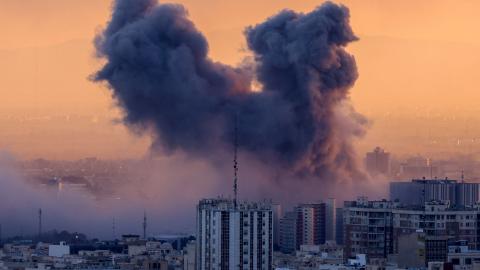



With the US-Israeli airstrikes against Iran on the brink of entering their third week, Iran’s response of firing missiles and drones toward the Gulf states has been a wake-up call. While, statistically, the countries of the Gulf have done a commendable job intercepting and destroying the vast majority of Iran’s aerial attacks, even a few successful strikes can cause havoc on a regional and even global scale. A single missile that slips through the defenses and hits critical infrastructure could have cascading effects well beyond the Middle East.
Many of the same challenges being faced by the Gulf states right now were the same challenges Ukraine faced early on in Russia’s invasion of that country, especially the proliferation of Iranian-designed and produced attack drones. When Russia began launching large numbers of Shahed drones against Ukrainian cities and infrastructure, Kyiv had to rapidly adapt its air defenses, tactics and technologies to cope with a new kind of threat.
Consequently, Ukraine has now sent teams of experts to various Gulf states to help advise on the best ways to counter these Iranian drones. Ukrainians have accumulated years of hard-earned experience in intercepting Iranian drones and adapting defensive systems to defeat them. This real-world knowledge has become a valuable export. And this opens a whole new opportunity for closer cooperation, not only between Ukraine and the Gulf states but also more broadly with NATO.
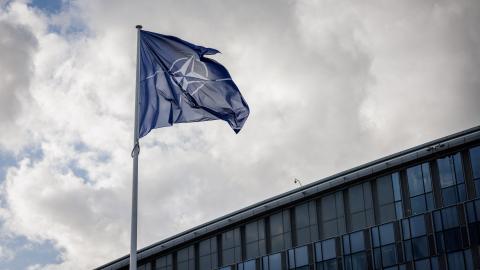
Since the creation of the Istanbul Cooperation Initiative at the NATO Summit in 2004, there has been an ongoing effort to boost relations between Brussels and the Gulf states. The initiative was designed to deepen practical security cooperation between NATO and willing partners in the Gulf region, including Bahrain, Kuwait, Qatar and the UAE. Early progress included training programs and officer exchanges.
While progress was made early in the initiative, in recent years it has stalled. Changing regional dynamics, competing diplomatic priorities and shifting geopolitical attention have all contributed to the slowdown. However, there are three reasons why the current conflict with Iran offers a new opportunity to refresh thinking about how NATO and the Gulf states can work together more closely for the common good.
Firstly, it is not only the Gulf states that have been attacked by Iranian drones and missiles, but also NATO territory. At least two ballistic missiles have been shot down that were targeting Turkiye, a member of the alliance, while Iranian drones targeting the UK’s Sovereign Base Areas in Cyprus, which in a legal sense is British territory, have also been intercepted. These incidents underscore that the threat posed by Iran’s expanding missile and drone arsenal is not confined to the Gulf region.
Therefore, both NATO and the Gulf states have an interest in ensuring that this threat is dealt with adequately. Air and missile defense is inherently a collective problem. Early warning systems, intelligence sharing and integrated defense networks become far more effective when countries cooperate. NATO has decades of experience coordinating multinational air defense systems, while Gulf states possess important regional knowledge and operational capabilities.
Secondly, this summer’s NATO Summit offers the perfect platform to formalize some possible arrangements. Coincidentally, the summit will be held in Ankara, Turkiye, in July. The symbolism should not be overlooked. The last time a NATO summit was held in Turkiye was in 2004, when the alliance’s biggest initiative to work more closely with the Gulf states was first formulated.
Policymakers in NATO and the Gulf states should use the upcoming summit in Ankara as an opportunity to reaffirm their commitment to enhancing the Istanbul Cooperation Initiative and to take relations to a new level. The initiative should not simply remain a framework on paper but should evolve into a more active platform for strategic coordination, training and technological cooperation focused on air and missile defense.
Finally, uniting the common ground between NATO and the Gulf states is cooperation with Ukraine. Ukraine now has more experience than any country in the world in countering Iranian drones and ballistic missiles. Through necessity, Kyiv has developed innovative tactics, layered defense approaches and new technologies specifically aimed at defeating Iranian-designed systems.
With NATO territory and Gulf states now coming under attack, Ukraine should be part of the conversation. Inviting Ukrainian participation in discussions about air and missile defense cooperation would provide practical value for both NATO and the Gulf states. It would also reinforce the idea that Ukraine is not merely a consumer of security assistance but, increasingly, an exporter of security expertise.
This would be a politically low-cost way to involve Ukraine in the upcoming summit, while demonstrating the practical contributions Kyiv can make. Ukraine’s experience with intercepting Shahed drones, adapting radar coverage and deploying domestically produced interceptor drones to destroy incoming threats could offer valuable lessons to Gulf partners now facing similar challenges.
It is unclear how the air war against Iran will end. And the broader geopolitical consequences remain uncertain. However, it is clear that global energy prices, as well as threats to international shipping through the Strait of Hormuz, are forcing policymakers — including US President Donald Trump — to consider ways to eventually find an off-ramp from the conflict.
But one thing will remain certain: the Iranian ballistic missile and drone threat will persist for the foreseeable future. From the Gulf of Oman to the Gulf of Finland, countries face a shared challenge that cannot be addressed in isolation. Strengthening cooperation between NATO, Ukraine and the Gulf states would be both an act of self-defense and a measure of strategic prudence.
Now is the time for bold and creative thinking. The upcoming NATO Summit in Ankara offers a timely opportunity to reinvigorate the Istanbul Cooperation Initiative and deepen practical security cooperation between NATO and the Gulf states in response to a threat that affects them all.