





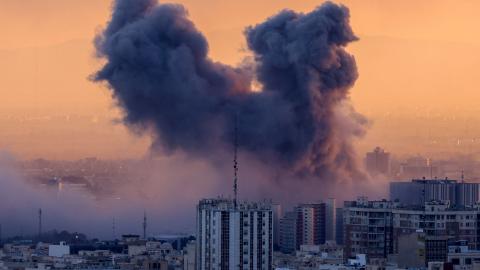




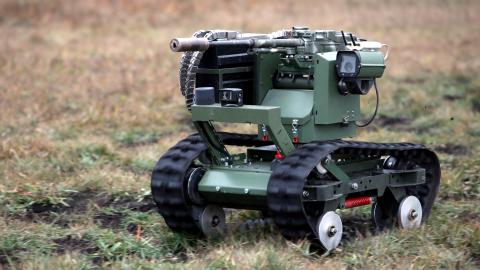

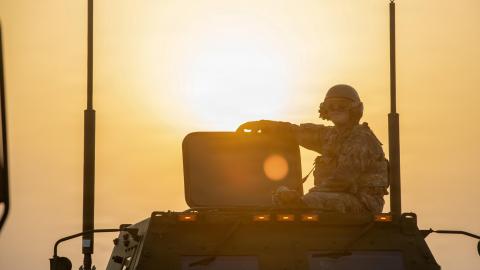
Entering its third week, Operation Epic Fury has degraded the Islamic Republic’s strategic strike systems and suppressed, though not eliminated, its ballistic-missile launch capacity. Yet the campaign has not neutralized Iran’s true center of gravity: the Islamic Revolutionary Guard Corps (IRGC). Despite leadership losses, the IRGC’s doctrinal order of battle and kill chains remain operationally coherent. The Revolutionary Guards also retain powerful economic warfare escalation levers that are effective on a global scale, particularly Iran’s ability to threaten the Strait of Hormuz and the region’s water desalination infrastructure.
Below, Hudson Institute Senior Fellow Can Kasapoğlu offers a theory of victory for the ongoing war. He identifies the threats Iran still poses and the strategic gaps that the American campaign has yet to address, and outlines how to shape the conflict in a way that brings the United States and its allies closer to winning the fight—militarily and strategically.
The Strategic Rationale for Operation Epic Fury
The strategic rationale for confronting Iran requires little elaboration. Prior to the 12-Day War between Israel and Iran in June 2025, the Islamic Republic had reached the threshold of acquiring military-grade nuclear capabilities—a development that would have fundamentally altered the regional security architecture of the Middle East. Even after the conclusion of the campaign, which saw America’s Operation Midnight Hammer targeting key nuclear sites, Tehran still retained more than 400 kilograms of its residual stockpiles of 60-percent-enriched uranium. These resources, while partially buried under rubble, have still been recoverable.
While pursuing its nuclear ambitions, Iran has long exercised sustained leverage over important arteries of the global economy. Its support for militant proxy networks, like the Houthis in Yemen, has systematically destabilized critical maritime corridors. Recently, Tehran has begun attacking the region’s critical energy infrastructure and brought the Strait of Hormuz to the brink of closure, triggering acute volatility in global oil markets.
Moreover, Iran’s powerful Revolutionary Guards have long pursued the proliferation of deep-strike systems, from ballistic and cruise missiles to drone warfare platforms. These ambitions have not only constituted a persistent threat in the Middle East but have also extended beyond the region. Iranian drone technology has been operationalized in support of Russia’s war in Ukraine, embedding the Islamic Republic’s military systems directly into the active threat calculus of the North Atlantic Treaty Organization (NATO).
The Importance of a Theory of Victory
Left unaddressed, Iran’s pattern of military-backed economic coercion, exponentially growing drone and missile proliferation, and state-sponsored terrorism all together risk becoming chronic features of the global threat landscape. Recognizing this threat, nonetheless, is only a precondition for formulating a strategy to combat it.
Such a strategy demands clearly defined political goals toward which the military force can be applied. As the nineteenth-century military theorist Carl von Clausewitz famously noted, war is an instrument and continuation of policy, not a policy in itself. Without a clearly defined endgame, even operationally successful campaigns risk producing strategic ambiguity that adversaries can exploit.
The need for clearly defined political goals for the ongoing conflict raises a central question: What political conditions do the United States and its allies aim to establish when combat operations conclude? Options range from a decapitated supreme clerical leadership and the degradation of Tehran’s long-range offensive-strike capabilities to the elimination of Iran’s ruling regime in its entirety. This question is not a peripheral concern, but the defining variable in assessing whether the campaign can produce durable strategic outcomes.
Thus far, the public messaging from senior Trump administration officials has offered divergent and at times contradictory answers. At the outset of the campaign, President Donald Trump framed the administration’s objectives in maximalist terms, invoking the language of unconditional surrender. US Secretary of State Marco Rubio has articulated a more operationally bounded objective: the systematic degradation of Iran’s ability to project military power and the permanent elimination of its nuclear capabilities.
Then there is Israel, Washington’s principal operational partner in the ongoing war effort. Comments by Israeli Prime Minister Benjamin Netanyahu have at times suggested that the campaign is pursuing regime change in Iran.
Against this backdrop of mixed messages, the most important consideration is not whether Iran is losing militarily, but whether America and its partners are first and foremost defining the victory precisely, and then winning strategically.
Amid Immense Military Losses, the Islamic Republic Targets the Global Economy
Events have thrown this question into relief only because Iran is unquestionably losing the military contest. In less than two weeks of sustained operations, US and Israeli forces have demonstrated unambiguous conventional superiority over the Islamic Republic. Iranian naval assets have suffered severe attrition, with more than 50 vessels damaged or destroyed. The tempo of Tehran’s retaliatory missile launches has also declined by more than 90 percent from the opening phases of the conflict. At the operational level, US Central Command (CENTCOM) currently holds a clear advantage over Iran.
As a result, Tehran is attempting to redefine the terms of the competition. At the strategic level, IRGC leaders are executing a deliberate pivot—relocating the war’s pressure points from a conventional paradigm to the global economy.
Iran’s military focus in this effort remains the Strait of Hormuz. Roughly one-quarter of the world’s oil, one-quarter of globally traded nitrogen-based fertilizer, and one-fifth of the world’s exports of liquefied natural gas (LNG) pass through this chokepoint each day. Even after enduring naval losses, Iran retains many of its small boats, anti-ship missiles, and drones, allowing it to threaten commercial shipping and amplify economic disruption. Iran’s efforts have prevented the region from exporting millions of barrels of oil, and oil prices have swung between $77 and $119 within a single week. Iranian missile and drone strikes against the infrastructure of the Gulf Arab states only reinforce Tehran’s desire to impose economic costs that extend beyond the battlefield.
Sustained pressure on the Strait of Hormuz would introduce systemic macroeconomic risk into the world financial system. Oxford Economics modeling indicates that a sustained Brent crude average of approximately $140 per barrel over a two-month period—compounded by the financial tightening and supply disruptions that such a threshold could bring—would push important parts of the global economy into contraction. The eurozone, the United Kingdom, and Japan would face measurable reductions in gross domestic product (GDP). The United States would likely suffer similar economic stagnation, and global CPI (consumer price index) inflation could peak near 5.8 percent.
Even a more moderate scenario, in which crude averages approximately $100 per barrel, would subtract several tenths of a percentage point from current global growth projections. The analytical implication is clear: the confrontation unfolding around the Strait of Hormuz has crossed the threshold from a regional military engagement to a systemic-risk event for the global economy.
A Hardliner Takeover in Iran
Iran’s ruling regime appears to be consolidating power rather than moving in the direction of regime collapse.
The opening phase of Operation Epic Fury resulted in the death of Supreme Leader Ayatollah Ali Khamenei and the elimination of senior IRGC commanders. But the Islamic Republic’s political system closed ranks quickly. A rushed succession process passed power to Mojtaba Khamenei, Ali’s son. More moderate civilian figures lost influence, while hawkish factions consolidated authority. The IRGC has emerged as the dominant force within the state apparatus. Iran has been under a sustained internet blackout for hundreds of hours, and its ruling regime is managing some degree of success in controlling the narrative of the conflict.
The regime has also projected deliberate defiance in public. Despite ongoing strikes throughout the country, on March 13 senior Iranian officials—including President Masoud Pezeshkian, Supreme National Security Council chief Ali Larijani, and Foreign Minister Abbas Araghchi—appeared in the open at an Al-Quds Day march in Tehran. The carefully staged optics of the event—almost certainly choreographed by the IRGC—were designed to project continuity and resolve rather than the image of a regime under pressure.
Thus, a campaign designed to weaken the Islamic Republic may instead end up exacerbating its institutional transformation into a full-blown military dictatorship in which clerical authority survives symbolically. In effect, the Islamic Republic is fast dragging itself toward a hybrid model that resembles Russia after the Soviet Union’s collapse when an intelligence and security elite (the siloviki) controlled the country, Syria when the Assad clan and the Ba’ath Party ruled, and North Korea today as the Kim regime governs it as a garrison state.
Moreover, the Islamic Republic’s leaders deliberately designed the structures of their regime to absorb precisely the kinds of leadership shocks they have experienced since Operation Epic Fury began. Open-source reporting circulating in the aftermath of the operation’s initial decapitation strikes indicates that Mojtaba Khamenei—despite being named supreme leader several weeks hence—may have been killed in the war’s opening days. Reporting from multiple sources has previously noted that Mojtaba’s father held reservations about his son’s ability to competently succeed him.
The newly commissioned X account of Iran’s supreme leader—whether it is run by Mojtaba or by IRGC operatives in his name—signals meaningful shifts in the military and strategic thinking guiding Iran’s rulers. Recent posts on the account indicate that the Islamic Republic has lifted its long-standing strategic ambiguity regarding the Strait of Hormuz; the posts openly frame the waterway as an extension of Iran’s strategic domain and declare that it will remain closed. This suggests that Tehran intends to threaten the international economy and global oil market more explicitly, possibly even after current hostilities cease.
Additional messaging on Mojtaba Khamenei’s X account signals a hardening Iranian attitude toward the US military presence in the region. Indeed, the Islamic Republic appears determined to challenge and undermine any forward US military posture in the Middle East by targeting US facilities in the region indefinitely. The new supreme leader’s rhetoric also increasingly references war reparations and the possibility of Iranian retaliation against regional infrastructure, echoing patterns reminiscent of Saddam Hussein’s threats against Kuwait in the lead-up to the Gulf War.
Taken together, the signals emanating from Iran’s regime suggest that its current rulers are likely to be more hostile and less risk-averse than their predecessors. And Mojtaba being injured, incapacitated, or even dead would not change this trajectory. The elite calling the shots have made their voices heard via those X posts.
The Critical Strategic Gaps the Campaign Has Yet to Address
By the tenth day of the current campaign, US and Israeli forces had struck more than 15,000 Iranian targets. Iran’s missile-launch rates, meanwhile, had declined approximately 90 percent from the outset of hostilities, while Tehran’s drone attacks had fallen 95 percent over the same period. Credible assessments indicate that by day 12 of operations, the campaign against Iran had cost the United States an estimated $16.5 billion, with a marginal daily burn rate approaching $500 million at its current operational tempo.
Yet despite the battlefield achievements of Epic Fury, the operation has left several critical strategic factors unaddressed:
- The campaign lacks a coherent architecture of political warfare. Occasional strikes against infrastructure operated by the Basij, a paramilitary homeland security militia within the IRGC, have imposed tactical pressure but have not yet translated into a systematic effort to fracture the regime’s internal cohesion. For doubts to result in defections, wars that aim to destabilize regimes have to set clear pathways for transition: if an IRGC general concludes that the system is failing, he needs to know whom to contact and what awaits him when he does. Safe passage, financial guarantees, and a credible political future need to be in place for potential defectors before hesitation can turn into action.
- The campaign has not yet exploited Iran’s dual-military structure. Washington has also missed an opportunity to exploit the structural divide between the Revolutionary Guards and the conventional armed forces of Iran, known as Artesh. Different histories and competing loyalties have shaped Iran’s two armed institutions: the IRGC functions as an ideological praetorian guard dedicated to regime survival, while Artesh preserves the traditions of a national military. For some time, Artesh has played second fiddle to the guards. A serious political-warfare effort, backed by carefully designed strikes, would quietly widen the institutional gap between these two forces.
- The campaign has yet to cultivate an organized opposition. Messaging to exile groups, important as it is, cannot convert instability inside Iran into a new political authority. Revolutionary transitions reward structure rather than sentiment. Leadership, cadres, financing, communications, and operational command determine who inherits power when the center breaks. The Bolsheviks, for example, seized power in Russia in 1917 not because they commanded the largest base, but because they were the most disciplined and organized group grappling for power.
- The campaign has yet to constitute a maritime-security coalition for the Strait of Hormuz. Current diplomatic activity confirms the absence of a preexisting maritime security framework prior to the outset of hostilities. Washington has initiated outreach to maritime powers, including European allies, requesting naval contributions to maintain freedom of navigation through the Strait of Hormuz. European governments are simultaneously exploring mechanisms to protect commercial shipping from continued disruptions. That these consultations are occurring amid an active conflict, rather than prior to its initiation, is not a diplomatic footnote but a reflection of the coalition planning process.
- The campaign has not severed the intelligence pipeline between Russia and the IRGC. Washington has not yet mounted a comprehensive effort to disrupt the targeting support the Kremlin is providing to the IRGC. The relationship between Moscow and Tehran transforms the conflict from a bilateral confrontation into one node within a broader military ecosystem connecting Russia and Iran—a distinction with significant implications for threat assessment and campaign design.
- The campaign has not cultivated a counter-value deterrence posture in the Gulf. Thus far, the Gulf Arab states have adopted an almost exclusively defensive operational posture, centered on interception and the protection of critical infrastructure. This posture is strategically insufficient. Deterrence does not rest on defensive capabilities alone, but requires the demonstrated capacity and political will to impose reciprocal costs on an adversary. Washington and its regional partners should present an unambiguous signal that strikes against Gulf Arab cities or energy infrastructure will invite calibrated retaliation against counter-value targets inside Iran.
The Winning Ticket: A Campaign Focusing on the Revolutionary Guards
Winning the current fight requires a strategy that distinguishes, analytically and operationally, between the state and the perpetuation of the Islamic Republic in its current form. The collapse of Iranian state capacity is not a desirable outcome for Washington or its regional partners. A fragile or failed Iran, or a fierce civil war inside Iran, would generate a strategic vacuum in the Middle East of a magnitude that would dwarf the threat posed by the current regime.
On the other hand, permitting the Islamic Republic to emerge from the current confrontation structurally intact—or able to accelerate its evolution into a military dictatorship dominated by the IRGC —would constitute a similarly undesirable strategic outcome. In many ways, such a scenario could present a greater danger to the region than the regime that emerged from Iran’s 1979 revolution.
The decapitation of Iran’s senior leadership is also an insufficient instrument for producing anything Washington could credibly define as victory. Eliminating senior IRGC commanders—and even Iran’s supreme leader—certainly produces disruption. But it does not dismantle the institutional machinery that sustains the system.
The true center of gravity in Iran is the Islamic Revolutionary Guard Corps as an institution. In its cohesion, its command networks, its grip on the Iranian state apparatus, and above all its dominance over Iran’s conventional military, the IRGC is the glue that holds the Islamic Republic together.
As a result, Washington and its regional partners should focus on the IRGC. Deliberately combining military pressure with political warfare and pinpoint intelligence operations can erode the institutional control of the guard and widen the range of positive outcomes that are plausible endgames for the current conflict.