








Executive Summary
- Battlefield assessment: Fighting remained intense at the tactical level, but neither side made strategic-level gains.
- Russia targets Ukrainian energy grid: In an attempt to weaken Ukrainian morale during the height of winter, Russia targeted Ukraine’s nuclear power infrastructure.
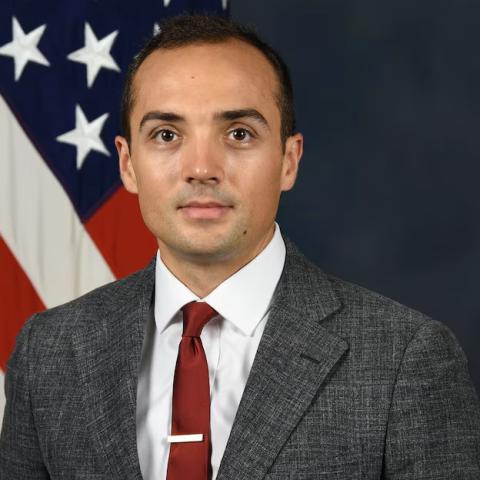
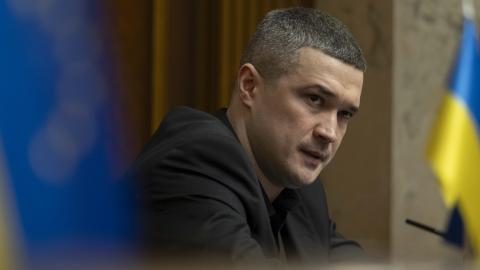
- Ukraine aims to inflict higher casualties: In an interview, Mykhailo Fedorov, Ukraine’s new defense minister, stated that his goal is to kill 50,000 Russian servicemen per month.
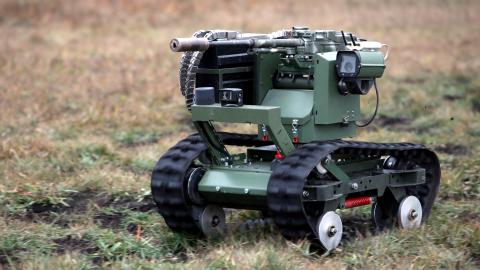
- What to monitor: (1) Further reshuffles under Fedorov and (2) a continued increase in unmanned ground vehicle usage on both sides.
1. Battlefield Assessment
Last week Ukrainian and Russian forces fought at a moderately intense operational tempo, waging between one and two hundred engagements per day. Drone warfare, positional clashes, and small infantry assault movements accounted for most of the combat activity.
Fighting raged near Kupiansk, Pokrovsk, Lyman, Kostyantynivka, Orikhiv, and Kramatorsk. In Kupiansk the Ukrainian counteroffensive achieved tactical success. Ukrainian combat formations from the 2nd Khartia Corps are conducting sweeping operations to clear Russian groupings from the recently recaptured area.
But concerningly for Kyiv, Defense Intelligence of Ukraine reported that Russia is expanding its probing attacks, mainly using drones, against substations linked to Ukraine’s nuclear power infrastructure. While not designed to trigger a nuclear incident, these strikes aim to deprive Ukraine’s civilian population of electricity, heat, and water during the height of winter. Ukrainian officials assess that Russia’s strategic objective is coercive rather than purely military: The Kremlin seeks to erode Ukrainian resilience and eventually force Kyiv to accept a ceasefire on terms more favorable to Moscow.
According to military intelligence assessments from the United Kingdom’s Ministry of Defense, Russian forces employed more than 50,000 loitering munitions in 2025, a fivefold increase from the previous year. The scale of Russia’s drone usage points not only to operational adaptation on the battlefield, but to the maturation of Russia’s wartime drone manufacturing pipeline. Absent a decisive disruption of its production capabilities, Russia’s expanding drone industry will continue to threaten Ukraine. The challenge lies less in the damage from any single strike than in the steady attrition of Ukraine’s air defense architecture, civilian morale, and critical infrastructure.
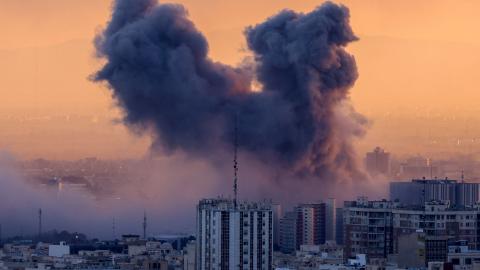
Demonstrating this trend, on January 20 Russia targeted Ukrainian infrastructure with a complex, layered strike package consisting of 18 ballistic missiles, 15 cruise missiles, and 339 drones, roughly 250 of which were of the Iran-designed Shahed variety. The scale of this strike suggests that Moscow is prioritizing saturation: overwhelming Ukraine’s air defenses while mapping Kyiv’s response patterns in preparation for future strikes.
Notably, Russia’s January 20 salvo included a Zircon missile, a nuclear-capable, ramjet-powered cruise missile that can reportedly reach hypersonic velocities approaching Mach 9. While Moscow’s use of the projectile as a conventional weapon reflects some measure of restraint, it also carries a clear, escalatory subtext: Russia is willing to demonstrate its nuclear capabilities even if it is not deploying nuclear warheads.
2. Ukraine’s New Defense Minister Prioritizes Inflicting Casualties on Russia
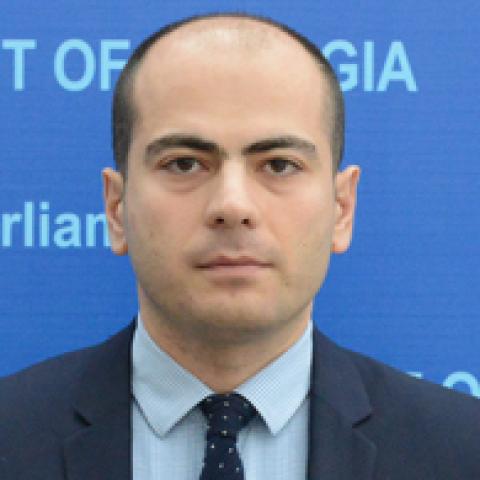
During a meeting with the media, Ukraine’s new defense minister, Mykhailo Fedorov, articulated his two priorities as he settles into his post. The first and more prosaic priority is management. Those who cannot produce measurable results, he argued, cannot remain in Ukraine’s ranks.
Fedorov’s second priority is to “kill 50,000 Russians per month,” he said in a media engagement. Raising the death toll, in Fedorov’s view, would increase the already significant strain on the Kremlin. Russia, the tech-savvy Fedorov suggested, treats soldiers as a consumable resource. But this model has limits. Around 422,000 people signed contracts with the Russian war machine last year, which may seem high but marks a decline compared to the previous year’s 450,000.
Fedorov estimates that in the last month Ukraine killed roughly 35,000 Russian soldiers, a figure that Kyiv claims it can support with video evidence. The North Atlantic Treaty Organization, however, puts the number closer to 25,000. While neither Moscow nor Kyiv regularly publishes official casualty figures and all numbers should be treated with skepticism, the number of Russian casualties is undoubtedly significant.
Ukraine estimates Russia’s total casualties since February 2022 at more than 1.2 million. The last two years alone account for nearly 900,000 of those deaths and injuries, a figure approaching five times the size of the original Russian invasion force that crossed into Ukraine. In 2024, the bloodiest year of the war, Russian forces sustained approximately 430,000 casualties.
In 2025 Moscow’s losses declined only marginally, to an estimated 415,000 casualties across regular units, paramilitary formations, and proxy forces. December 2025 was especially lethal, with Ukrainian General Staff data indicating average daily Russian casualties exceeding 1,100, up from just over 1,000 in November 2025. Mykhailo Fedorov is no doubt hoping to continue this trend.
3. What to Monitor in the Coming Weeks
1. More reshuffles in the Armed Forces of Ukraine. As earlier editions of this report projected, Fedorov began his tenure by shaking up the command of the Ukrainian military. To build short-range air defenses against Russian drones, Fedorov has appointed Pavlo Yelizarov as deputy commander of the Air Force of Ukraine. Expect further reshuffles within Kyiv’s top brass, potentially extending all the way to its chief of staff.
2. Heightened robotic ground warfare. Unmanned ground vehicles have seen more usage in increasingly diverse and critical roles in the ongoing war. Kill rates and deployments for these robotic weapons are likely to continue to rise.