








President Donald Trump’s critics say he has no strategy in Iran because he hasn’t specified a goal or a plan for the “day after.” They argue he owes the public answers. Who will restore order after the bombing campaign? Who will run the government, sign peace deals, ratify arms control agreements? Without such details, opponents say, U.S. policy is unserious.
But it may be serious, even if those questions remain unanswered.
The Trump logic seems to run as follows: There are, broadly speaking, only two possible outcomes of the U.S.-Israeli air campaign. The first is that the Iranian people do what Trump has said he wants them to do: Oust the current regime and create a new one. The second is that they don’t.
The operation creates an opportunity for regime change through a mass uprising. History says that is a long shot. There aren’t many cases of air campaigns producing regime change. The overthrow of Serbia’s Slobodan Milosevic in October 2000 — the delayed reaction to a U.S.-led air campaign — is arguably the exception that proves the rule. From World War II through Vietnam to the Gulf and Iraq Wars, aerial bombing alone failed to dislodge enemy leaders. But if the current U.S.-Israeli air action produces a popular revolution, Trump will praise himself as a strategic genius, and his political opponents will have a hard time contradicting him.
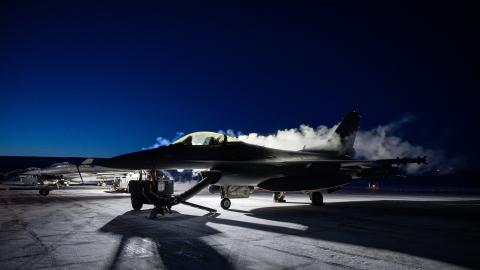
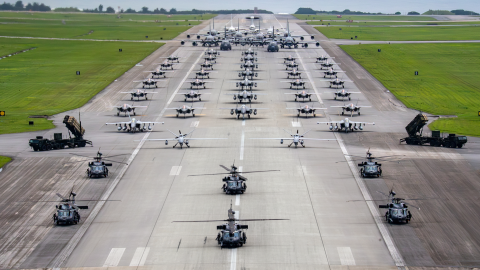
The president may figure that the second possibility — no popular revolution — would also be a good result. The air campaign is intended to destroy the Islamic Revolutionary Guard Corps and Iran’s navy, air force, air defenses, missile capabilities and nuclear weapons program. Even if new leaders arise out of the old Islamic regime, they will have far less power to harm their neighbors or the United States.
That, too, would present two possibilities. One is that the new leaders ask for American cooperation to rejoin the world economy. Trump could then impose conditions and declare victory — something similar to his arrangement with Venezuela’s Delcy Rodríguez after the U.S. capture of Nicolás Maduro.
The other possibility is that the new leaders remain fanatical and hostile, oppressive and aggressive, in which case Trump may assume he can hit them again. There is risk, especially because Iran could disintegrate into civil war, causing millions to flee and seek refuge in Europe and America, as happened in Syria. But it would also be risky for the U.S. to try to play a major role on the ground in Iran to avoid that not-inevitable result.
There’s no indication that U.S. officials are drawing up plans to address the range of likely future challenges. Trump’s focus tends to be on dangers that directly affect Americans and their interests — things he could handle through use of force. He appears confident that, as the U.S. is powerful and the Iranian authorities impotent, he will be able to do whatever he considers necessary.
That thinking is altogether different from the ideas that shaped U.S. foreign policy after 9/11. When U.S. troops overthrew the regimes of the Taliban in Afghanistan and Saddam Hussein in Iraq, President George W. Bush believed the U.S. had a responsibility to avert chaos. He was intent on helping those countries lay foundations for governments that would neither be repressive nor give safe harbor or support to anti-American terrorists. Stressing that America was only at war with those countries’ evil leaders, the president felt responsible to assist their people. He also shared the view that failed states are breeding grounds for anti-Americanism, terrorism and other pathologies that endanger U.S. interests.
Trump shows no concern about chaos. He is giving the Iranians a chance to take control away from the ayatollahs. Trump sees that as a gift — he doesn’t think the U.S. owes Iranians an on-the-ground effort to prevent chaos or to make their country stable, let alone democratic and prosperous. The president’s goal is to deprive Iran of the power to hurt the U.S. and its interests. If dangers develop down the road, he expects to be able to deal with them far more easily than if he had left in place the Islamic regime that was pursuing nuclear weapons and developing ever-longer-range missiles.
Ironically, critics from the Democratic Party and elsewhere who are demanding to know the “day after” plan are implying that Trump should adopt Bush’s outlook.
There are risks of inaction and risks in every possible course of action. A president’s main national security job is choosing which he prefers to face. Trump is trying something new, on the grounds that what happens after the air campaign isn’t necessarily a U.S. problem. Americans have to hope he’s right.