










To assess who’s winning the Iran war, imagine Donald Trump stepping off Air Force One in Beijing in early May, preparing to face Xi Jinping across the table on trade, tariffs, rare earths, and technology. The question is: What hand will the war deal him?
In one scenario, he arrives with a stronger hand. U.S. forces have seized Kharg Island, Iran’s main oil export terminal, through which roughly 90 percent of the regime’s crude flows—nearly all of it shipped to China at a steep discount. Trump sits across from Xi having already begun to take Iran off the board.
In another, he arrives weaker. Iranian forces get off a lucky shot that strikes the USS Tripoli as it nears the Strait of Hormuz, killing and wounding hundreds of American Marines and triggering a domestic political crisis. The attack demonstrates that the Revolutionary Guards can still make Trump bleed and force him toward a ceasefire before he has broken them.
Short of regime collapse, these are the outer bounds of what the war, now three weeks old, might yet deliver. In the best-case scenario, Trump arrives in Beijing holding China’s energy lifeline at risk. In the worst, he arrives bloodied, having failed to break Iran’s chokehold on the Gulf’s energy flows. The distance between those two outcomes measures what remains at stake in Operation Epic Fury.
The United States and Israel have carried out a masterful campaign that has killed Supreme Leader Ali Khamenei, de facto leader Ali Larijani, and a host of other senior figures. They have turned the surviving Iranians into hunted foxes. Pointing to these military achievements, Trump has occasionally suggested that Iran is already defeated. For instance, on March 11, 2026, Trump told reporters: “They’ve lost their navy. They’ve lost their air force. They have no anti-aircraft apparatus at all. They have no radar. Their leaders are gone and we could do a lot worse.”
This sounded to some ears like preparation for a ceasefire proclamation: The United States had won, Iran was shattered, and the war could end on favorable terms. If Trump declared victory today, he could legitimately claim that the United States and Israel had “won” on points—but that might prove to be a temporary victory.
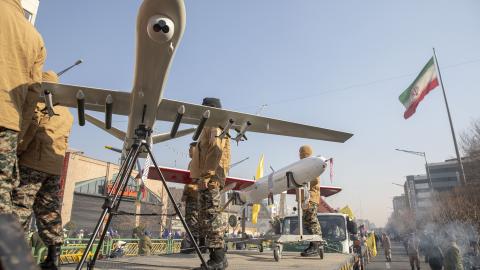
To be sure, Iran would emerge profoundly weakened. Its economy was already in shambles before the war. Rebuilding lost conventional infrastructure would take years. Yet its drone arsenal could be replenished in months. Iran has long partnered on drone production abroad—including facilities in Tajikistan and ties to Russia and Belarus for Shahed-series systems. Destroying factories inside Iran has imposed costs and demonstrated resolve, but it has not eliminated Tehran’s ability to field swarms capable of intimidating shipping through the Strait of Hormuz.
Rebuilding ballistic missiles would prove harder, as Iran lacks major production infrastructure outside its borders. Still, rearmament could take only a few years, aided by China, Russia, and North Korea. Israeli strikes in October 2024 set back elements of Iran’s solid-fuel missile production, but recovery has been faster than expected, supported in part by components and precursor materials imported from China.
Beijing’s interest is clear: Iran ties down U.S. forces away from the South China Sea and Taiwan, supplies discounted oil, and provides a platform for studying American responses to asymmetric threats. In a Taiwan conflict, Iran—and its proxies, including the Houthis—could disrupt energy flows to East Asia through the Strait of Hormuz, which carries roughly a fifth of global oil trade, or through the Bab al-Mandab and Suez canal.
Iran’s conventional navy and air force were never the real threat. Those forces were outdated, limited, and secondary to the Revolutionary Guards’ asymmetric arsenal: missile arrays, drone swarms, coastal batteries, and an advancing nuclear program. The route to decisive victory runs through its destruction.
The U.S. and Israeli strategy of decapitation has brought to a head a deeper transformation that has been underway for two decades: the steady conversion of the Islamic Republic into a system dominated by the Revolutionary Guards. The question that once defined the regime—who guards the guardians—has now been answered in practice. The Guards guard themselves.
Civilian authority has withered. When President Masoud Pezeshkian struck a conciliatory tone toward Iran’s neighbors—saying Iran “does not seek conflict” and wants “constructive relations with the region”—hard-liners aligned with the IRGC immediately undercut him. Hard-line MP Hamid Rasaei publicly slammed the remarks on X as “unprofessional, weak, and unacceptable,” arguing that countries hosting U.S. bases should be the ones apologizing instead.
Pezeshkian backtracked within hours, issuing a follow-up statement that omitted the apology and reaffirmed defense of sovereignty. The underlying message was unmistakable: The president speaks, but he does not decide.
The succession of Mojtaba Khamenei only reinforced the point. Lacking the clerical stature or governing record traditionally expected of a supreme leader, he emerged as the candidate of the security apparatus. Credible reports indicated that the selection process was shaped, if not effectively controlled, by the Guards. What began as a revolutionary state is hardening into a military dictatorship, and the war has speeded up the process.
One major obstacle therefore persists: The IRGC’s missile and drone teams remain active and effective. They conduct target acquisition, threaten neighbors, and—most critically—hold the Strait of Hormuz at risk. China and India can still obtain Tehran’s assurances of safe passage for their tankers; nations Iran deems hostile cannot, and no shipping firm will take the risk. The drone and missile teams have not only survived; they remain embedded in a larger, resilient system that continues to hold global energy supplies hostage.
Iran foresaw this war and built its strategy around a single ace in the hole: the ability to disrupt global energy flows. It dispersed capabilities, decentralized command, and built redundancy into every layer of the system. The route to decisive victory runs through the destruction of that system.
The first step is to break the back of the missile and drone teams. Yet this remains extraordinarily difficult. High-profile leaders can be tracked—through communications, intelligence penetration, or fixed locations—and eliminated. These teams are different.They are elusive by design.
Iran is a vast country with rugged terrain and a dispersed population. Without occupying forces, locating every mobile unit is a needle-in-a-haystack problem. Tehran anticipated this kind of conflict and built its resilience around the “mosaic defense” doctrine, developed by the IRGC in the mid-2000s. Authority is fragmented into semiautonomous provincial commands, each capable of operating independently if central control collapses. Decapitation does not end the fight; it diffuses it.
American and Israeli progress has been greater against ballistic missiles, which are easier to detect and track. Drones are far harder to suppress. Systems like the Shahed can be assembled in small workshops, stored in civilian areas, and launched from improvised platforms with minimal warning. Mobility, deception, and redundancy combine to produce a resilient threat.
Without clear evidence to the contrary, we must assume these teams are not collapsing or deserting. They remain active, embedded, and capable of inflicting costs long after conventional forces have been shattered.
Until those teams are defeated, the United States cannot take Kharg Island. Seizing the island and controlling Iran’s export infrastructure would be the most elegant end to the war. It would sever Iran’s role as an energy supplier to China and, more importantly, starve the regime of revenue. If Donald Trump arrived in Beijing with Kharg Island in American hands, he would not be negotiating at gunpoint—but he would be close.
But Marines cannot conduct an amphibious landing on Kharg unless the missile and drone threat is suppressed. Otherwise, they would be exposed to sustained attack from shore-based systems and mobile launch teams. The United States would also have to push back Iranian forces along the coast opposite the island and along the Strait of Hormuz, creating a buffer zone deep enough to prevent interdiction.
Enormous pressures now bear on Trump to declare victory and end Operation Epic Fury—domestic fatigue, rising costs, and the lure of a quick “win on points.” Last June, he proclaimed a ceasefire after the 12-day war, believing overwhelming force had finally knocked sense into Tehran. Instead, Iran doubled down, accelerating its nuclear and missile programs with external support.
Trump undoubtedly wants out. But he also knows that a premature exit leaves the core threat intact.
The costs of premature closure are already visible. Israeli strikes on Iran’s South Pars gas field—the world’s largest, shared with Qatar—drew retaliatory missile and drone strikes on Qatar’s Ras Laffan liquefied natural gas complex and Saudi petrochemical sites in the Eastern Province, sending oil prices up more than five percent. The exchange illustrates exactly what a ceasefire before victory would lock in: an Iran still capable of threatening the regional energy architecture on which American allies and adversaries alike depend. A temporary end to the fighting would not end that threat.
The United States and Israel will be marching toward decisive victory only when they break the back of the IRGC’s system—its missile and drone teams. Anything short of that will fail to impress Xi Jinping. The Chinese leader will see that, in a future war over Taiwan, he can still rely on Iran and its proxies to close the Strait of Hormuz to Western shipping while securing safe passage for China’s tankers. Until then, Trump steps off Air Force One with a strong hand only if that system lies shattered, not merely bloodied.