



The United States of America succeeded in executing a complex military operation to capture the communist dictator of Venezuela, Nicolas Maduro, and his wife Cilia Flores. This followed weeks of a pressure campaign that included the United States droning boats allegedly carrying drug cartels and culminating in a naval blockade. The couple will face an American court for their crimes of narco-terrorism.
The United States has long rejected Maduro’s claim to governance, and Secretary of State Marco Rubio reiterated this view in a July statement:
Maduro is NOT the President of Venezuela and his regime is NOT the legitimate government. Maduro is the head of the Cartel de Los Soles, a narco-terror organization which has taken possession of a country. And he is under indictment for pushing drugs into the United States.
The United States is not alone in this assessment. Foreign ministers of European American allies also rejected the legitimacy of Maduro’s claim to the presidency. Edmundo González Urrutia, who ran against Maduro in the election last July, had earned the support of the Venezuelan people. Maduro stayed in power flouting the will of the people with the help of the military.
The U.S. action to forcibly remove Maduro and change the government gives Americans three big reasons to celebrate and two for concern.
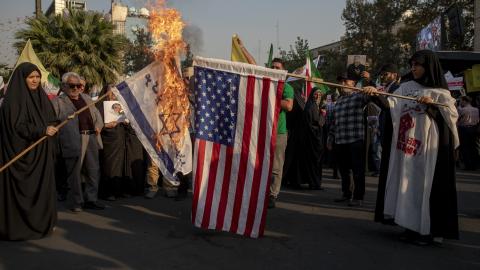
One, Maduro’s rule enabled America’s strongest enemies to get near to U.S. shores, and removing him portends the possibility of boxing out their influence in our neighborhood. China, Russia, and Iran supported Maduro. The Chinese Communist Party was the biggest buyer of Maduro’s oil, provided diplomatic support to the fellow Communist dictator, and denounced the U.S. actions to coerce Maduro to exit the country. Russia was also a backer of Maduro, recently pledged more support to Maduro, and was a regular supplier of weapons to the corrupt and brutal regime. Iran too enabled Maduro to evade global sanctions and keep the regime afloat. Ensuring Venezuela is not an enabler of the China-led axis of aggressors strengthens American security globally.
Two, the U.S. operation was daring, did not result in a single American casualty, and demonstrates world-class military competency. As Gen. Dan Caine, chairman of the Joint Chiefs of Staff, explained in the press conference, this was a joint operation that included forces from the air, sea, land, and space. It required months of coordination with intelligence and law enforcement agencies and secretive practice. And those men and women executed what they practiced with technical sophistication and apparently without an error, without the Chinese knowing at least the timing of the impending operation. The Russian air defenses proved worthless against the American operation, as did Cuban security forces around Maduro. Demonstrating such superior military technical prowess and operational competency boosts the credibility of American warnings to other adversaries, which strengthens deterrence.
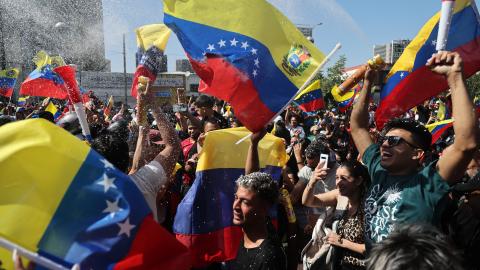
Three, removing Maduro frees the Venezuelan people from his oppressive rule and gives them an opportunity to finally have peace and prosperity, to live quiet lives with a more just government that is tolerable. Maduro’s oppression had led to more than 7% of the population fleeing it and, going to, among other places—the United States of America, which strains America’s legal and social welfare system. If Venezuela can be a safe and stable place, Venezuelans can build better lives in their homeland.
Still, opponents of President Trump’s order to conduct air strikes in Venezuela and seize Maduro argue that the move is illegal and violates the Constitution. But the Constitution provides broad authority for the chief executive to use military force in defense of the nation, and there is a key historical precedent. Congress must “declare war,” but the administration can credibly claim that there is no need for a declaration and that the United States is not at war.
Even so, the administration should share any additional intelligence it has with Congress now that the raid is over. Earning as much of a bipartisan consensus from Congress is wise. Likewise, the United States should expend the diplomatic effort to discuss with allies its national security reasons for its actions and its compliance with international law. The United States must defend its interests while upholding the principles of justice that make it unlike totalitarian imperialist nations such as China and Russia and showing that we continue to reject the claim that “might makes right.” That’s not naïve, it’s necessary to ensure the United States remains the leader of the free and civilized world based on the reality that God and not man determines what is just.
This brings us to the reasons for concern.
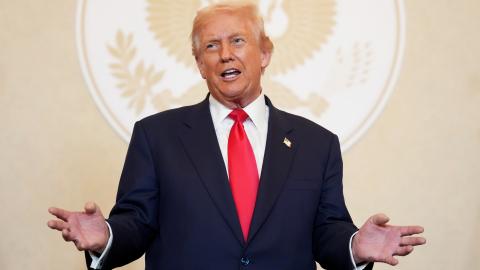
President Trump threw cold water on the possibility that popular opposition leader and Nobel Peace Prize laureate Maria Corina Machado will help govern the nation, saying she does not have the “respect” to lead. She is friendly towards the United States and does have the respect of the Venezuelan people, so the claim is rather surprising. Machado was quick to back Edmundo González Urrutia and called on the military to recognize him as the rightful president of Venezuela. Instead of immediately backing either or both leaders President Trump said that a “team” including U.S. leaders will “run” the government and that he is not afraid of putting American “boots” on the ground and left open the possibility of working with Maduro-installed individuals.
The refusal to work with those with whom the Venezuelan people have given consent sounds less like just liberation and more like unjust occupation. But occupying a nation of nearly 30 million Venezuelans who have their own identity, culture, and national sovereignty, is fraught and presents more questions about the plans for remaining tied down diplomatically, militarily, and economically.
It is possible that U.S. government officials are concerned that the military and security forces remain loyal to Maduro and to avoid chaos and a civil war, a U.S.-controlled transition government is necessary before turning the government over to democratic governance. If this is true, it is understandable but there should be urgency to recognize the legitimacy of the Venezuelans who have been elected.
Last, President Trump and Vice President Vance continue to make a national claim to Venezuelan oil, calling it “stolen.” While it is true that Maduro nationalized oil when American companies were operating there, the oil under the ground in Venezuela does not belong to the United States. The United States produces about 20% of the world’s global crude oil. Venezuela has about the same amount in reserves, but inherent and unjust structural deficiencies of communism predictably led to a disastrous extraction results and decrepit refineries. Preventing that oil or any other natural resources in Venezuela from being pilfered and otherwise exploited by America’s enemies is wise, and benefiting from a pro-American trading partner in our hemisphere is of course good, but those resources belong to the Venezuelan people and that’s how U.S. officials should always talk about them.
Still, the United States has provided immense opportunity for greater peace, prosperity, and justice for the American and Venezuelan people. American military power, planning, and execution have once again demonstrated to the world that the United States of American remains a dominant superpower—a result from a free, just, and industrious society, and that it is better to choose diplomacy with Washington than confrontation.